Ch. 11 Cardiovascular System
Marieb - Essentials of Human Anatomy & Physiology 13th Edition
Marieb13th EditionEssentials of Human Anatomy & PhysiologyISBN: 9780135624340Not the one you use?Change textbook
Chapter 11, Problem 1

More than one choice may apply.
Pulmonary veins deliver freshly oxygenated blood from the lungs to the
a. right ventricle
b. left ventricle
c. right atrium
d. left atrium

Verified step by step guidance
1
Step 1: Understand the role of pulmonary veins in the circulatory system. Pulmonary veins are responsible for carrying oxygenated blood from the lungs back to the heart.
Step 2: Recall the anatomy of the heart. The heart has four chambers: the right atrium, right ventricle, left atrium, and left ventricle. Oxygenated blood enters the left side of the heart, while deoxygenated blood enters the right side.
Step 3: Identify the specific chamber that receives oxygenated blood from the pulmonary veins. Oxygenated blood flows into the left atrium, which is the first chamber on the left side of the heart.
Step 4: Eliminate incorrect options. The right atrium and right ventricle handle deoxygenated blood, so they are not involved in receiving oxygenated blood from the pulmonary veins. The left ventricle receives blood from the left atrium but does not directly receive blood from the pulmonary veins.
Step 5: Conclude that the correct answer is the left atrium, as it is the chamber that directly receives oxygenated blood from the pulmonary veins.

Verified video answer for a similar problem:

This video solution was recommended by our tutors as helpful for the problem above.
Video duration:
5m
Was this helpful?

Key Concepts

Here are the essential concepts you must grasp in order to answer the question correctly.

Pulmonary Circulation

Pulmonary circulation is the pathway through which deoxygenated blood is transported from the heart to the lungs and back. In this process, blood is oxygenated in the lungs and then returned to the heart via the pulmonary veins, which specifically carry oxygen-rich blood to the left atrium.
Recommended video:
Guided course
3:49
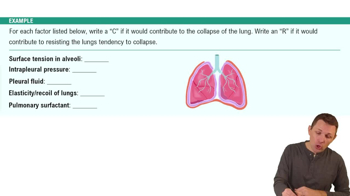
Pressure in the Lungs and Pleural Cavity Example 1

Heart Chambers

The heart consists of four chambers: the right atrium, right ventricle, left atrium, and left ventricle. The pulmonary veins deliver oxygenated blood to the left atrium, which then pumps it into the left ventricle, from where it is distributed to the rest of the body through the aorta.
Recommended video:
Guided course
6:13
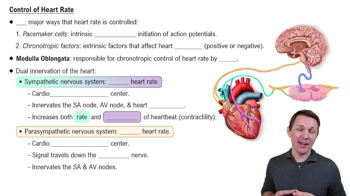
Control of Heart Rate

Oxygenated vs. Deoxygenated Blood

Oxygenated blood is rich in oxygen and is delivered from the lungs to the heart, while deoxygenated blood is low in oxygen and is sent from the body back to the heart. Understanding the distinction between these two types of blood is crucial for comprehending the flow of blood through the heart and the role of the pulmonary veins.
Recommended video:
5:34
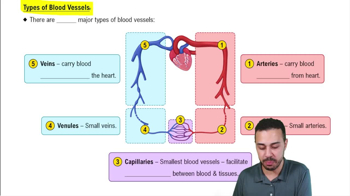
Types of Blood Vessels