Ch. 11 Cardiovascular System
Marieb - Essentials of Human Anatomy & Physiology 13th Edition
Marieb13th EditionEssentials of Human Anatomy & PhysiologyISBN: 9780135624340Not the one you use?Change textbook
Chapter 11, Problem 30

Mrs. Rees is brought to the emergency room after being involved in an auto accident. She is hemorrhaging and has a rapid pulse that can barely be felt, but her blood pressure is still within normal limits. Describe the compensatory mechanisms that are maintaining her blood pressure in the face of blood loss.

Verified step by step guidance
1
Recognize that Mrs. Rees is experiencing hemorrhagic shock, which is a condition where there is significant blood loss leading to decreased blood volume.
Understand that the body compensates for blood loss by activating the sympathetic nervous system, which releases catecholamines like adrenaline to increase heart rate and contractility, helping maintain cardiac output.
Acknowledge that vasoconstriction occurs in peripheral blood vessels, which increases systemic vascular resistance and helps maintain blood pressure despite reduced blood volume.
Note that the renin-angiotensin-aldosterone system (RAAS) is activated, leading to the release of angiotensin II, which causes vasoconstriction and stimulates aldosterone release to promote sodium and water retention, increasing blood volume.
Consider that antidiuretic hormone (ADH) is released to promote water reabsorption in the kidneys, further aiding in maintaining blood volume and pressure.

Verified video answer for a similar problem:

This video solution was recommended by our tutors as helpful for the problem above.
Video duration:
3m
Was this helpful?

Key Concepts

Here are the essential concepts you must grasp in order to answer the question correctly.

Compensatory Mechanisms

Compensatory mechanisms are physiological responses that help maintain homeostasis in the body during stress or injury. In the context of hemorrhage, these mechanisms include increased heart rate, vasoconstriction, and fluid retention, which work to stabilize blood pressure despite significant blood loss.
Recommended video:
3:02
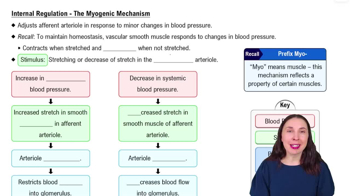
Internal Regulation - The Myogenic Mechanism

Baroreceptor Reflex

The baroreceptor reflex is a critical feedback loop that helps regulate blood pressure. Baroreceptors located in the carotid arteries and aorta detect changes in blood pressure and send signals to the central nervous system, which can trigger responses such as increased heart rate and vascular resistance to maintain adequate blood flow.
Recommended video:
3:37
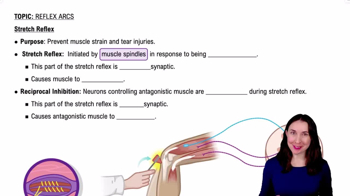
Stretch Reflex

Hormonal Responses

Hormonal responses, particularly the release of catecholamines (like adrenaline) and hormones such as aldosterone and antidiuretic hormone (ADH), play a vital role in compensating for blood loss. These hormones promote vasoconstriction, increase heart rate, and enhance fluid retention, all of which help to sustain blood pressure during hemorrhagic events.
Recommended video:
9:59
Steps of the Interferon Response