Ch. 1 The Human Body: An Orientation
Marieb - Essentials of Human Anatomy & Physiology 13th Edition
Marieb13th EditionEssentials of Human Anatomy & PhysiologyISBN: 9780135624340Not the one you use?Change textbook
Chapter 1, Problem 11

On what body surface is each of the following located: nose, calf of leg, ears, umbilicus, fingernails?

Verified step by step guidance
1
Step 1: Understand the concept of body surfaces. The human body is divided into anatomical regions and surfaces, such as anterior (front), posterior (back), lateral (side), and others. These terms help describe the location of structures relative to the body.
Step 2: Identify the location of the nose. The nose is located on the anterior surface of the body, specifically on the face.
Step 3: Determine the location of the calf of the leg. The calf is located on the posterior surface of the body, specifically on the back of the lower leg.
Step 4: Locate the ears. The ears are located on the lateral surfaces of the head, as they are positioned on the sides of the head.
Step 5: Identify the location of the umbilicus and fingernails. The umbilicus (navel) is located on the anterior surface of the body, specifically on the abdomen. Fingernails are located on the dorsal surface of the fingers, which is the back side of the fingers.

Verified video answer for a similar problem:

This video solution was recommended by our tutors as helpful for the problem above.
Video duration:
2m
Was this helpful?

Key Concepts

Here are the essential concepts you must grasp in order to answer the question correctly.

Anatomical Terminology

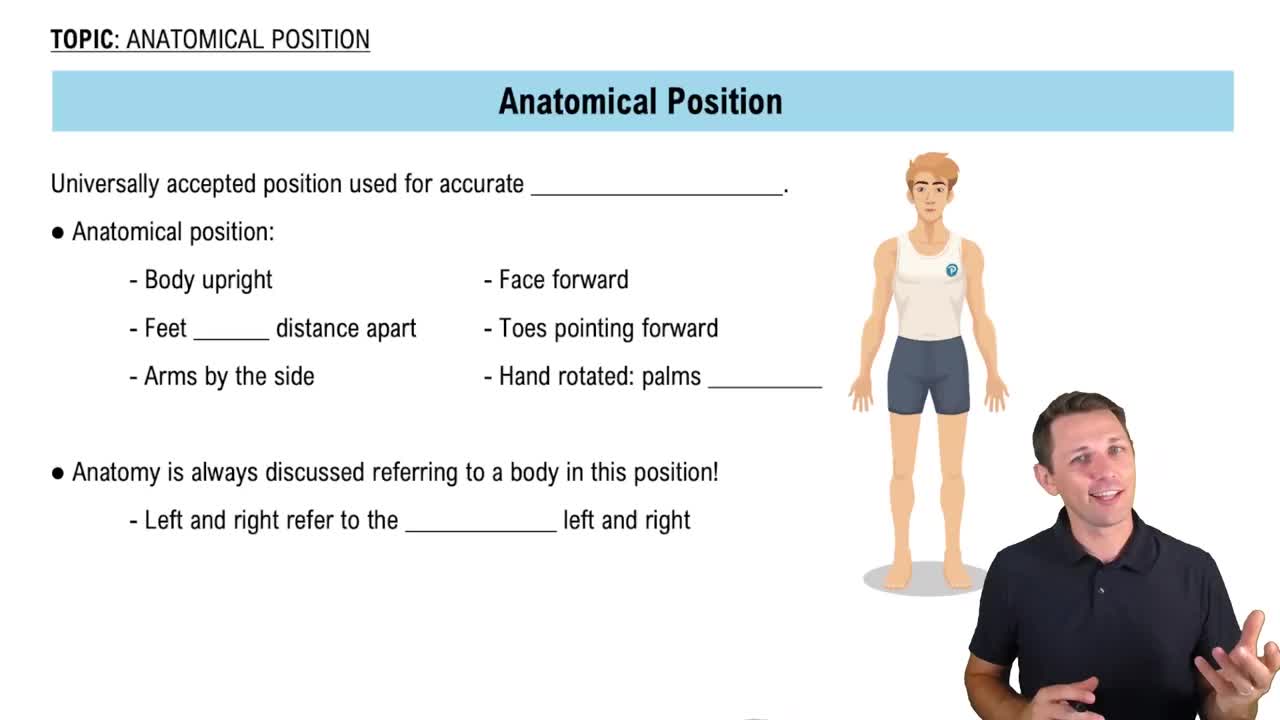
Anatomical terminology is a standardized language used to describe the locations and relationships of body parts. It includes terms that specify regions, directions, and positions, such as 'anterior' (front) and 'posterior' (back). Understanding this terminology is essential for accurately identifying the body surfaces where specific structures, like the nose or ears, are located.
Recommended video:
Guided course
02:40
Anatomical Position

Body Regions

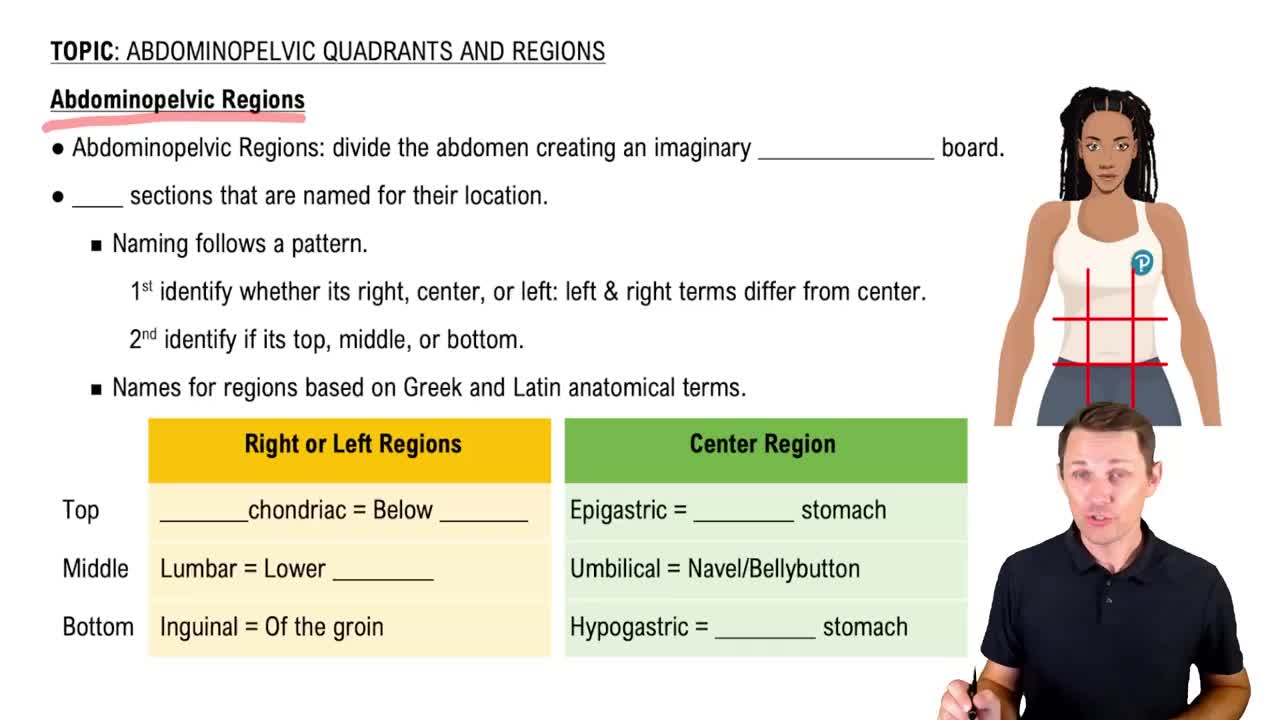
The human body is divided into various regions that help in identifying the location of organs and structures. Key regions include the head, neck, trunk, and limbs. Recognizing these regions allows for a clearer understanding of where specific body parts, such as the umbilicus or calf of the leg, are situated in relation to one another.
Recommended video:
Guided course
04:21
The 9 Abdominopelvic Regions

Surface Anatomy

Surface anatomy refers to the study of the external features of the body and how they relate to the underlying structures. It involves identifying landmarks on the skin that correspond to deeper anatomical structures. This concept is crucial for locating features like fingernails and understanding their position on the body surface.
Recommended video:
4:05
Cell Surface Receptors