Ch. 21 The Immune System: Innate and Adaptive Body Defenses
Marieb - Human Anatomy & Physiology 11th Edition
Marieb, Hoehn11th EditionHuman Anatomy & PhysiologyISBN: 9780136874034Not the one you use?Change textbook
Chapter 21, Problem 28

Caroline, a pregnant 29-year-old, has been HIV-positive for at least 10 years, dating back to when she was homeless and injecting heroin. While she currently has no symptoms of AIDS, she is taking several medications and is worried about the possibility that her baby might be infected. How do you think the HIV virus might be transferred from a mother to her offspring? Which of Caroline’s cells are infected by the virus, and why is the viral attack on these cells so devastating? Why is Caroline taking medication even though she has no symptoms?

Verified step by step guidance
1
Understand the modes of mother-to-child transmission of HIV. HIV can be transferred from mother to offspring during pregnancy through the placenta, during labor and delivery via exposure to maternal blood and fluids, and after birth through breastfeeding. Each of these stages provides a potential route for the virus to infect the baby.
Identify which cells are primarily infected by HIV. HIV targets CD4+ T helper cells, which are a type of white blood cell crucial for coordinating the immune response. The virus binds to the CD4 receptor and co-receptors on these cells to enter and replicate within them.
Explain why the infection of CD4+ T cells is devastating. Since CD4+ T cells regulate the immune system by activating other immune cells, their destruction leads to a weakened immune response. This immunodeficiency makes the body vulnerable to opportunistic infections and diseases, which characterize AIDS.
Discuss why Caroline is taking medication despite having no symptoms. Antiretroviral therapy (ART) suppresses viral replication, helping to maintain her immune function and reduce the viral load. This treatment lowers the risk of progression to AIDS and decreases the chance of transmitting HIV to her baby.
Summarize the importance of continuous medication and monitoring during pregnancy. Maintaining effective ART throughout pregnancy, delivery, and breastfeeding is critical to minimize the risk of mother-to-child transmission and to protect both Caroline's health and her baby's health.

Verified video answer for a similar problem:

This video solution was recommended by our tutors as helpful for the problem above.
Video duration:
4m
Was this helpful?

Key Concepts

Here are the essential concepts you must grasp in order to answer the question correctly.

Mother-to-Child Transmission of HIV

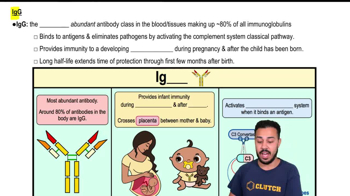
HIV can be transmitted from an infected mother to her baby during pregnancy, childbirth, or breastfeeding. The virus crosses the placenta, infects the baby during delivery through contact with maternal blood and fluids, or is passed via breast milk. Understanding these transmission routes is crucial for preventing neonatal HIV infection.
Recommended video:

HIV Infection of CD4+ T Cells

HIV primarily infects CD4+ T helper cells, which are vital for coordinating the immune response. The virus binds to these cells, replicates inside them, and eventually destroys them, weakening the immune system. This loss of CD4+ cells leads to immune deficiency, making the body vulnerable to opportunistic infections.
Recommended video:
3:53
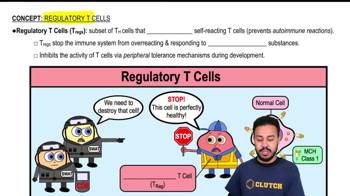
Regulatory T Cells

Antiretroviral Therapy (ART) in Asymptomatic HIV Infection

Even without symptoms, HIV-positive individuals take antiretroviral therapy to suppress viral replication, preserve immune function, and prevent progression to AIDS. ART reduces the viral load, lowers the risk of transmission, and improves long-term health outcomes, making early treatment essential regardless of symptom presence.
Recommended video:
07:43
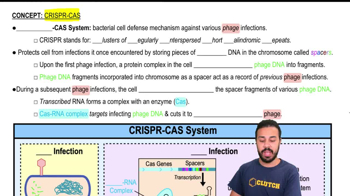
CRISPR CAS