Ch. 16 The Endocrine System
Marieb - Human Anatomy & Physiology 11th Edition
Marieb, Hoehn11th EditionHuman Anatomy & PhysiologyISBN: 9780136874034Not the one you use?Change textbook
Chapter 16, Problem 22

How are the hyperglycemia and lipidemia of insulin deficiency linked?

Verified step by step guidance
1
Step 1: Understand the role of insulin in normal metabolism. Insulin promotes glucose uptake by cells and stimulates the storage of glucose as glycogen, while also inhibiting the breakdown of fats (lipolysis).
Step 2: Recognize that in insulin deficiency, cells cannot effectively take up glucose, leading to elevated blood glucose levels, a condition known as hyperglycemia.
Step 3: Note that without insulin's inhibitory effect on lipolysis, fat breakdown in adipose tissue increases, releasing free fatty acids into the bloodstream, which causes elevated lipid levels, or lipidemia.
Step 4: Connect the two phenomena by explaining that the lack of insulin simultaneously causes glucose to remain in the blood (hyperglycemia) and increases fat breakdown (lipidemia), as the body shifts to using fats for energy due to cellular glucose deprivation.
Step 5: Summarize that hyperglycemia and lipidemia in insulin deficiency are linked through the loss of insulin's regulatory effects on both carbohydrate and lipid metabolism, resulting in elevated blood glucose and lipid levels.

Verified video answer for a similar problem:

This video solution was recommended by our tutors as helpful for the problem above.
Video duration:
3m
Was this helpful?

Key Concepts

Here are the essential concepts you must grasp in order to answer the question correctly.

Role of Insulin in Glucose Metabolism

Insulin is a hormone that facilitates the uptake of glucose by cells, promoting its storage as glycogen and usage for energy. In insulin deficiency, glucose uptake is impaired, leading to elevated blood glucose levels, known as hyperglycemia.
Recommended video:
02:17
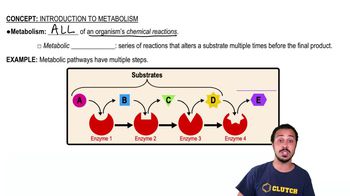
Introduction to Metabolism

Insulin's Effect on Lipid Metabolism

Insulin inhibits lipolysis, the breakdown of fat stored in adipose tissue. When insulin is deficient, increased lipolysis releases free fatty acids into the bloodstream, causing elevated lipid levels or lipidemia.
Recommended video:
02:17
Introduction to Metabolism

Metabolic Link Between Hyperglycemia and Lipidemia in Insulin Deficiency

In insulin deficiency, impaired glucose utilization forces the body to rely on fat breakdown for energy, increasing free fatty acids in blood. This dual effect causes both hyperglycemia and lipidemia, linking carbohydrate and lipid metabolic disturbances.
Recommended video:
02:17
Introduction to Metabolism