
Ch. 1 The Human Body: An Orientation
Marieb - Human Anatomy & Physiology 11th Edition
Marieb, Hoehn11th EditionHuman Anatomy & PhysiologyISBN: 9780136874034Not the one you use?Change textbook
Chapter 1, Problem 3

Which of the following is a major functional characteristic of all organisms?
a. Movement
b. Growth
c. Metabolism
d. Responsiveness
e. All of these

Verified step by step guidance
1
Step 1: Understand the question is asking for a major functional characteristic common to all living organisms.
Step 2: Review the definitions of each option: Movement (ability to change position), Growth (increase in size), Metabolism (all chemical reactions in the body), Responsiveness (ability to detect and respond to stimuli).
Step 3: Recognize that while movement, growth, and responsiveness are important, metabolism is essential for all life because it includes all chemical processes that sustain life.
Step 4: Consider that 'All of these' implies every option is a major characteristic, but some organisms may not exhibit movement or growth in the same way, whereas metabolism is universal.
Step 5: Conclude that metabolism is the fundamental functional characteristic shared by all organisms.

Verified video answer for a similar problem:

This video solution was recommended by our tutors as helpful for the problem above.
Video duration:
2m
Was this helpful?

Key Concepts

Here are the essential concepts you must grasp in order to answer the question correctly.

Metabolism

Metabolism refers to the sum of all chemical reactions that occur within an organism to maintain life. It includes processes that convert energy and matter to sustain growth, repair, and reproduction. This characteristic is fundamental to all living organisms, distinguishing them from non-living matter.
Recommended video:
02:17
Introduction to Metabolism

Growth

Growth is the process by which organisms increase in size and often in cell number. It involves the synthesis of new cellular material and is essential for development and maturation. Growth is a common feature of living beings but may vary in rate and form across different species.
Recommended video:
04:02
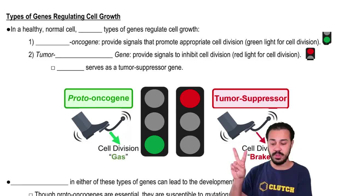
Types of Genes Regulating Cell Growth

Responsiveness

Responsiveness is the ability of an organism to detect and react to changes in its internal or external environment. This characteristic allows organisms to adapt to stimuli, ensuring survival and homeostasis. It is a key functional trait seen in all living organisms.
Recommended video:
9:59
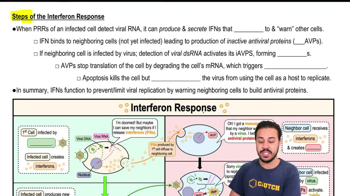
Steps of the Interferon Response