Ch. 24 Nutrition, Metabolism, and Energy Balance
Hoehn - Marieb Human Anatomy & Physiology, 12th edition
Hoehn, Haynes, Abbott12th EditionMarieb Human Anatomy & PhysiologyISBN: 9780138242732Not the one you use?Change textbook
Chapter 24, Problem 22

Make a flowchart that indicates the pivotal intermediates through which glucose can be converted to fat.

Verified step by step guidance
1
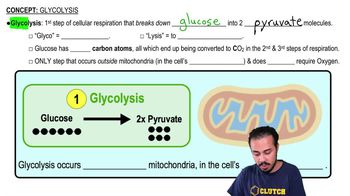
Start by understanding the metabolic pathways involved in glucose metabolism and fat synthesis. Glucose is primarily metabolized through glycolysis, which breaks it down into pyruvate. Pyruvate is a key intermediate in cellular respiration and fat synthesis.
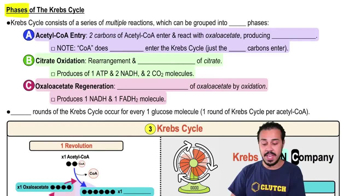
Next, recognize that pyruvate is converted into acetyl-CoA via the pyruvate dehydrogenase complex. Acetyl-CoA is a pivotal intermediate that serves as a building block for both energy production in the citric acid cycle and fatty acid synthesis.
From acetyl-CoA, fatty acid synthesis begins in the cytoplasm. Acetyl-CoA is converted into malonyl-CoA by the enzyme acetyl-CoA carboxylase, which is a critical regulatory step in lipogenesis (fat synthesis).
Malonyl-CoA is then used by fatty acid synthase to elongate fatty acid chains, eventually forming palmitate, a common saturated fatty acid. These fatty acids can be further modified or combined with glycerol to form triglycerides, the storage form of fat.
Finally, organize these steps into a flowchart format, starting with glucose at the top, followed by glycolysis leading to pyruvate, conversion to acetyl-CoA, synthesis of malonyl-CoA, and ending with fatty acid and triglyceride formation. Label each step clearly to show the progression of intermediates.

Verified video answer for a similar problem:

This video solution was recommended by our tutors as helpful for the problem above.
Video duration:
2m
Was this helpful?

Key Concepts

Here are the essential concepts you must grasp in order to answer the question correctly.

Glycolysis

Glycolysis is the metabolic pathway that converts glucose into pyruvate, producing a small amount of ATP and NADH in the process. This pathway occurs in the cytoplasm and is the first step in both aerobic and anaerobic respiration. Understanding glycolysis is crucial as it provides the initial substrate for further metabolic processes leading to fat synthesis.
Recommended video:
05:04
Glycolysis

Lipogenesis

Lipogenesis is the biochemical process through which fatty acids are synthesized from acetyl-CoA, primarily in the liver and adipose tissue. This process involves several enzymatic reactions that convert excess glucose into triglycerides for storage. Recognizing lipogenesis is essential for understanding how glucose can ultimately be transformed into fat.

Acetyl-CoA

Acetyl-CoA is a central metabolite in energy production and biosynthesis, formed from the breakdown of carbohydrates, fats, and proteins. It serves as a key substrate for the synthesis of fatty acids during lipogenesis. Understanding the role of Acetyl-CoA is vital for tracing the pathway from glucose to fat, as it links glycolysis to lipid metabolism.
Recommended video:
09:54
Phases of The Krebs Cycle