Ch. 2 Chemistry Comes Alive
Hoehn - Marieb Human Anatomy & Physiology, 12th edition
Hoehn, Haynes, Abbott12th EditionMarieb Human Anatomy & PhysiologyISBN: 9780138242732Not the one you use?Change textbook
Chapter 2, Problem 7

Factors that accelerate the rate of chemical reactions include all but:
a. The presence of catalysts
b. Increasing the temperature
c. Increasing the particle size
d. Increasing the concentration of the reactants

Verified step by step guidance
1
Understand the concept of chemical reaction rates: Chemical reactions occur when reactants interact to form products. The rate of a chemical reaction refers to how quickly this process happens, and several factors can influence this rate.
Review the role of catalysts: Catalysts are substances that speed up chemical reactions without being consumed in the process. They lower the activation energy required for the reaction, making it proceed faster.
Analyze the effect of temperature: Increasing the temperature generally accelerates chemical reactions because higher temperatures provide reactant particles with more kinetic energy, increasing the frequency and energy of collisions.
Examine the impact of reactant concentration: Higher concentrations of reactants lead to more frequent collisions between particles, which can increase the rate of reaction.
Evaluate the effect of particle size: Smaller particle sizes increase the surface area available for reactions, which can accelerate the rate of reaction. Conversely, increasing the particle size reduces the surface area, slowing down the reaction rate.

Verified video answer for a similar problem:

This video solution was recommended by our tutors as helpful for the problem above.
Video duration:
3m
Was this helpful?

Key Concepts

Here are the essential concepts you must grasp in order to answer the question correctly.

Catalysts

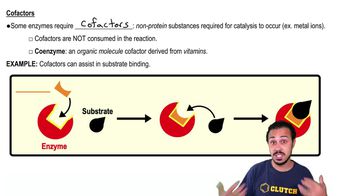
Catalysts are substances that increase the rate of a chemical reaction without being consumed in the process. They work by providing an alternative reaction pathway with a lower activation energy, allowing more reactant molecules to collide with sufficient energy to react. This makes catalysts essential in many industrial processes and biochemical reactions.
Recommended video:
04:22
Cofactors

Temperature

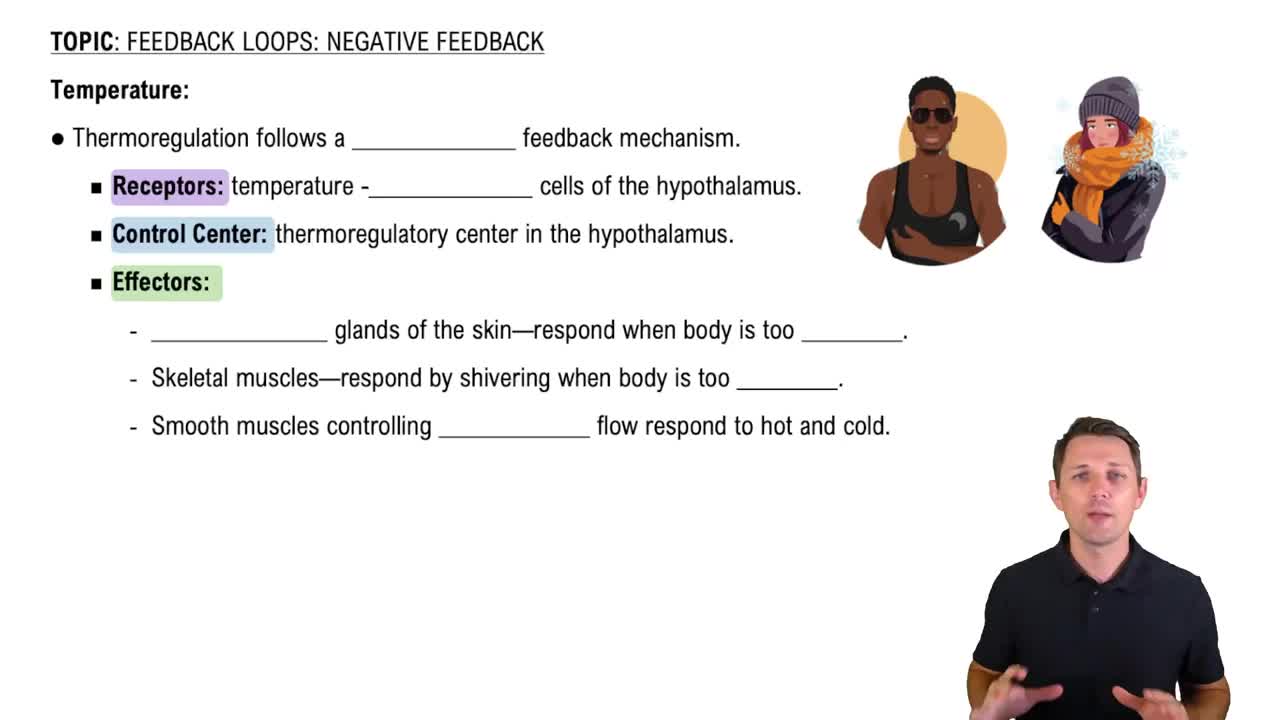
Increasing the temperature of a reaction generally increases the kinetic energy of the molecules involved, leading to more frequent and energetic collisions. This heightened activity can significantly accelerate the rate of reaction, as more molecules can overcome the activation energy barrier required for the reaction to occur.
Recommended video:
Guided course
04:42
Negative Feedback Loops: Temperature

Particle Size

The particle size of reactants affects the surface area available for reactions. Smaller particles have a larger surface area relative to their volume, which allows for more collisions between reactants. Conversely, increasing particle size reduces the surface area, thereby slowing down the reaction rate, making it a factor that does not accelerate reactions.
Recommended video:
03:45
3 Size Classes of Carbohydrates