Ch. 17 Blood
Hoehn - Marieb Human Anatomy & Physiology, 12th edition
Hoehn, Haynes, Abbott12th EditionMarieb Human Anatomy & PhysiologyISBN: 9780138242732Not the one you use?Change textbook
Chapter 17, Problem 16

If you had a severe infection, would you expect your WBC count to be closest to 5000, 10,000, or 15,000/μl?
What is this condition called?

Verified step by step guidance
1
Understand that WBC (white blood cell) count is a measure of the number of white blood cells in a microliter (μl) of blood, which are crucial for fighting infections.
Recall the normal range for WBC count in a healthy individual, which is typically around 4,000 to 11,000/μl.
Recognize that during a severe infection, the body produces more white blood cells to combat the invading pathogens, causing the WBC count to increase above the normal range.
Compare the given options (5,000, 10,000, and 15,000/μl) to the normal range and understand that 15,000/μl is the closest to what you would expect during a severe infection, as it indicates an elevated WBC count.
Identify that an elevated WBC count due to infection is called leukocytosis, which is a common response to infection or inflammation.

Verified video answer for a similar problem:

This video solution was recommended by our tutors as helpful for the problem above.
Video duration:
5m
Was this helpful?

Key Concepts

Here are the essential concepts you must grasp in order to answer the question correctly.

White Blood Cell (WBC) Count

WBC count measures the number of white blood cells in a microliter of blood, indicating immune system activity. Normal ranges typically fall between 4,000 and 11,000/μl. Changes in WBC count help diagnose infections, inflammation, or immune disorders.
Recommended video:
7:49
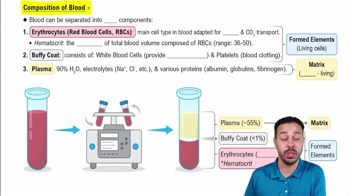
Composition of Blood

Leukocytosis

Leukocytosis is the condition of having an elevated WBC count, often above 11,000/μl. It commonly occurs during infections as the body produces more white blood cells to fight pathogens. A severe infection usually causes leukocytosis, reflecting an active immune response.

Immune Response to Infection

During a severe infection, the immune system activates and increases WBC production to combat invading microbes. This response raises the WBC count significantly, often reaching or exceeding 15,000/μl, signaling the body's effort to control the infection.
Recommended video:
6:59
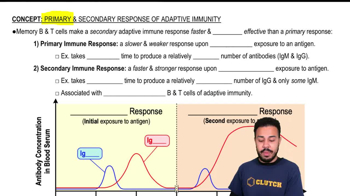
Primary and Secondary Response of Adaptive Immunity