
Ch. 5 The Integumentary System
Amerman- Human Anatomy & Physiology 3e
Amerman3rd EditionHuman Anatomy & PhysiologyISBN: 9780138247201, 9780138247928, 9780138201814Not the one you use?Change textbook
Chapter 5, Problem 3

Which of the following is not a function of the integument?
a. Protection from mechanical trauma
b. Thermoregulation
c. Protection from acid-base imbalances
d. Vitamin D synthesis

Verified step by step guidance
1
Step 1: Begin by understanding the primary functions of the integumentary system. The integumentary system includes the skin, hair, nails, and associated glands. Its main roles are protection, thermoregulation, sensation, excretion, and vitamin D synthesis.
Step 2: Analyze each option provided in the question. For example, 'Protection from mechanical trauma' is a valid function of the integumentary system, as the skin acts as a physical barrier against external forces.
Step 3: Evaluate 'Thermoregulation.' This is another key function of the integumentary system, as sweat glands and blood vessels in the skin help regulate body temperature.
Step 4: Consider 'Protection from acid-base imbalances.' This is not a primary function of the integumentary system. While the skin provides a barrier, it does not directly regulate acid-base balance, which is primarily managed by the respiratory and renal systems.
Step 5: Review 'Vitamin D synthesis.' The skin plays a crucial role in synthesizing vitamin D when exposed to sunlight, making this a valid function of the integumentary system.

Verified video answer for a similar problem:

This video solution was recommended by our tutors as helpful for the problem above.
Was this helpful?

Key Concepts

Here are the essential concepts you must grasp in order to answer the question correctly.

Functions of the Integumentary System

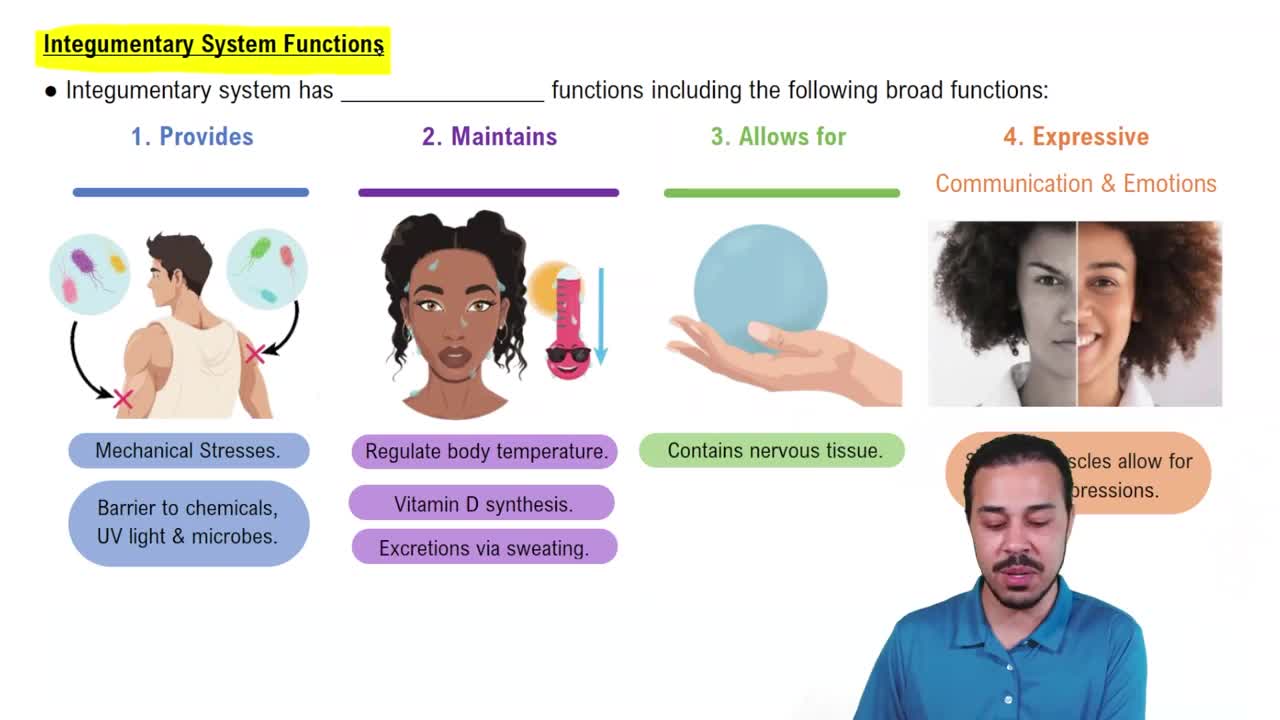
The integumentary system, primarily composed of the skin, serves several vital functions including protection against mechanical trauma, thermoregulation, and synthesis of vitamin D. It acts as a barrier to pathogens and physical injuries, helps regulate body temperature through sweat and blood flow, and facilitates the production of vitamin D when exposed to sunlight.
Recommended video:
03:40
Integumentary System Functions

Thermoregulation

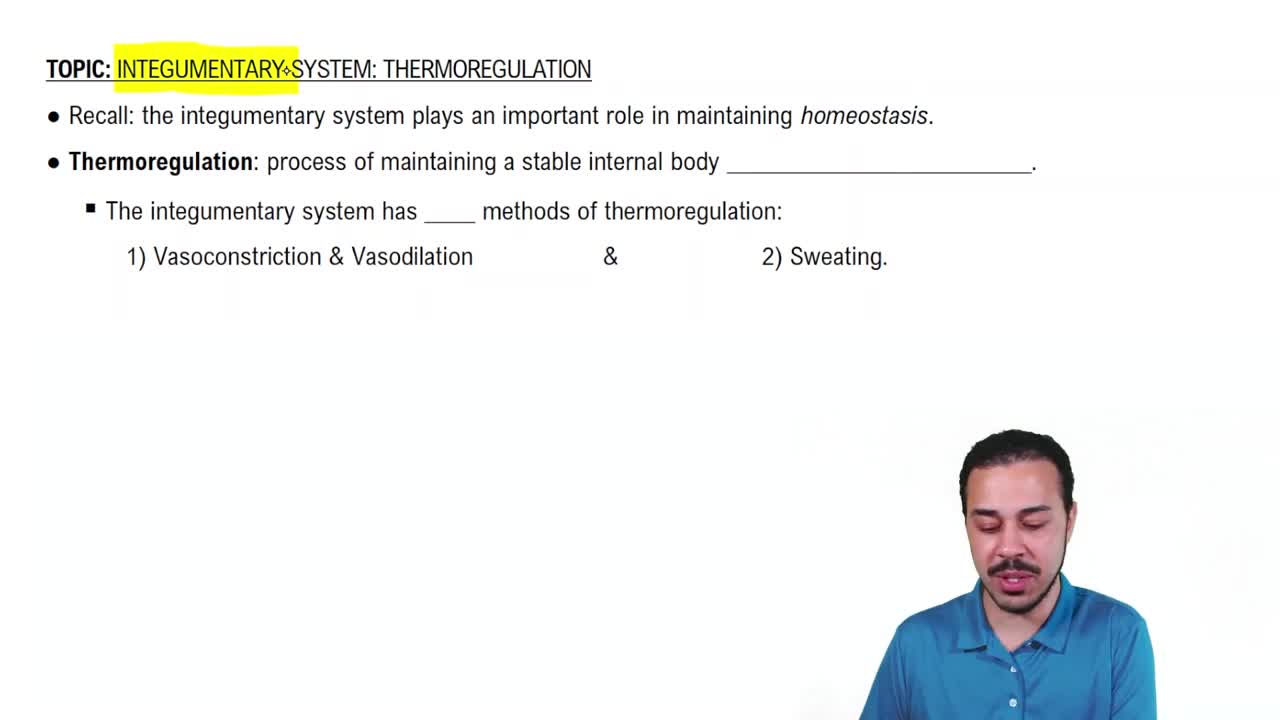
Thermoregulation is the process by which the body maintains its core internal temperature. The integumentary system plays a crucial role in this by adjusting blood flow to the skin and through the evaporation of sweat, which cools the body. This function is essential for maintaining homeostasis and ensuring that enzymatic and metabolic processes occur optimally.
Recommended video:
01:07
Introduction to Thermoregulation

Acid-Base Balance

Acid-base balance refers to the mechanisms the body uses to maintain the pH levels of bodily fluids within a narrow range. While the integumentary system does not directly protect against acid-base imbalances, it does play a role in overall homeostasis. The primary organs involved in regulating acid-base balance are the kidneys and lungs, rather than the skin.
Recommended video:
01:29
Acids and Bases