Ch. 5 The Integumentary System
Amerman- Human Anatomy & Physiology 3e
Amerman3rd EditionHuman Anatomy & PhysiologyISBN: 9780138247201, 9780138247928, 9780138201814Not the one you use?Change textbook
Chapter 5, Problem 2

Which of the following correctly describes the structure of the skin?
a. It consists of the superficial epidermis, middle dermis, and deep hypodermis.
b. It consists of the superficial epidermis and deep dermis.
c. It consists of the superficial dermis and deep epidermis.
d. It consists of the superficial dermis and deep hypodermis.

Verified step by step guidance
1
Understand the basic structure of the skin, which is composed of three main layers: the epidermis (outermost layer), the dermis (middle layer), and the hypodermis (deepest layer, also known as the subcutaneous tissue).
Recognize that the epidermis is the superficial layer of the skin, primarily made up of keratinized stratified squamous epithelium, providing a protective barrier.
Identify the dermis as the middle layer, which contains connective tissue, blood vessels, nerve endings, sweat glands, and hair follicles. It supports the epidermis and provides elasticity and strength.
Note that the hypodermis is not technically part of the skin but lies beneath the dermis. It consists of adipose tissue and connective tissue, providing insulation and cushioning.
Review the options provided in the question and eliminate incorrect descriptions based on the anatomical structure of the skin. The correct answer should describe the skin as consisting of the superficial epidermis and deep dermis, without including the hypodermis as part of the skin.

Verified video answer for a similar problem:

This video solution was recommended by our tutors as helpful for the problem above.
Was this helpful?

Key Concepts

Here are the essential concepts you must grasp in order to answer the question correctly.

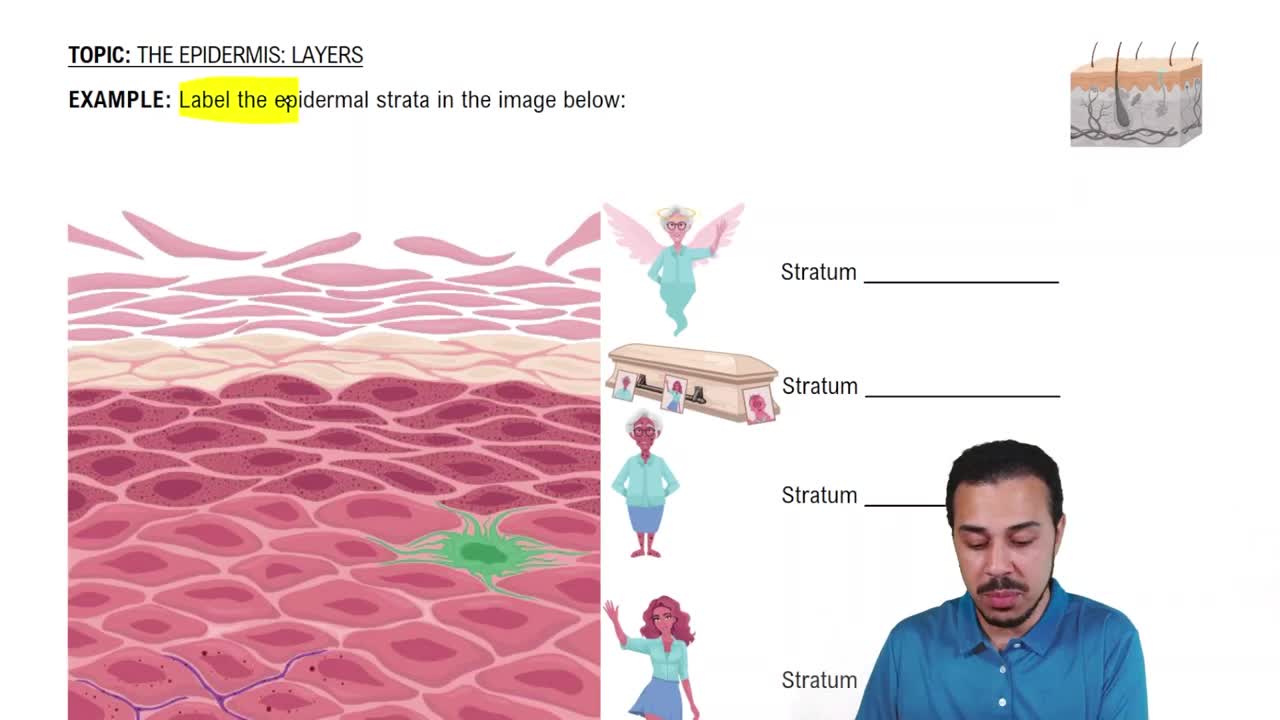
Epidermis

The epidermis is the outermost layer of the skin, primarily composed of keratinized stratified squamous epithelium. It serves as a protective barrier against environmental hazards, pathogens, and water loss. The epidermis contains various cell types, including keratinocytes, melanocytes, and Langerhans cells, which contribute to skin color and immune response.
Recommended video:
04:09
The Epidermis: Layers Example 2

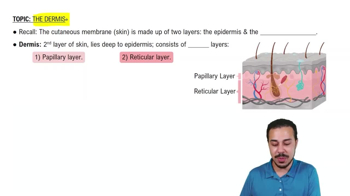
Dermis

The dermis lies beneath the epidermis and is much thicker, consisting of connective tissue that provides strength and elasticity to the skin. It contains blood vessels, nerve endings, hair follicles, and glands (such as sweat and sebaceous glands). The dermis is divided into two layers: the papillary dermis, which is more superficial, and the reticular dermis, which is deeper and denser.
Recommended video:
01:20
Introduction to the Dermis

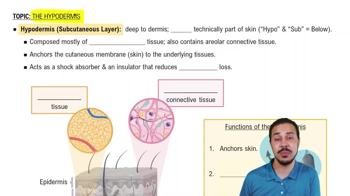
Hypodermis

The hypodermis, also known as the subcutaneous layer, is the deepest layer of the skin, primarily composed of loose connective tissue and fat. It serves as an insulator, helps to anchor the skin to underlying structures, and provides cushioning against external forces. The hypodermis plays a crucial role in energy storage and thermoregulation.
Recommended video:
02:44
The Hypodermis