Ch. 4 Histology
Amerman- Human Anatomy & Physiology 3e
Amerman3rd EditionHuman Anatomy & PhysiologyISBN: 9780138247201, 9780138247928, 9780138201814Not the one you use?Change textbook
Chapter 4, Problem 7a

Compare and contrast the following pairs of terms:
Endocrine gland and exocrine gland

Verified step by step guidance
1
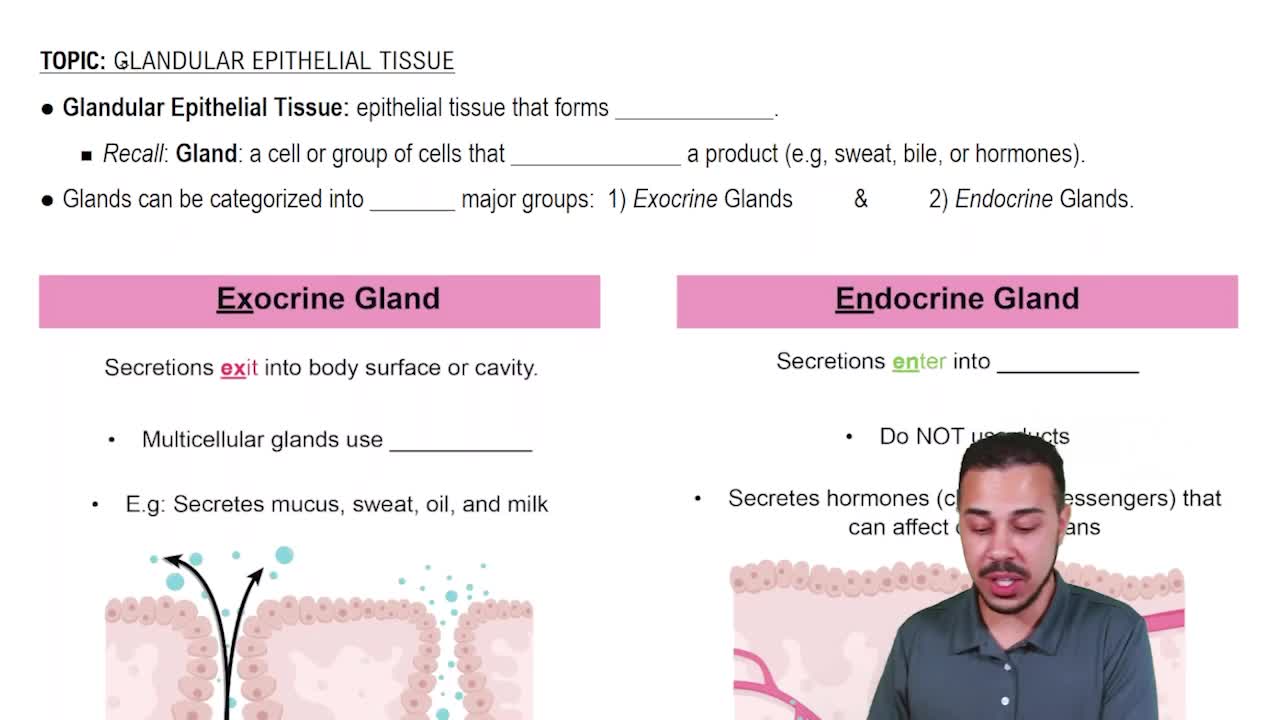
Define the term 'endocrine gland': An endocrine gland is a type of gland that secretes hormones directly into the bloodstream or interstitial fluid, without the use of ducts. These hormones regulate various physiological processes in the body, such as metabolism, growth, and reproduction.
Define the term 'exocrine gland': An exocrine gland is a type of gland that releases its secretions through ducts to an external surface (e.g., skin) or into a body cavity (e.g., digestive tract). Examples include sweat glands, salivary glands, and the pancreas (for its digestive enzyme secretion).
Compare the two: Both endocrine and exocrine glands are part of the body's glandular system and are responsible for producing and releasing substances. However, their methods of secretion and the nature of their products differ significantly.
Contrast the two: Endocrine glands release hormones directly into the bloodstream, affecting distant target organs, while exocrine glands release substances (e.g., enzymes, sweat, mucus) to a localized area via ducts. Endocrine glands are ductless, whereas exocrine glands have ducts.
Provide examples for clarity: Examples of endocrine glands include the thyroid gland, adrenal glands, and pituitary gland. Examples of exocrine glands include sweat glands, sebaceous glands, and the pancreas (for its exocrine function).

Verified video answer for a similar problem:

This video solution was recommended by our tutors as helpful for the problem above.
Was this helpful?

Key Concepts

Here are the essential concepts you must grasp in order to answer the question correctly.

Endocrine Glands

Endocrine glands are specialized organs that secrete hormones directly into the bloodstream. These hormones regulate various bodily functions, including metabolism, growth, and mood. Unlike exocrine glands, endocrine glands do not have ducts; instead, they release their products into the circulatory system, allowing for widespread distribution throughout the body.
Recommended video:
Guided course
06:14
Exocrine vs. Endocrine Glands

Exocrine Glands

Exocrine glands are glands that secrete their products through ducts to an epithelial surface, either inside or outside the body. Common examples include sweat glands, salivary glands, and digestive glands. The secretions from exocrine glands can include enzymes, sweat, and mucus, which serve specific local functions rather than entering the bloodstream.
Recommended video:
Guided course
06:14
Exocrine vs. Endocrine Glands

Comparison of Secretion Mechanisms

The primary difference between endocrine and exocrine glands lies in their secretion mechanisms. Endocrine glands release hormones directly into the bloodstream for systemic effects, while exocrine glands utilize ducts to transport their secretions to specific target sites. This distinction is crucial for understanding how different glands contribute to bodily functions and maintain homeostasis.
Recommended video:
01:33
Protein Secretion