Ch. 3 The Cell
Amerman- Human Anatomy & Physiology 3e
Amerman3rd EditionHuman Anatomy & PhysiologyISBN: 9780138247201, 9780138247928, 9780138201814Not the one you use?Change textbook
Chapter 3, Problem L2.3a

Explain how the form of the following structures is related to its function:
Cilia

Verified step by step guidance
1
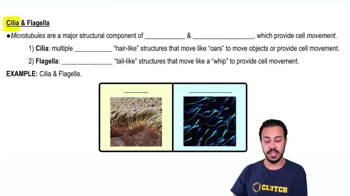
Cilia are hair-like structures that extend from the surface of certain cells. Their form is designed to maximize surface area and movement capabilities, which is essential for their function.
Cilia are composed of microtubules arranged in a '9+2' structure (nine pairs of microtubules surrounding two central microtubules). This arrangement provides structural support and flexibility, enabling the cilia to move rhythmically.
The rhythmic movement of cilia is powered by motor proteins, such as dynein, which cause the microtubules to slide against each other. This movement is crucial for their function in propelling substances across the cell surface or aiding in locomotion.
In the respiratory system, cilia are found lining the trachea and bronchi. Their form allows them to sweep mucus and trapped particles upward toward the throat, helping to keep the airways clear of debris and pathogens.
In the reproductive system, cilia in the fallopian tubes help move the egg toward the uterus. Their structure and coordinated movement are essential for ensuring the egg reaches its destination efficiently.

Verified video answer for a similar problem:

This video solution was recommended by our tutors as helpful for the problem above.
Was this helpful?

Key Concepts

Here are the essential concepts you must grasp in order to answer the question correctly.

Cilia Structure

Cilia are microscopic, hair-like structures that extend from the surface of many eukaryotic cells. They are composed of microtubules arranged in a specific '9+2' pattern, which provides structural integrity and flexibility. This unique arrangement allows cilia to beat in a coordinated manner, facilitating movement and the transport of substances across cell surfaces.
Recommended video:
03:14
Cilia & Flagella

Function of Cilia

Cilia serve various functions depending on their location in the body. In the respiratory tract, they help move mucus and trapped particles out of the airways, while in the reproductive system, they assist in the movement of eggs from the ovaries to the uterus. Their ability to beat in a rhythmic pattern is crucial for these functions, highlighting the relationship between their form and purpose.
Recommended video:
03:14
Cilia & Flagella

Cellular Motility

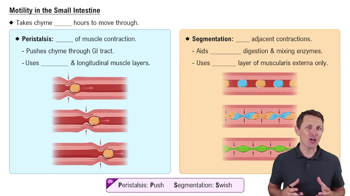
Cellular motility refers to the ability of cells to move and navigate their environment, which is essential for processes like tissue development, immune response, and wound healing. Cilia play a significant role in this by providing propulsion and facilitating the movement of fluids. Understanding how cilia contribute to cellular motility helps explain their structural adaptations and functional significance.
Recommended video:
Guided course
3:06
Motility in the Small Intestine