Ch. 20 The Lymphatic System and Immunity
Amerman- Human Anatomy & Physiology 3e
Amerman3rd EditionHuman Anatomy & PhysiologyISBN: 9780138247201, 9780138247928, 9780138201814Not the one you use?Change textbook
Chapter 20, Problem L3.4

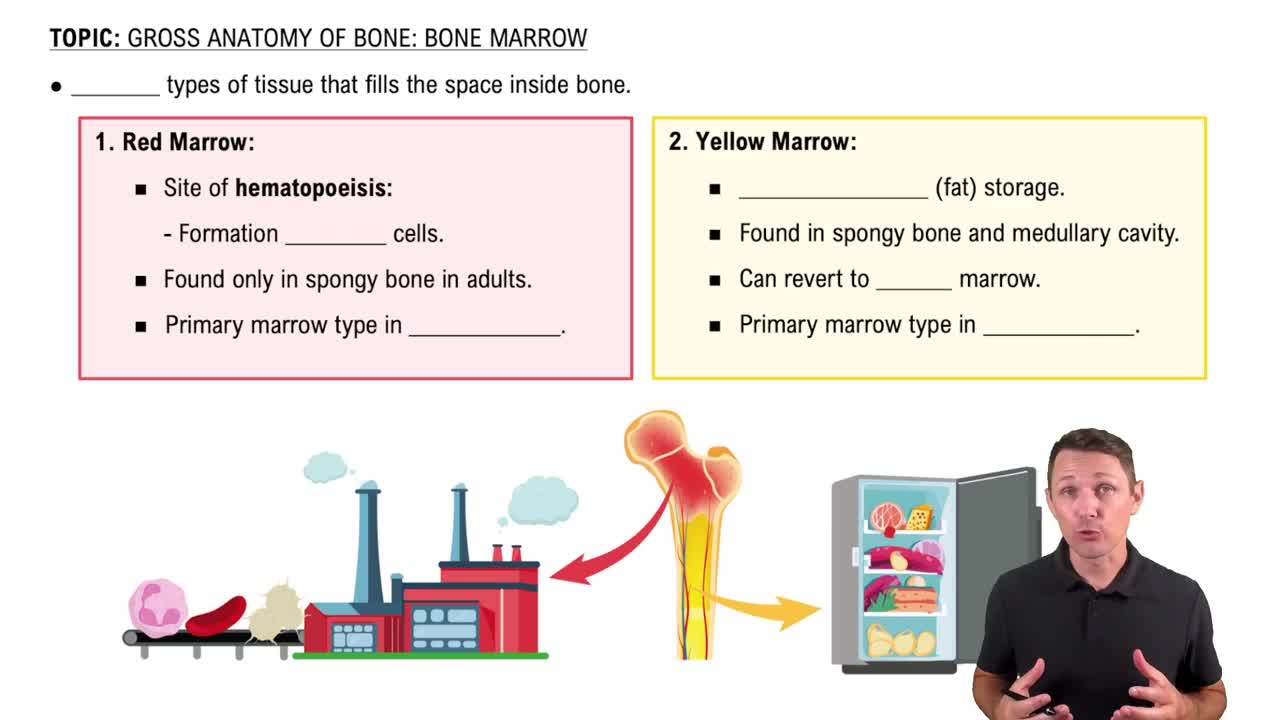
Mr. White developed neutropenia as a consequence of cancer chemotherapy, which destroyed much of his bone marrow. What other components of the immune system would be harmed by bone marrow destruction? Would you expect his hematocrit to be elevated or decreased? What effects would you expect to see from this change in hematocrit?

Verified step by step guidance
1
Step 1: Understand the role of bone marrow in the immune system. Bone marrow is responsible for producing various blood cells, including white blood cells (leukocytes), red blood cells (erythrocytes), and platelets. Neutropenia, a condition characterized by a low neutrophil count, indicates that the production of white blood cells has been compromised.
Step 2: Identify other components of the immune system affected by bone marrow destruction. Since bone marrow produces lymphocytes (B cells and T cells), which are crucial for adaptive immunity, their production would also be impaired. Additionally, macrophages and dendritic cells, which originate from monocytes produced in the bone marrow, may be affected.
Step 3: Analyze the impact on hematocrit levels. Hematocrit is the percentage of red blood cells in the blood. Bone marrow destruction would likely lead to decreased production of red blood cells, resulting in a lower hematocrit level. This is because erythropoiesis (red blood cell production) occurs in the bone marrow.
Step 4: Consider the physiological effects of a decreased hematocrit. A lower hematocrit reduces the oxygen-carrying capacity of the blood, leading to symptoms such as fatigue, weakness, and shortness of breath. This is due to insufficient oxygen delivery to tissues and organs.
Step 5: Summarize the overall impact of bone marrow destruction. The destruction of bone marrow affects multiple components of the immune system, including neutrophils, lymphocytes, and monocytes, compromising both innate and adaptive immunity. Additionally, the reduction in hematocrit can lead to anemia-related symptoms, further impacting the patient's overall health.

Verified video answer for a similar problem:

This video solution was recommended by our tutors as helpful for the problem above.
Was this helpful?

Key Concepts

Here are the essential concepts you must grasp in order to answer the question correctly.

Bone Marrow Function

Bone marrow is a vital organ responsible for producing blood cells, including red blood cells, white blood cells, and platelets. When bone marrow is damaged, as in the case of neutropenia from chemotherapy, the production of these cells is significantly impaired, leading to a weakened immune response and increased susceptibility to infections.
Recommended video:

Hematocrit Levels

Hematocrit is the proportion of blood volume that is occupied by red blood cells. In cases of bone marrow destruction, the production of red blood cells decreases, which typically results in a lower hematocrit level. This decrease can lead to anemia, causing fatigue and weakness due to insufficient oxygen delivery to tissues.
Recommended video:
Guided course
05:04
The Levels of Organization

Immune System Components

The immune system comprises various components, including white blood cells (leukocytes) that are crucial for fighting infections. Bone marrow destruction affects not only neutrophils but also other types of white blood cells, such as lymphocytes and monocytes, leading to a compromised immune system and increased risk of infections and other complications.
Recommended video:
Guided course
5:04
Optic Components
Related Practice
Textbook Question

The chemotherapeutic drugs Mr. White is taking affect all cells that undergo rapid mitosis, such as those of the skin. What effect would this have on the functions of the skin? How could this affect his immunity?

5
views

Textbook Question

Nonspecific immunity is also known as_____. Specific immunity is also known as_____. Specific immunity has the capacity for immunological ______ .

3
views
Textbook Question

Mr. White has been diagnosed with febrile neutropenia, a condition characterized by the presence of a fever with an extremely low number of neutrophils in the blood. Blood work demonstrates the presence of bacteria in his blood. Explain why neutropenia might lead to a bacterial infection. Why is a bacterial infection particularly dangerous for Mr. White?

Textbook Question

Carla presents to her physician with a complaint of swollen axillary lymph nodes. Her physician performs a breast exam and finds a tumor on the same side as the swollen nodes.

b. Carla undergoes surgery to have the tumor and affected lymph nodes and surrounding lymphatic vessels removed. Predict any complications Carla might have after the surgery that could arise from removal of the lymph nodes and vessels.

2
views
Textbook Question

Which of the following make up the body's first line of defense?

a. Surface barriers

b. Cells and proteins of adaptive immunity

c. Cells and proteins of innate immunity

d. All of the above

1
views
Textbook Question

Carla presents to her physician with a complaint of swollen axillary lymph nodes. Her physician performs a breast exam and finds a tumor on the same side as the swollen nodes.

a. Explain what process has likely caused her nodes to swell.

2
views