Ch. 20 The Lymphatic System and Immunity
Amerman- Human Anatomy & Physiology 3e
Amerman3rd EditionHuman Anatomy & PhysiologyISBN: 9780138247201, 9780138247928, 9780138201814Not the one you use?Change textbook
Chapter 20, Problem 4

Nonspecific immunity is also known as_____. Specific immunity is also known as_____. Specific immunity has the capacity for immunological ______ .

Verified step by step guidance
1
Step 1: Understand the concept of nonspecific immunity. Nonspecific immunity refers to the body's first line of defense against pathogens, which includes physical barriers (like skin and mucous membranes), chemical barriers (like stomach acid), and general immune responses (like inflammation and phagocytosis). It is also known as innate immunity.
Step 2: Understand the concept of specific immunity. Specific immunity refers to the body's ability to target specific pathogens using specialized cells and molecules, such as antibodies and lymphocytes. It is also known as adaptive immunity.
Step 3: Learn about immunological memory. Specific immunity has the capacity for immunological memory, which means the immune system can 'remember' a pathogen after an initial exposure and respond more effectively during subsequent encounters.
Step 4: Review the differences between nonspecific and specific immunity. Nonspecific immunity is immediate and general, while specific immunity is slower to develop but highly targeted and capable of long-term protection through memory.
Step 5: Apply this knowledge to complete the blanks in the problem. Use the terms 'innate immunity,' 'adaptive immunity,' and 'memory' to fill in the blanks appropriately based on the definitions provided.

Verified video answer for a similar problem:

This video solution was recommended by our tutors as helpful for the problem above.
Was this helpful?

Key Concepts

Here are the essential concepts you must grasp in order to answer the question correctly.

Nonspecific Immunity

Nonspecific immunity, also referred to as innate immunity, is the body's first line of defense against pathogens. It includes physical barriers like skin and mucous membranes, as well as immune responses that are not tailored to specific pathogens, such as inflammation and the action of phagocytes. This type of immunity responds quickly to a wide range of invaders.
Recommended video:
5:52
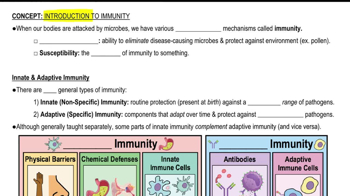
Introduction to Immunity

Specific Immunity

Specific immunity, also known as adaptive immunity, is characterized by its ability to recognize and remember specific pathogens. This type of immunity involves lymphocytes, such as B cells and T cells, which produce antibodies and mount targeted responses against previously encountered pathogens. It develops over time and provides long-lasting protection.
Recommended video:
03:25
Water’s High Specific Heat

Immunological Memory

Immunological memory refers to the ability of the immune system to remember past infections and respond more effectively upon subsequent exposures to the same pathogen. This is a key feature of specific immunity, allowing for a faster and stronger response due to the presence of memory cells. It is the basis for the effectiveness of vaccines, which train the immune system to recognize specific pathogens.
Recommended video:
7:56
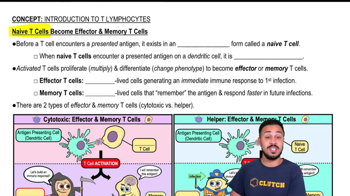
Naive T Cells Become Effector & Memory T Cells
Related Practice
Textbook Question

The chemotherapeutic drugs Mr. White is taking affect all cells that undergo rapid mitosis, such as those of the skin. What effect would this have on the functions of the skin? How could this affect his immunity?

5
views

Textbook Question

Which of the following does not describe the relationship between the lymphatic and immune systems?

a. Lymphoid organs and tissues house cells of the immune system.

b. Lymphoid organs and tissues trap pathogens for the immune system.

c. Lymphoid organs activate cells of the immune system.

d. Lymphoid organs and tissues create the surface barriers of the immune system.

4
views
Textbook Question

Mr. White developed neutropenia as a consequence of cancer chemotherapy, which destroyed much of his bone marrow. What other components of the immune system would be harmed by bone marrow destruction? Would you expect his hematocrit to be elevated or decreased? What effects would you expect to see from this change in hematocrit?

2
views
Textbook Question

Mr. White has been diagnosed with febrile neutropenia, a condition characterized by the presence of a fever with an extremely low number of neutrophils in the blood. Blood work demonstrates the presence of bacteria in his blood. Explain why neutropenia might lead to a bacterial infection. Why is a bacterial infection particularly dangerous for Mr. White?

Textbook Question

Mark the following statements as true or false. If a statement is false, correct it to make a true statement.

Surface barriers contain substances in their secretions that kill pathogens and deter their growth.

2
views
Textbook Question

Which of the following make up the body's first line of defense?

a. Surface barriers

b. Cells and proteins of adaptive immunity

c. Cells and proteins of innate immunity

d. All of the above

1
views