Ch. 19 Blood
Amerman- Human Anatomy & Physiology 3e
Amerman3rd EditionHuman Anatomy & PhysiologyISBN: 9780138247201, 9780138247928, 9780138201814Not the one you use?Change textbook
Chapter 19, Problem 2

Which of the following plasma proteins is responsible for osmotic pressure?
a. γ-Globulins
b. Albumin
c. α-Globulins
d. Clotting proteins

Verified step by step guidance
1
Understand the role of plasma proteins in the blood. Plasma proteins are essential for various functions, including maintaining osmotic pressure, immune responses, and blood clotting.
Review the concept of osmotic pressure. Osmotic pressure is the force exerted by solutes in a solution, which helps regulate the movement of water between compartments, such as blood vessels and tissues.
Identify the plasma protein responsible for osmotic pressure. Albumin is the primary plasma protein that contributes to osmotic pressure due to its high concentration in the blood and its ability to attract water molecules.
Compare the functions of the other plasma proteins listed in the options: γ-Globulins are involved in immune responses, α-Globulins transport molecules and perform enzymatic functions, and clotting proteins are responsible for blood coagulation.
Conclude that albumin is the correct answer because it plays a key role in maintaining osmotic pressure by preventing excessive fluid loss from blood vessels into surrounding tissues.

Verified video answer for a similar problem:

This video solution was recommended by our tutors as helpful for the problem above.
Was this helpful?

Key Concepts

Here are the essential concepts you must grasp in order to answer the question correctly.

Osmotic Pressure

Osmotic pressure is the pressure required to prevent the flow of water across a semipermeable membrane due to solute concentration differences. In the context of plasma proteins, it plays a crucial role in maintaining fluid balance between blood vessels and surrounding tissues, preventing edema and ensuring proper circulation.
Recommended video:
Guided course
6:12
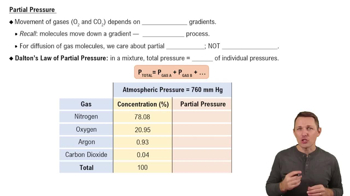
Partial Pressure

Plasma Proteins

Plasma proteins are proteins present in blood plasma that perform various functions, including maintaining osmotic pressure, transporting substances, and playing roles in immune response. The main types include albumin, globulins, and fibrinogen, each contributing differently to physiological processes.
Recommended video:
02:50
Proteins

Albumin

Albumin is the most abundant plasma protein, accounting for about 60% of total plasma protein content. It is primarily responsible for maintaining osmotic pressure in the blood, helping to regulate fluid distribution between blood vessels and tissues, and transporting various substances, including hormones and drugs.
Recommended video:
2:58
Overview of Filtration Pressures