Ch. 19 Blood
Amerman- Human Anatomy & Physiology 3e
Amerman3rd EditionHuman Anatomy & PhysiologyISBN: 9780138247201, 9780138247928, 9780138201814Not the one you use?Change textbook
Chapter 19, Problem L2.4

Cirrhosis of the liver often reduces production of many types of plasma proteins, including albumin and clotting factors. Predict the effects on the body of decreased numbers of these proteins in the plasma. Would this also affect the number of γ-globulins in the plasma? Why or why not?

Verified step by step guidance
1
Understand the role of albumin in the plasma: Albumin is a major plasma protein responsible for maintaining oncotic pressure (the pressure that helps retain water in the blood vessels). A decrease in albumin production due to cirrhosis can lead to reduced oncotic pressure, causing fluid to leak into the interstitial spaces and resulting in edema (swelling).
Examine the role of clotting factors: Clotting factors are essential for blood coagulation. A reduction in their production can impair the blood's ability to clot, leading to an increased risk of bleeding and difficulty stopping hemorrhages.
Analyze the role of γ-globulins: γ-globulins (immunoglobulins) are primarily produced by plasma cells, not the liver. Therefore, cirrhosis of the liver would not directly affect the production of γ-globulins. However, the overall immune response might be compromised due to other systemic effects of liver dysfunction.
Predict the systemic effects of reduced plasma proteins: Reduced plasma proteins can lead to complications such as ascites (fluid accumulation in the abdominal cavity), increased susceptibility to infections, and impaired wound healing due to poor clotting ability.
Explain why γ-globulins are unaffected: Since γ-globulins are produced by plasma cells in the immune system rather than the liver, their levels in the plasma are not directly impacted by cirrhosis. However, liver dysfunction may indirectly affect immune function, which could influence γ-globulin activity or effectiveness.

Verified video answer for a similar problem:

This video solution was recommended by our tutors as helpful for the problem above.
Was this helpful?

Key Concepts

Here are the essential concepts you must grasp in order to answer the question correctly.

Cirrhosis and Liver Function

Cirrhosis is a progressive liver disease characterized by the replacement of healthy liver tissue with scar tissue, impairing liver function. The liver is crucial for synthesizing various plasma proteins, including albumin and clotting factors. As cirrhosis advances, the liver's ability to produce these proteins diminishes, leading to significant physiological consequences.
Recommended video:
Guided course
2:59
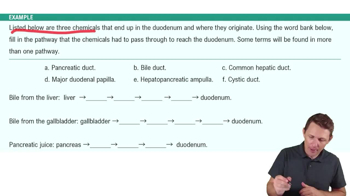
Duct System of the Liver, Gallbladder, and Pancreas Example 1

Role of Albumin

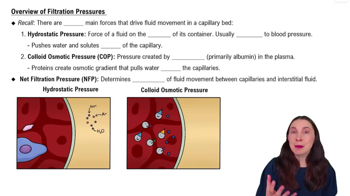
Albumin is the most abundant plasma protein, playing a vital role in maintaining oncotic pressure, which helps keep fluid within the blood vessels. A decrease in albumin levels due to liver dysfunction can lead to edema and ascites, as fluid leaks into surrounding tissues. Additionally, low albumin levels can affect the transport of various substances in the blood, including hormones and drugs.
Recommended video:
2:58
Overview of Filtration Pressures

Clotting Factors and Hemostasis

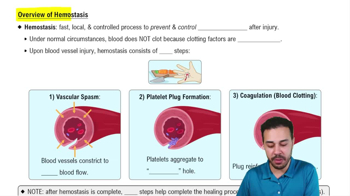
Clotting factors are proteins essential for blood coagulation, preventing excessive bleeding. The liver produces most of these factors, and a reduction in their levels due to cirrhosis can lead to coagulopathy, increasing the risk of bleeding and bruising. While γ-globulins are primarily produced by plasma cells and not the liver, the overall immune response may be affected by liver dysfunction, potentially altering their levels indirectly.
Recommended video:
4:28
Overview of Hemostasis