
Ch. 17 The Cardiovascular System I: The Heart
Amerman- Human Anatomy & Physiology 3e
Amerman3rd EditionHuman Anatomy & PhysiologyISBN: 9780138247201, 9780138247928, 9780138201814Not the one you use?Change textbook
Chapter 17, Problem 3

Which of the following statements is true?
a. The tricuspid valve is located between the right atrium and the right ventricle.
b. The mitral valve is located between the pulmonary veins and the left atrium.
c. The pulmonary valve is located between the pulmonary artery and the pulmonary veins.
d. The aortic valve is located between the right ventricle and the aorta.

Verified step by step guidance
1
Step 1: Understand the anatomy of the heart and the location of its valves. The heart has four main valves: the tricuspid valve, the mitral valve, the pulmonary valve, and the aortic valve. Each valve is located between specific chambers or vessels to regulate blood flow.
Step 2: Analyze option (a): The tricuspid valve is located between the right atrium and the right ventricle. Recall that the tricuspid valve prevents backflow of blood from the right ventricle to the right atrium during ventricular contraction. This statement is anatomically correct.
Step 3: Analyze option (b): The mitral valve is located between the pulmonary veins and the left atrium. This statement is incorrect because the mitral valve is located between the left atrium and the left ventricle, not between the pulmonary veins and the left atrium.
Step 4: Analyze option (c): The pulmonary valve is located between the pulmonary artery and the pulmonary veins. This statement is incorrect because the pulmonary valve is located between the right ventricle and the pulmonary artery, not between the pulmonary artery and pulmonary veins.
Step 5: Analyze option (d): The aortic valve is located between the right ventricle and the aorta. This statement is incorrect because the aortic valve is located between the left ventricle and the aorta, not the right ventricle.

Verified video answer for a similar problem:

This video solution was recommended by our tutors as helpful for the problem above.
Was this helpful?

Key Concepts

Here are the essential concepts you must grasp in order to answer the question correctly.

Heart Valves

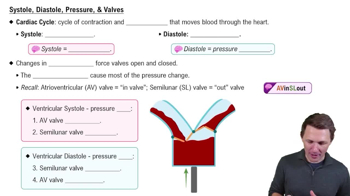
Heart valves are structures that regulate blood flow through the heart's chambers and into the major arteries. There are four main valves: the tricuspid valve, mitral valve, pulmonary valve, and aortic valve. Each valve opens and closes in response to pressure changes, ensuring unidirectional blood flow and preventing backflow.
Recommended video:
Guided course
7:13
Systole, Diastole, Pressure, & Valves

Anatomy of the Heart

The heart consists of four chambers: the right atrium, right ventricle, left atrium, and left ventricle. Blood flows through these chambers in a specific sequence, with valves positioned between them to control the flow. Understanding the anatomical relationships between these chambers and valves is crucial for identifying the correct statements about their locations.
Recommended video:
Guided course
6:13
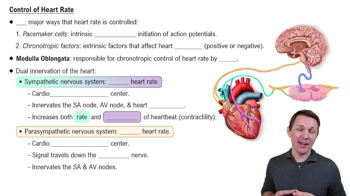
Control of Heart Rate

Circulatory System Function

The circulatory system is responsible for transporting blood, nutrients, and oxygen throughout the body. Each valve plays a critical role in maintaining efficient circulation by ensuring that blood moves in the correct direction. Misunderstanding the function of these valves can lead to incorrect conclusions about their anatomical positions.
Recommended video:
06:04
Functional Groups