
Textbook Question
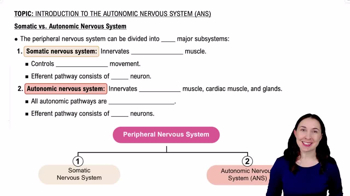
Common findings in heart failure are fluid retention by the kidneys and stimulation of the heart by the sympathetic nervous system. How would both of these findings help the body to compensate for the failing heart?
2
views

 Verified step by step guidance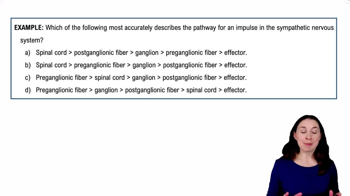
 1:21
1:21
 1:50
1:50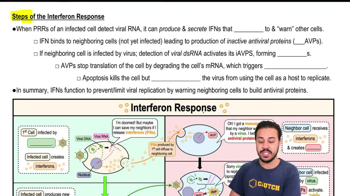 9:59
9:59Common findings in heart failure are fluid retention by the kidneys and stimulation of the heart by the sympathetic nervous system. How would both of these findings help the body to compensate for the failing heart?
You are running a race to the top of a mountain. Explain all the changes your sympathetic nervous system will initiate to maintain homeostasis as you run the race.
Regulation of heart rate, blood pressure, and digestive functions is carried out by the:
a. Somatic motor division of the peripheral nervous system.
b. Central nervous system.
c. Visceral sensory division of the peripheral nervous system.
d. Autonomic nervous system.
The drug neostigmine blocks the activity of the enzyme acetylcholinesterase in the synaptic cleft. Predict the effects of this drug.
Using 20 or fewer words, define each of the following terms in your own words.
b. Parasympathetic nervous system
The sympathetic nervous system is also known as the ________ division because the cell bodies of its preganglionic neurons are located in the ________ .