
Ch. 14 The Autonomic Nervous System and Homeostasis
Amerman- Human Anatomy & Physiology 3e
Amerman3rd EditionHuman Anatomy & PhysiologyISBN: 9780138247201, 9780138247928, 9780138201814Not the one you use?Change textbook
Chapter 14, Problem 2

Regulation of heart rate, blood pressure, and digestive functions is carried out by the:
a. Somatic motor division of the peripheral nervous system.
b. Central nervous system.
c. Visceral sensory division of the peripheral nervous system.
d. Autonomic nervous system.

Verified step by step guidance
1
Step 1: Understand the question. The problem is asking which system regulates heart rate, blood pressure, and digestive functions. These are involuntary processes, so we need to identify the system responsible for controlling involuntary physiological activities.
Step 2: Review the options provided. Option a refers to the somatic motor division, which controls voluntary movements of skeletal muscles. Option b refers to the central nervous system, which includes the brain and spinal cord but does not directly regulate these specific functions. Option c refers to the visceral sensory division, which transmits sensory information from internal organs but does not regulate their activity. Option d refers to the autonomic nervous system, which is responsible for involuntary control of internal organs.
Step 3: Recall the role of the autonomic nervous system (ANS). The ANS is divided into the sympathetic and parasympathetic divisions. The sympathetic division prepares the body for 'fight or flight' responses, increasing heart rate and blood pressure. The parasympathetic division promotes 'rest and digest' activities, aiding in digestion and reducing heart rate.
Step 4: Eliminate incorrect options. Since the somatic motor division controls voluntary actions, it is not involved in regulating involuntary processes like heart rate or digestion. The central nervous system processes information but does not directly regulate these functions. The visceral sensory division only transmits sensory input and does not control organ activity.
Step 5: Conclude that the autonomic nervous system (ANS) is the correct answer, as it is specifically responsible for regulating involuntary processes such as heart rate, blood pressure, and digestive functions.

Verified video answer for a similar problem:

This video solution was recommended by our tutors as helpful for the problem above.
Was this helpful?

Key Concepts

Here are the essential concepts you must grasp in order to answer the question correctly.

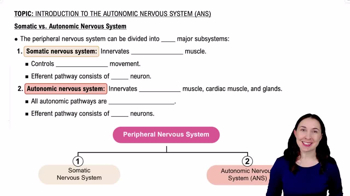
Autonomic Nervous System

The autonomic nervous system (ANS) is a component of the peripheral nervous system that regulates involuntary physiological functions, including heart rate, blood pressure, and digestion. It operates automatically without conscious control and is divided into two main branches: the sympathetic and parasympathetic nervous systems, which work together to maintain homeostasis.
Recommended video:
1:50
Somatic vs. Autonomic Nervous System

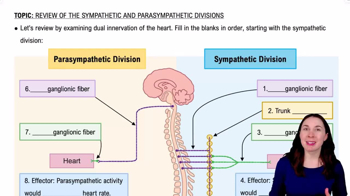
Sympathetic and Parasympathetic Systems

The sympathetic and parasympathetic systems are the two divisions of the autonomic nervous system. The sympathetic system prepares the body for 'fight or flight' responses, increasing heart rate and blood pressure, while the parasympathetic system promotes 'rest and digest' activities, slowing the heart rate and enhancing digestive processes. Their balance is crucial for maintaining overall bodily function.
Recommended video:
4:39
Review of the Sympathetic and Parasympathetic Divisions

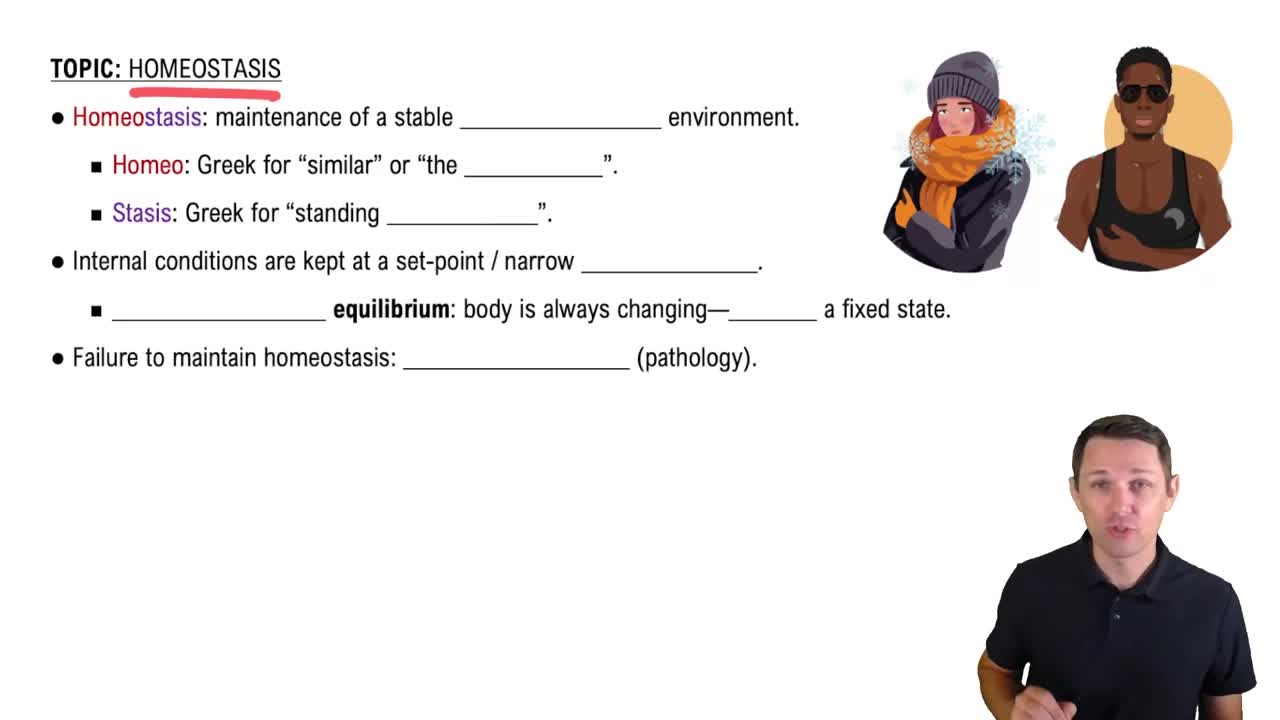
Homeostasis

Homeostasis refers to the body's ability to maintain stable internal conditions despite external changes. The autonomic nervous system plays a vital role in homeostasis by regulating essential functions such as heart rate, blood pressure, and digestion, ensuring that the body can respond appropriately to varying demands and stressors.
Recommended video:
Guided course
01:59
Introduction to Homeostasis