
Ch. 10 Muscle Tissue and Physiology
Amerman- Human Anatomy & Physiology 3e
Amerman3rd EditionHuman Anatomy & PhysiologyISBN: 9780138247201, 9780138247928, 9780138201814Not the one you use?Change textbook
Chapter 10, Problem L3.6

Paola is a 3-year-old girl with a disease that reduces the ability of her mitochondria to generate ATP. Explain the specific effects of this disease on the ability of Paola's muscles to function properly. What other tissues and organs are likely to be especially affected by her disease, and why?

Verified step by step guidance
1
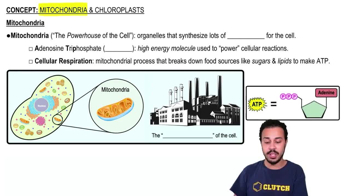
Understand the role of mitochondria in the body: Mitochondria are the 'powerhouses' of the cell, responsible for producing ATP (adenosine triphosphate) through cellular respiration. ATP is the primary energy currency of the cell, essential for powering various cellular processes, including muscle contraction.
Explain how reduced ATP production affects muscle function: Muscles require ATP for contraction and relaxation. ATP is used to detach myosin heads from actin filaments during the cross-bridge cycle and to pump calcium ions back into the sarcoplasmic reticulum after a contraction. Without sufficient ATP, Paola's muscles may experience weakness, fatigue, or even cramping due to impaired contraction and relaxation cycles.
Identify other tissues and organs that rely heavily on ATP: Organs with high energy demands, such as the brain, heart, and kidneys, are likely to be especially affected. For example, the brain requires ATP for maintaining ion gradients essential for nerve impulse transmission, while the heart relies on ATP for continuous contraction to pump blood.
Discuss the potential effects on these tissues: In the brain, reduced ATP production could lead to cognitive impairments, developmental delays, or seizures. In the heart, it could result in weakened cardiac output or arrhythmias. In the kidneys, it may impair filtration and reabsorption processes, leading to metabolic imbalances.
Summarize the systemic impact: Paola's condition could lead to widespread symptoms, including muscle weakness, fatigue, developmental delays, and organ dysfunction. The severity of these effects depends on the extent of mitochondrial dysfunction and the energy demands of the affected tissues.

Verified video answer for a similar problem:

This video solution was recommended by our tutors as helpful for the problem above.
Was this helpful?

Key Concepts

Here are the essential concepts you must grasp in order to answer the question correctly.

Mitochondrial Function

Mitochondria are known as the powerhouses of the cell, responsible for producing adenosine triphosphate (ATP) through oxidative phosphorylation. ATP serves as the primary energy currency in cells, fueling various biological processes. A reduction in mitochondrial function leads to decreased ATP production, which can severely impact energy-dependent activities in tissues, particularly those with high energy demands like muscles.
Recommended video:
04:18
Mitochondria

Muscle Physiology

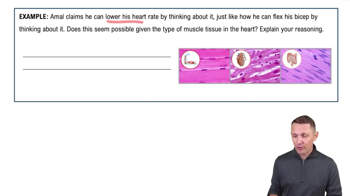
Muscles require a significant amount of energy to contract and perform movements. The inability to generate sufficient ATP due to mitochondrial dysfunction can lead to muscle weakness, fatigue, and impaired physical performance. In Paola's case, her muscles may struggle to sustain activity, leading to symptoms such as reduced endurance and difficulty in performing everyday tasks.
Recommended video:
Guided course
2:00
Introduction to Muscles and Muscle Tissue Example 1

Systemic Effects of Energy Deficiency

Energy deficiency from impaired mitochondrial function can affect not only muscles but also other high-energy demanding organs such as the brain, heart, and liver. These organs rely on ATP for critical functions, including cognitive processes, cardiac output, and metabolic regulation. Consequently, Paola may experience broader systemic issues, including neurological deficits, cardiovascular problems, and metabolic disturbances.
Recommended video:
1:32
Effects of the Complement System
Related Practice
Textbook Question

Mr. Nasheed has cerebral palsy and suffers severe skeletal muscle spasms as a result of his condition. He is prescribed the drug dantrolene, which prevents the release of Ca2+ from the SR. Explain how this will treat his muscle spasms.

2
views
Textbook Question

Match the following terms with the correct definition.      


____Z-disc     

____Sarcomere     

____A band     

____H zone     

____I band     

____M line


a. The dark band containing the entire length of the thick filament

b. The band of proteins in the middle of the H zone

c. The boundary between sarcomeres

d. The functional unit of contraction

e. The middle region of the A band containing only thick filaments

f. The light band containing only thin filaments

1
views
Textbook Question

Some athletes will consume only protein for several days before a competition, which reduces the amount of glycogen in both the muscle fibers and the liver. What effect would this have on their ability to perform activities that require short, powerful bursts of activity? How would it affect their ability to perform endurance activities?

1
views
Textbook Question

What is the basic mechanism of contraction at the level of myofilaments?

2
views
Textbook Question

Jesse is a 2-year-old boy who presents with difficulty in walking and poor control of movements. When the doctor examines Jesse, she notices that when his muscles contract, they are very slow to relax and remain contracted well after the movement has been performed. She sends a sample of his tissue for genetic analysis, and the lab reports a genetic defect that causes the pumps in the SR to operate much more slowly than normal. How does a defect in DNA lead to a malfunctioning protein? How does this finding explain Jesse's symptoms?

1
views
Textbook Question

Ms. Sanchez was in a motorcycle accident in which she lost the use of her right upper limb muscles due to significant nerve damage. However, when an electrode is inserted into her muscles, they are able to contract. Explain specifically why nerve damage caused her to lose the use of her muscles. Why can they still respond to stimulation from an electrode?

1
views