Ch. 6 Bones and Bone Tissue
Amerman - Human Anatomy & Physiology 2nd Edition
Amerman2nd EditionHuman Anatomy & PhysiologyISBN: 9780136873822Not the one you use?Change textbook
Chapter 6, Problem 13c

Explain the effect that the following hormones have on the growth of bone tissue:
c. Estrogen

Verified step by step guidance
1
Understand that estrogen is a sex hormone that plays a significant role in bone growth and maintenance, particularly during puberty and throughout life.
Recognize that during puberty, estrogen promotes the growth of long bones by stimulating the activity of osteoblasts, which are the cells responsible for bone formation.
Learn that estrogen also contributes to the closure of epiphyseal growth plates (the areas of growing tissue near the ends of long bones), which marks the end of longitudinal bone growth after puberty.
Understand that estrogen helps maintain bone density in adults by inhibiting osteoclast activity, which are the cells responsible for bone resorption (breaking down bone tissue). This balance is crucial for preventing bone loss.
Note that a decline in estrogen levels, such as during menopause, can lead to increased bone resorption and a higher risk of osteoporosis, a condition characterized by weakened bones.

Verified video answer for a similar problem:

This video solution was recommended by our tutors as helpful for the problem above.
Was this helpful?

Key Concepts

Here are the essential concepts you must grasp in order to answer the question correctly.

Estrogen and Bone Growth

Estrogen is a key hormone in regulating bone growth and maintenance. It promotes the activity of osteoblasts, the cells responsible for bone formation, while inhibiting osteoclasts, which break down bone tissue. This balance is crucial for maintaining bone density and strength, particularly during puberty and in postmenopausal women when estrogen levels decline.
Recommended video:
Guided course
6:19
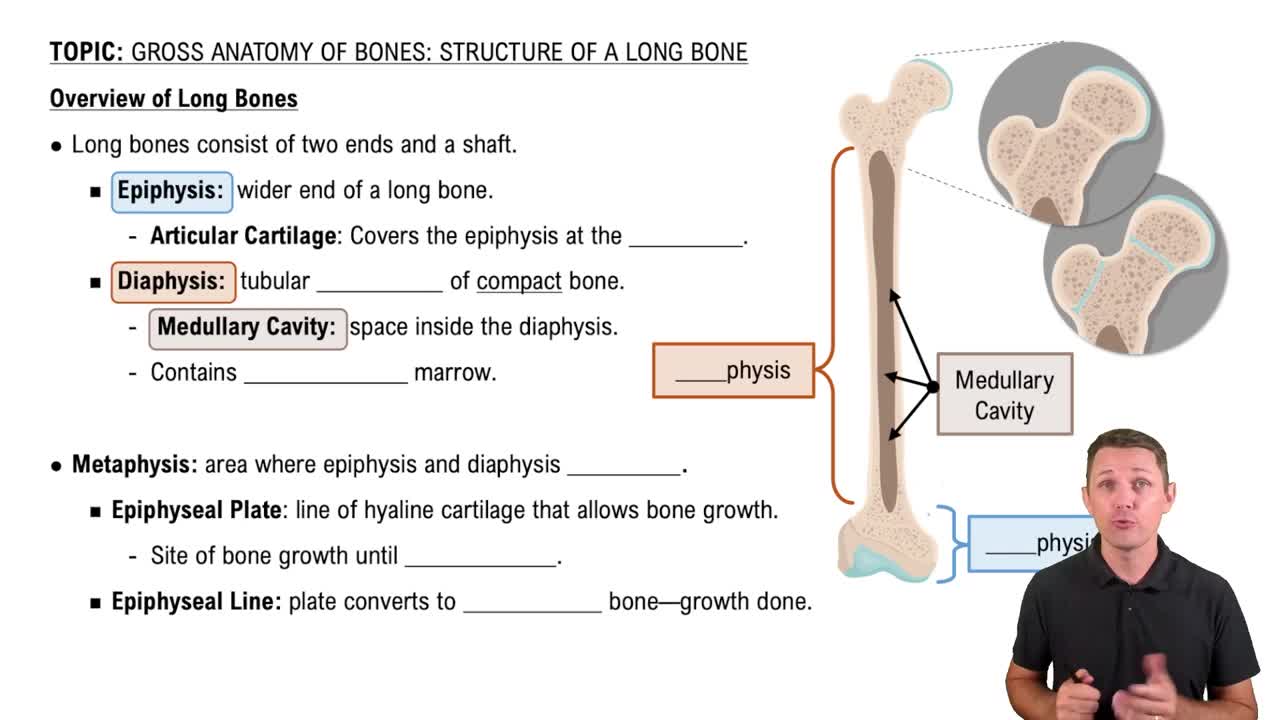
Overview of Long Bones

Bone Remodeling

Bone remodeling is a continuous process where old bone tissue is replaced by new bone tissue. This process involves the coordinated activity of osteoblasts and osteoclasts, influenced by various hormones, including estrogen. Proper remodeling is essential for adapting bone structure to mechanical stress and repairing micro-damage, ensuring overall skeletal health.
Recommended video:
Guided course
4:19
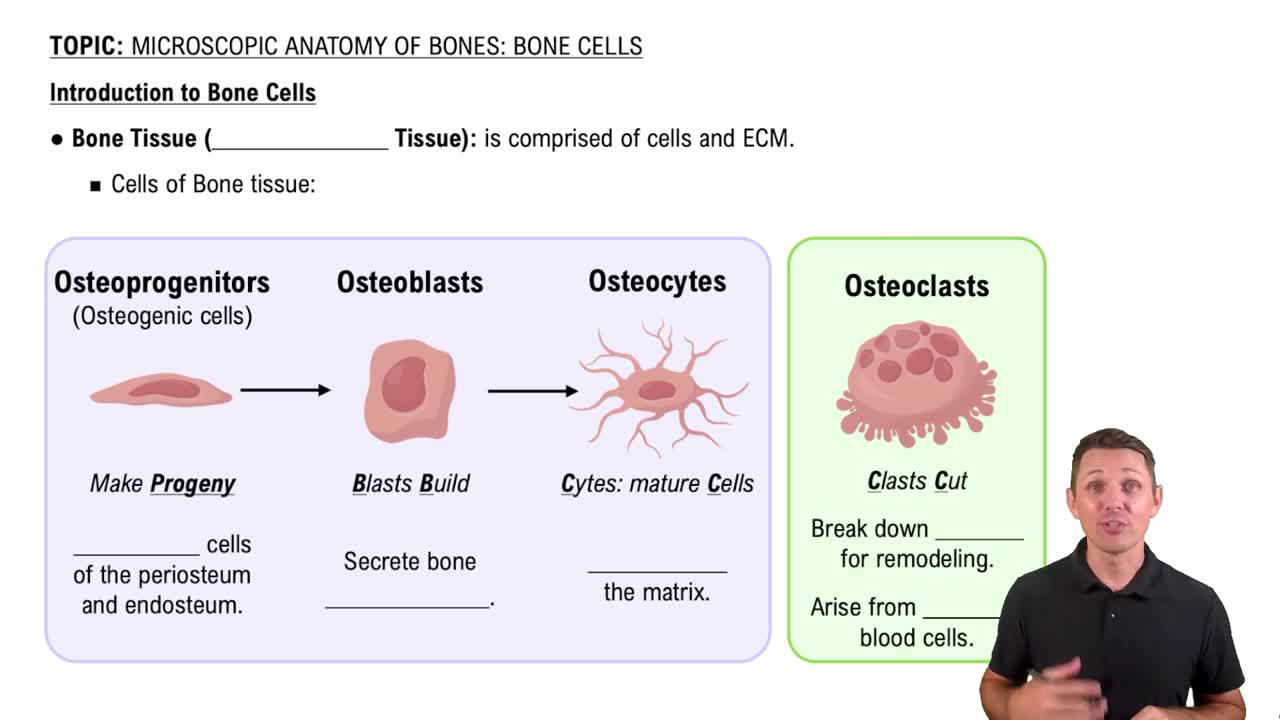
Introduction to Bone Cells

Hormonal Regulation of Growth

Hormonal regulation of growth involves various hormones that influence the growth and development of tissues, including bones. Besides estrogen, hormones like growth hormone and parathyroid hormone also play significant roles. Understanding how these hormones interact helps explain the complex mechanisms behind growth and the impact of hormonal changes on skeletal health.
Recommended video:
04:02
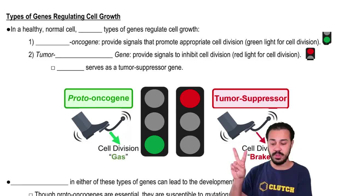
Types of Genes Regulating Cell Growth