
Ch. 25 Fluid, Electrolyte, and Acid-Base Homeostasis
Amerman - Human Anatomy & Physiology 2nd Edition
Amerman2nd EditionHuman Anatomy & PhysiologyISBN: 9780136873822Not the one you use?Change textbook
Chapter 25, Problem L3.5

What happens to the concentration of sodium ions in the ECF if you consume a large amount of salt without consuming any water? How will this affect the osmotic pressure of the ECF? Why could this lead to an elevation in blood pressure?

Verified step by step guidance
1
Step 1: Understand that consuming a large amount of salt (sodium chloride) without water increases the sodium ion (Na⁺) concentration in the extracellular fluid (ECF). Sodium ions are a major component of the ECF and play a key role in maintaining osmotic balance.
Step 2: Recognize that the increase in sodium ion concentration in the ECF will raise the osmotic pressure of the ECF. Osmotic pressure is determined by the concentration of solutes, such as sodium ions, in a solution. A higher sodium concentration means more solutes, which increases the osmotic pressure.
Step 3: Explain that the increased osmotic pressure in the ECF will draw water out of cells (intracellular fluid, or ICF) into the ECF by osmosis. This movement of water occurs to balance the solute concentration between the ECF and ICF.
Step 4: Understand that the increase in ECF volume due to water movement from the ICF can lead to an increase in blood volume. Blood volume is directly related to blood pressure, as more fluid in the vascular system exerts greater pressure on blood vessel walls.
Step 5: Conclude that the elevated blood volume caused by the osmotic shift can result in an increase in blood pressure. This is because the heart must pump against the higher volume of fluid, and the vascular system experiences greater resistance.

Verified video answer for a similar problem:

This video solution was recommended by our tutors as helpful for the problem above.
Was this helpful?

Key Concepts

Here are the essential concepts you must grasp in order to answer the question correctly.

Sodium Ion Concentration

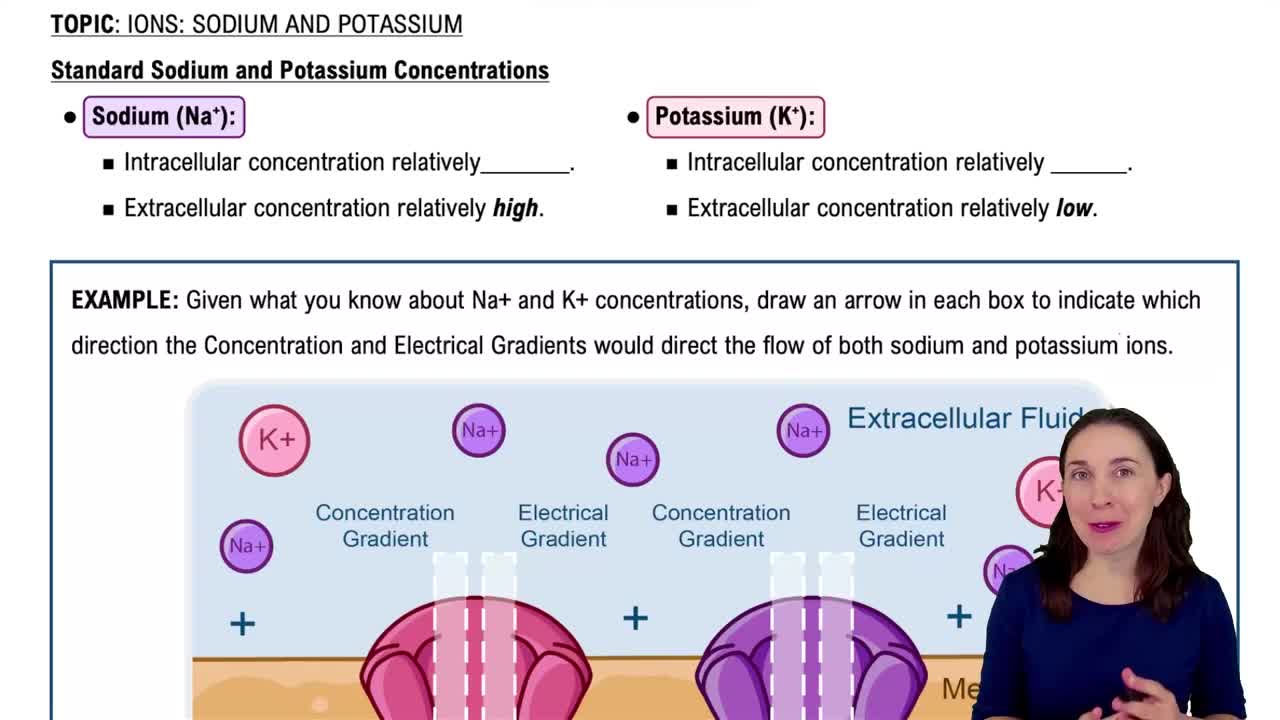
Sodium ions (Na+) are crucial for maintaining fluid balance and osmotic pressure in the extracellular fluid (ECF). When a large amount of salt (sodium chloride) is consumed without water, the concentration of sodium ions in the ECF increases. This elevated concentration can disrupt homeostasis, leading to potential physiological effects.
Recommended video:
03:35
Standard Sodium and Potassium Concentrations

Osmotic Pressure

Osmotic pressure is the pressure required to prevent the flow of water across a semipermeable membrane due to solute concentration differences. An increase in sodium ion concentration in the ECF raises osmotic pressure, causing water to move out of cells into the ECF to balance the solute levels. This shift can lead to cellular dehydration and altered fluid distribution in the body.
Recommended video:
Guided course
6:12
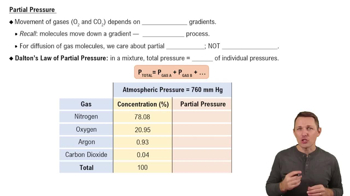
Partial Pressure

Blood Pressure Regulation

Blood pressure is influenced by the volume of blood and the resistance of blood vessels. Increased sodium concentration in the ECF can lead to water retention, increasing blood volume. This elevated blood volume can raise blood pressure, potentially leading to hypertension, which poses risks for cardiovascular health.
Recommended video:
Guided course
6:12
Partial Pressure
Related Practice
Textbook Question

Elise Anderson is a 6-year-old girl who presents to the emergency department with a history of vomiting for the past 3 days. The nurse notices that her respiratory rate is abnormally low. What is the likely reason for this change in ventilation? Predict what Elise's arterial blood gas values would show.

1
views
Textbook Question

What do you think has happened to Elise's ECF volume and osmolarity over the past 3 days? Will this lead to a change in the volume of water in the cytosol of her cells? Explain.

1
views
Textbook Question

A laboratory printout of arterial blood gases indicates that a patient has an increased Pco₂ , decreased pH, and normal bicarbonate ion concentration. Is this patient in acidosis or alkalosis? Is the pH disturbance respiratory or metabolic in nature? Explain your reasoning. How long do you think the patient has had this pH disturbance? (Hint: Look at the bicarbonate ion concentration. What system controls the concentration of bicarbonate ions, and how quickly does it compensate for pH disturbances?)

1
views
Textbook Question

Ms. Johanssen is a patient in the hospital. The nurse examines her laboratory reports and notices that she has developed hyperkalemia and acidosis over the past several days. On closer examination of her medical chart, the nurse also sees that her physician recently doubled her dose of spironolactone, an aldosterone-blocking diuretic. How does this explain her laboratory findings?

1
views
Textbook Question

Explain how the amount of water in the body affects the concentration of ions and solutes in the ECF.

8
views
Textbook Question

What happens to the pH of a solution when hydrogen ions are added?

a. The pH increases.

b. The pH decreases.

c. The pH does not change.

d. The pH does not measure hydrogen ion concentration.

6
views