Ch. 22 The Digestive System
Amerman - Human Anatomy & Physiology 2nd Edition
Amerman2nd EditionHuman Anatomy & PhysiologyISBN: 9780136873822Not the one you use?Change textbook
Chapter 22, Problem 14

Which of the following is/are absorbed in the small intestine by the Na+/glucose cotransporter?
a. Glucose
b. Galactose
c. Fructose
d. Both a and b are correct
e. All of the above are correct

Verified step by step guidance
1
Understand the role of the Na+/glucose cotransporter (SGLT1): This transporter is located in the small intestine and is responsible for the active transport of glucose and galactose into the intestinal epithelial cells. It uses the sodium (Na+) gradient to drive the uptake of these sugars.
Recall the specificity of the Na+/glucose cotransporter: The SGLT1 transporter specifically transports glucose and galactose, but not fructose. Fructose is absorbed via a different transporter called GLUT5, which facilitates its passive transport.
Analyze the options provided: Option a refers to glucose, which is absorbed by the Na+/glucose cotransporter. Option b refers to galactose, which is also absorbed by the same transporter. Option c refers to fructose, which is not absorbed by this transporter. Option d suggests both glucose and galactose are correct, and option e suggests all three are correct.
Eliminate incorrect options: Since fructose is not absorbed by the Na+/glucose cotransporter, options c and e can be ruled out. This leaves options a, b, and d for further consideration.
Select the correct answer: Based on the specificity of the Na+/glucose cotransporter, both glucose and galactose (options a and b) are absorbed by this mechanism. Therefore, the correct answer is option d, 'Both a and b are correct.'

Verified video answer for a similar problem:

This video solution was recommended by our tutors as helpful for the problem above.
Was this helpful?

Key Concepts

Here are the essential concepts you must grasp in order to answer the question correctly.

Na+/glucose cotransporter

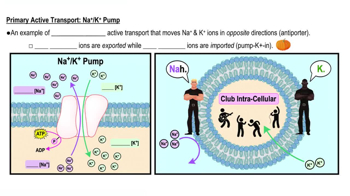
The Na+/glucose cotransporter is a membrane protein that facilitates the active transport of glucose and galactose into intestinal cells. It utilizes the sodium gradient established by the Na+/K+ ATPase pump, allowing glucose and galactose to be absorbed against their concentration gradient. This process is crucial for efficient nutrient uptake in the small intestine.
Recommended video:
06:57
Primary Active Transport: Na+/K+ Pump

Absorption in the small intestine

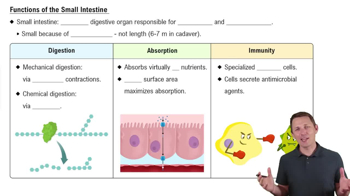
The small intestine is the primary site for nutrient absorption in the digestive system. It has specialized structures, such as villi and microvilli, that increase surface area and enhance the absorption of carbohydrates, proteins, and fats. Understanding the mechanisms of absorption, including transporters like the Na+/glucose cotransporter, is essential for comprehending how nutrients enter the bloodstream.
Recommended video:
Guided course
3:44
Functions of the Small Intestine

Types of carbohydrates

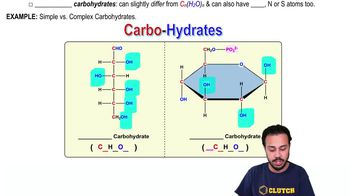
Carbohydrates can be classified into simple sugars (monosaccharides) and complex carbohydrates (polysaccharides). Monosaccharides like glucose, galactose, and fructose differ in their structure and absorption mechanisms. While glucose and galactose are absorbed via the Na+/glucose cotransporter, fructose is absorbed through a different transporter, highlighting the importance of understanding these distinctions in nutrient absorption.
Recommended video:
04:53
Carbohydrates
Related Practice
Textbook Question

Which of the following best describes the role of bile salts in lipid digestion?

a. Bile salts begin chemical digestion of lipids.

b. Bile salts bind to lipids and physically break them apart into monoglycerides and free fatty acids.

c. Bile salts bind to lipids and physically break them apart into smaller pieces.

d. Bile salts interact with pancreatic lipase and catalyze lipid breakdown.

4
views
Textbook Question

Lipids associate with bile salts in the small intestine to form_____ . In the enterocyte, lipids are packaged with other lipids into______.

2
views
Textbook Question

Mark the following statements as true or false. If a statement is false, correct it to make a true statement.

b. The esophageal and pharyngeal phases of swallowing are mediated by the swallowing reflex of the brainstem and the enteric nervous system.

Textbook Question

Which of the following best describes the microscopic structure of the liver?

a. Hexagonal plates of hepatocytes surrounding a central vein with portal triads at each corner

b. Octagonal plates of hepatocytes surrounding a central artery with portal triads at each corner

c. Irregular groups of hepatocytes surrounding a central vein with bile ducts at each corner

d. Hexagonal plates of hepatocytes surrounding a portal vein with bile ducts at each corner

4
views
Textbook Question

Which of the following statements about accessory organ secretions is not true?

a. Hepatocytes produce bile, which drains out of the liver via the common hepatic ducts.

b. Saliva contains secretory IgA and lysozyme, which play an important role in preventing the growth of pathogenic bacteria in the oral cavity.

c. Pancreatic juice contains digestive enzymes and bicarbonate ions to neutralize the acidic chyme.

d. The gallbladder produces bile, which drains out of the gallbladder via the cystic duct.

2
views
Textbook Question

The primary hormone that triggers the secretion of pancreatic juice and bile is:

a. Gastric inhibitory peptide

b. Cholecystokinin

c. Motilin

d. Somatostatin

7
views