Ch. 19 Blood
Amerman - Human Anatomy & Physiology 2nd Edition
Amerman2nd EditionHuman Anatomy & PhysiologyISBN: 9780136873822Not the one you use?Change textbook
Chapter 19, Problem 1

Which of the following is not a formed element of blood?
a. Erythrocyte
b. Leukocyte
c. Mast cell
d. Platelet

Verified step by step guidance
1
Step 1: Understand the term 'formed elements of blood.' Formed elements refer to the cellular components of blood, which include erythrocytes (red blood cells), leukocytes (white blood cells), and platelets (cell fragments). These are suspended in plasma.
Step 2: Review the function and classification of erythrocytes. Erythrocytes are responsible for oxygen transport and are a major formed element of blood.
Step 3: Examine leukocytes. Leukocytes are white blood cells involved in immune defense and are also considered formed elements of blood.
Step 4: Analyze platelets. Platelets are small cell fragments that play a critical role in blood clotting and are classified as formed elements of blood.
Step 5: Consider mast cells. Mast cells are part of the immune system but are not found as formed elements in circulating blood. They are primarily located in tissues and play a role in allergic responses, making them the correct answer to the question.

Verified video answer for a similar problem:

This video solution was recommended by our tutors as helpful for the problem above.
Was this helpful?

Key Concepts

Here are the essential concepts you must grasp in order to answer the question correctly.

Formed Elements of Blood

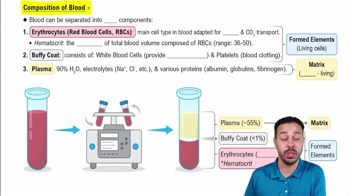
Formed elements of blood refer to the cellular components that are suspended in the plasma. These include erythrocytes (red blood cells), leukocytes (white blood cells), and platelets. Each of these elements plays a crucial role in bodily functions, such as oxygen transport, immune response, and blood clotting.
Recommended video:
7:49
Composition of Blood

Erythrocytes

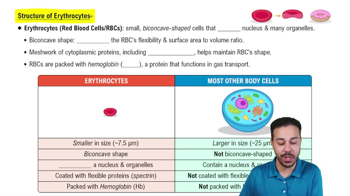
Erythrocytes, or red blood cells, are the most abundant formed elements in blood. Their primary function is to transport oxygen from the lungs to the body's tissues and return carbon dioxide from the tissues back to the lungs. They contain hemoglobin, a protein that binds oxygen, making them essential for respiration.
Recommended video:
6:31
Structure of Erythrocytes

Leukocytes

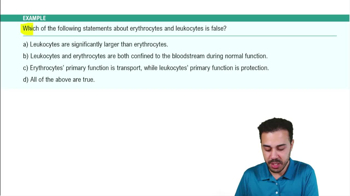
Leukocytes, or white blood cells, are a key component of the immune system. They help the body fight infections and other diseases by identifying and destroying pathogens. There are several types of leukocytes, each with specific functions, including neutrophils, lymphocytes, and monocytes.
Recommended video:
2:33
Leukocytes Example 1