Ch. 18 The Cardiovascular System II: The Blood Vessels
Amerman - Human Anatomy & Physiology 2nd Edition
Amerman2nd EditionHuman Anatomy & PhysiologyISBN: 9780136873822Not the one you use?Change textbook
Chapter 18, Problem L3.4

Explain why the skin and lips of fair-skinned individuals may 'turn blue' in very cold weather.

Verified step by step guidance
1
Understand the concept of cyanosis: Cyanosis is a condition where the skin or mucous membranes turn blue due to insufficient oxygen in the blood. This can occur when blood flow is reduced or oxygen delivery is impaired.
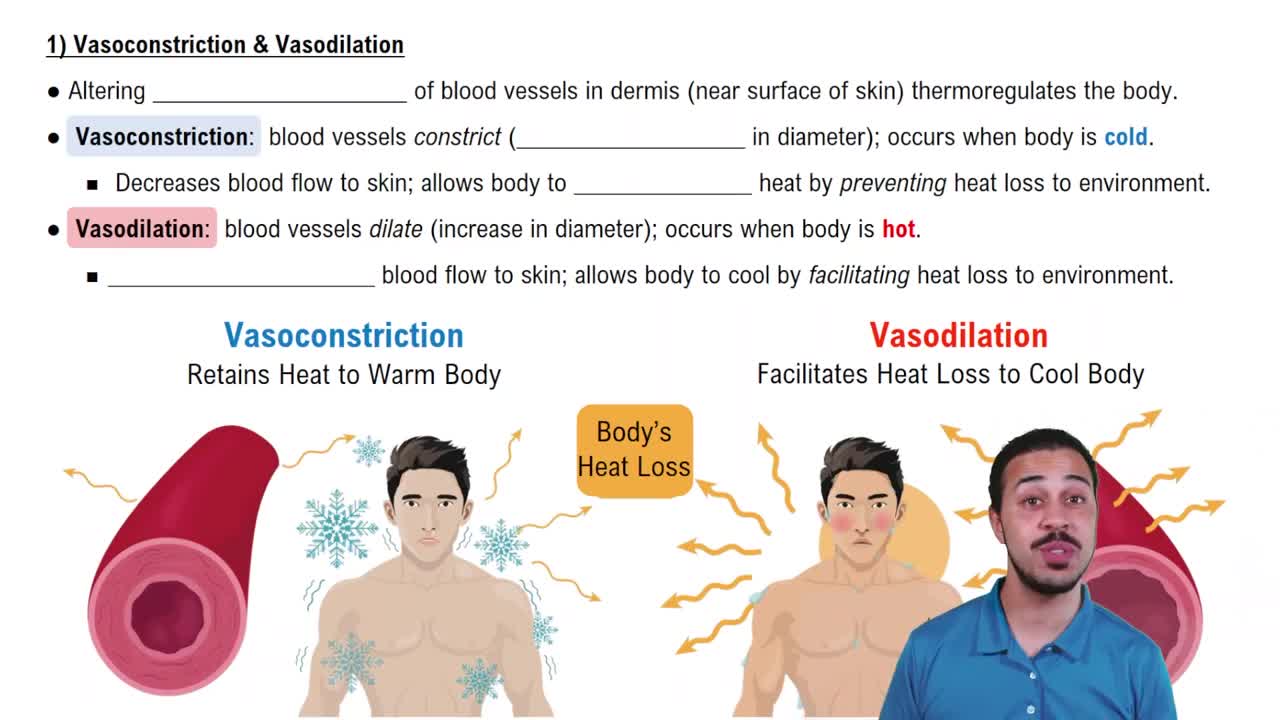
Recognize the role of temperature in blood vessel constriction: In cold weather, the body conserves heat by constricting blood vessels in the skin (a process called vasoconstriction). This reduces blood flow to the skin and extremities to maintain core body temperature.
Explain the impact of reduced blood flow on oxygen delivery: When blood flow to the skin is reduced, less oxygenated blood reaches the surface tissues. This can cause the skin to appear blue, especially in areas like the lips, which have thinner skin and are more vascularized.
Discuss the role of hemoglobin and light absorption: Hemoglobin in the blood reflects light differently depending on its oxygenation state. Deoxygenated hemoglobin absorbs more red light and reflects blue light, contributing to the bluish appearance of the skin and lips.
Connect the phenomenon to fair-skinned individuals: Fair-skinned individuals may show this bluish tint more prominently because their skin has less melanin, which can mask the underlying color changes caused by reduced oxygenation.

Verified video answer for a similar problem:

This video solution was recommended by our tutors as helpful for the problem above.
Was this helpful?

Key Concepts

Here are the essential concepts you must grasp in order to answer the question correctly.

Vasoconstriction

Vasoconstriction is the narrowing of blood vessels, which occurs in response to cold temperatures. This physiological response reduces blood flow to the skin and extremities to conserve body heat. In fair-skinned individuals, this can lead to a noticeable decrease in blood circulation, causing the skin and lips to appear bluish due to the reduced oxygenated blood reaching the surface.
Recommended video:
05:07
Vasoconstriction & Vasodilation

Cyanosis

Cyanosis is a condition characterized by a bluish discoloration of the skin and mucous membranes, resulting from insufficient oxygen in the blood. When blood flow is restricted due to vasoconstriction, the oxygen levels in the blood decrease, leading to cyanosis. This is particularly visible in fair-skinned individuals, where the contrast between the skin tone and the bluish hue is more pronounced.

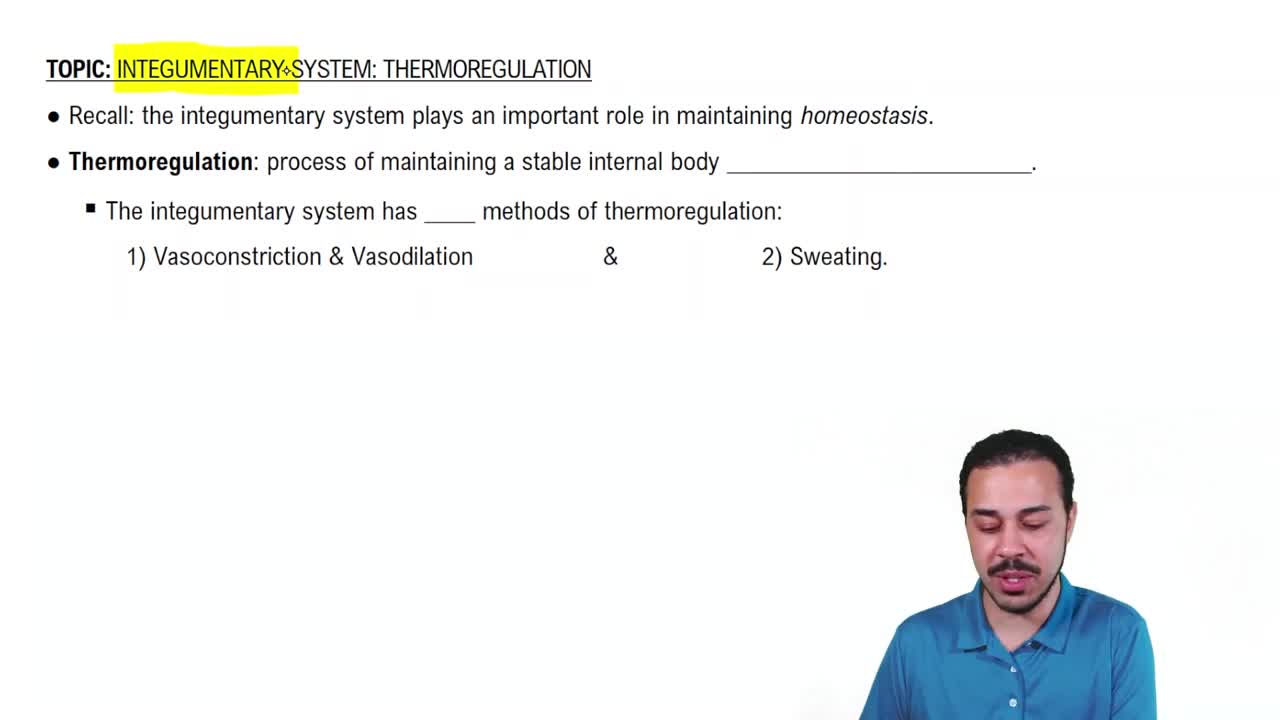
Thermoregulation

Thermoregulation is the process by which the body maintains its core internal temperature. In cold environments, the body employs various mechanisms, including vasoconstriction and shivering, to preserve heat. Fair-skinned individuals may be more susceptible to temperature changes, making their skin and lips more likely to exhibit signs of cold stress, such as turning blue, as the body prioritizes vital organ function over peripheral circulation.
Recommended video:
01:07
Introduction to Thermoregulation
Related Practice
Textbook Question

Predict which would be more damaging to long-term survival: a blood clot lodged in the right coronary artery or one in the left coronary artery. Explain.
Textbook Question

You are babysitting two children who are having a contest to see who can hang upside-down for the longest time. At the end of the contest, both children feel dizzy and are worried they are sick. Explain to them why they feel this way and why the effect is only temporary. (Hint: Consider how the baroreceptor reflex responds when a person hangs upside-down.)

3
views
Textbook Question

The carotid sinus contains:

a. Baroreceptors

b. Chemoreceptors

c. Metabolic controls

d. Smooth muscle cells

1
views
Textbook Question

Predict the effects of each of the following on systemic arterial blood pressure:

Caffeine consumption, which increases heart rate and causes vasoconstriction

1
views
Textbook Question

Match the following terms with the correct definition.

____ Auricle      

____ Aorta      

____ Coronary sinus       

____ Papillary muscle      

____ Fossa ovalis     

____ Pectinate muscle      

____ Venae cavae      

____ Pulmonary trunk      

____ Chordae tendineae      

____ Pulmonary veins 

a. Drainage point for the coronary veins

b. Extensions that attach papillary muscles to valves

c. Remnant of a hole present in the fetal interatrial septum

d. Two largest veins of the systemic circuit

e. Flaplike extension from the right or left atrium

f. Finger-like projections of ventricular muscle

g. Main artery of the pulmonary circuit

h. Veins that drain the pulmonary circuit

i. Largest artery of the systemic circuit

j. Ridges of muscle in the atria

Textbook Question

Ms. Rodgers has been diagnosed with secretion of inappropriate ADH syndrome (SIADH). What effect will SIADH have on the amount of water in her body? What symptoms would you expect from this condition? How would it affect her blood pressure and net filtration pressure?

1
views