
Ch. 16 The Endocrine System
Amerman - Human Anatomy & Physiology 2nd Edition
Amerman2nd EditionHuman Anatomy & PhysiologyISBN: 9780136873822Not the one you use?Change textbook
Chapter 16, Problem L2.3

A patient has a brain tumor that necessitates removal of his pituitary gland. Will its removal affect production of ADH and oxytocin? Explain.

Verified step by step guidance
1
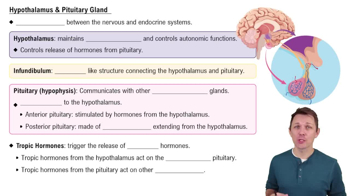
Understand the role of the pituitary gland: The pituitary gland is divided into two parts—the anterior pituitary and the posterior pituitary. The posterior pituitary stores and releases two hormones: antidiuretic hormone (ADH) and oxytocin, which are produced by the hypothalamus.
Recognize the connection between the hypothalamus and the posterior pituitary: ADH and oxytocin are synthesized in the hypothalamus and transported to the posterior pituitary for storage and release. The removal of the pituitary gland would eliminate the storage and release site for these hormones.
Consider the impact of pituitary removal: Without the posterior pituitary, the hypothalamus can no longer release ADH and oxytocin into the bloodstream, which would disrupt their normal physiological functions.
Explain the physiological consequences: The absence of ADH would impair water reabsorption in the kidneys, leading to excessive urination and dehydration (a condition known as diabetes insipidus). The absence of oxytocin would affect uterine contractions during childbirth and milk ejection during breastfeeding.
Conclude the explanation: Removal of the pituitary gland directly affects the production and release of ADH and oxytocin because the posterior pituitary is essential for their storage and secretion, even though they are synthesized in the hypothalamus.

Verified video answer for a similar problem:

This video solution was recommended by our tutors as helpful for the problem above.
Was this helpful?

Key Concepts

Here are the essential concepts you must grasp in order to answer the question correctly.

Pituitary Gland Function

The pituitary gland, often referred to as the 'master gland,' regulates various hormonal functions in the body. It produces and secretes hormones that control other glands, including the adrenal glands, thyroid, and reproductive glands. The anterior pituitary produces hormones like ACTH and TSH, while the posterior pituitary stores and releases ADH and oxytocin, which are crucial for water balance and childbirth, respectively.
Recommended video:
Guided course
7:10
Hypothalamus & Pituitary Gland

Antidiuretic Hormone (ADH)

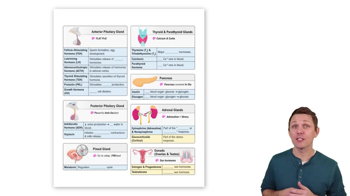
Antidiuretic hormone (ADH), also known as vasopressin, is produced in the hypothalamus and stored in the posterior pituitary. It plays a vital role in regulating the body's water balance by promoting water reabsorption in the kidneys. A decrease in ADH levels can lead to conditions such as diabetes insipidus, characterized by excessive urination and thirst.
Recommended video:
Guided course
13:06
Review of Major Hormones

Oxytocin

Oxytocin is a hormone produced in the hypothalamus and released by the posterior pituitary. It is primarily known for its role in childbirth, stimulating uterine contractions, and facilitating milk ejection during breastfeeding. Additionally, oxytocin is involved in social bonding and emotional responses, making it significant in both physiological and psychological contexts.
Recommended video:
Guided course
01:57
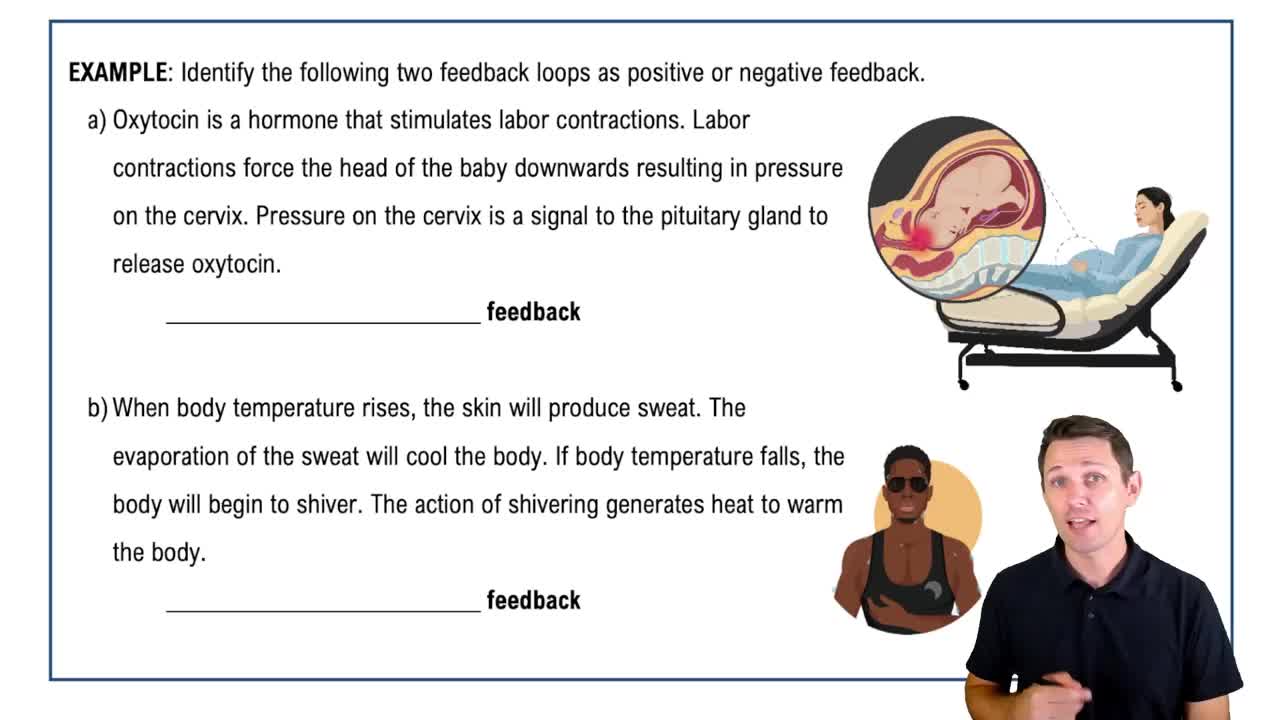
Feedback Loops Example 1