
Ch. 19 Blood
Amerman - Human Anatomy & Physiology 2nd Edition
Amerman2nd EditionHuman Anatomy & PhysiologyISBN: 9780136873822Not the one you use?Change textbook
Chapter 19, Problem L3.3a

Predict the effects of each of the following on systemic arterial blood pressure:
The practice of 'blood doping,' which increases the number of red blood cells in the blood

Verified step by step guidance
1
Understand the concept of systemic arterial blood pressure: It is the pressure exerted by blood on the walls of arteries during circulation. It is influenced by factors such as blood volume, vascular resistance, and cardiac output.
Recognize the role of red blood cells in blood viscosity: Red blood cells contribute to the thickness (viscosity) of blood. An increase in red blood cell count, as seen in 'blood doping,' leads to higher blood viscosity.
Analyze the relationship between blood viscosity and vascular resistance: Increased blood viscosity causes greater resistance to blood flow within the vessels. This resistance can elevate systemic arterial blood pressure.
Consider the impact on oxygen delivery and cardiac workload: While more red blood cells improve oxygen delivery to tissues, the heart must work harder to pump the thicker blood, potentially increasing blood pressure further.
Summarize the overall effect: The practice of 'blood doping' is likely to increase systemic arterial blood pressure due to the combined effects of increased blood viscosity and vascular resistance, along with the added strain on the heart.

Verified video answer for a similar problem:

This video solution was recommended by our tutors as helpful for the problem above.
Was this helpful?

Key Concepts

Here are the essential concepts you must grasp in order to answer the question correctly.

Blood Doping

Blood doping refers to the practice of increasing the number of red blood cells in the bloodstream, typically through transfusions or the use of erythropoietin (EPO). This increase enhances the blood's oxygen-carrying capacity, which can improve athletic performance. However, it also raises the risk of cardiovascular complications due to increased blood viscosity.
Recommended video:
6:11
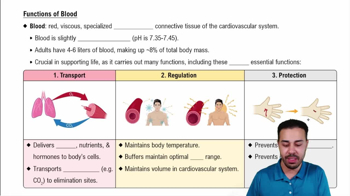
Functions of Blood

Systemic Arterial Blood Pressure

Systemic arterial blood pressure is the pressure exerted by circulating blood upon the walls of blood vessels, particularly arteries. It is influenced by cardiac output and systemic vascular resistance. An increase in red blood cell mass from blood doping can elevate blood pressure by increasing blood volume and viscosity, leading to greater resistance in the circulatory system.
Recommended video:
3:23
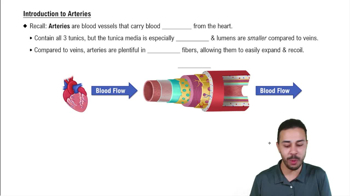
Introduction to Arteries

Cardiac Output

Cardiac output is the volume of blood the heart pumps per minute, calculated as the product of heart rate and stroke volume. It plays a crucial role in determining blood pressure. When blood doping increases the number of red blood cells, it can lead to higher blood volume, which may increase cardiac output and subsequently raise systemic arterial blood pressure.
Recommended video:
Guided course
9:44
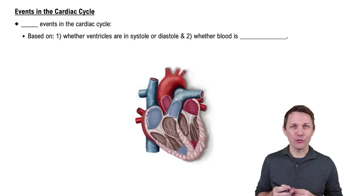
Events in the Cardiac Cycle
Related Practice
Textbook Question

Ms. Wu, whose blood type is O−, requires a blood transfusion. Her family members volunteer to donate blood. Their blood types are as follows: her son, type B−; her husband, type B+; her daughter, type O+. Which family members could safely donate blood to Ms. Wu? Who could not? Explain.

2
views
Textbook Question

Predict how abnormal hemoglobin proteins that contain only two iron ions, instead of four, would affect homeostasis.

4
views
Textbook Question

The anticoagulant drug warfarin primarily disrupts the extrinsic/tissue factor coagulation pathway. Explain why disrupting only this pathway disrupts the entire coagulation cascade.

1
views
Textbook Question

A blood sample from your patient shows that she has decreased numbers of neutrophils. Predict the effects of this condition. How would it differ if numbers of T lymphocytes were decreased instead?

4
views
Textbook Question

Mr. Jackson presents to the emergency room with a minor wound that has bled for several days. An examination of his medical history reveals that Mr. Jackson has hemophilia A, which is caused by a deficiency of factor VIII. Your co-worker suggests that you give Mr. Jackson some platelets to stop the bleeding. Will this help your patient? Why or why not?

1
views
Textbook Question

Elise is a 36-year-old woman who has volunteered to donate red bone marrow to a patient in need of a bone marrow transplant for aplastic anemia. The physician performing the bone marrow extraction is an intern, and it is her first time doing the procedure. She asks that you prepare a site on Elise's tibia for the procedure. Is this a good place for red bone marrow to be extracted, considering Elise's age? Why or why not? Can you suggest an alternative location? Explain.

1
views