Ch. 19 Blood
Amerman - Human Anatomy & Physiology 2nd Edition
Amerman2nd EditionHuman Anatomy & PhysiologyISBN: 9780136873822Not the one you use?Change textbook
Chapter 19, Problem L3.2

Mr. Jackson presents to the emergency room with a minor wound that has bled for several days. An examination of his medical history reveals that Mr. Jackson has hemophilia A, which is caused by a deficiency of factor VIII. Your co-worker suggests that you give Mr. Jackson some platelets to stop the bleeding. Will this help your patient? Why or why not?

Verified step by step guidance
1
Understand the role of platelets in the clotting process: Platelets are essential for forming the initial plug at the site of a wound, but they are not directly involved in the activation of clotting factors like factor VIII.
Review the clotting cascade: Hemophilia A is caused by a deficiency in factor VIII, which is part of the intrinsic pathway of the clotting cascade. Factor VIII is necessary for the activation of factor X, which ultimately leads to the formation of fibrin and stable clot formation.
Evaluate the suggestion to give platelets: While platelets are important for initiating clot formation, they cannot compensate for the absence of factor VIII. The deficiency in factor VIII prevents the clotting cascade from progressing to the formation of a stable fibrin clot.
Consider the appropriate treatment: Patients with hemophilia A typically require factor VIII replacement therapy to address the underlying deficiency and restore the clotting cascade. Platelet transfusion would not address the root cause of the bleeding in this case.
Explain why platelets alone will not help: Since the bleeding is due to a deficiency in factor VIII, providing platelets will not resolve the issue. The patient needs factor VIII replacement to restore normal clotting function and stop the prolonged bleeding.

Verified video answer for a similar problem:

This video solution was recommended by our tutors as helpful for the problem above.
Was this helpful?

Key Concepts

Here are the essential concepts you must grasp in order to answer the question correctly.

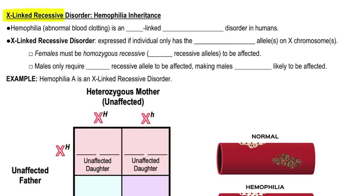
Hemophilia A

Hemophilia A is a genetic disorder characterized by a deficiency in clotting factor VIII, which is essential for blood coagulation. Individuals with this condition experience prolonged bleeding due to their blood's inability to form clots effectively. Understanding this disorder is crucial for determining appropriate treatment options for patients like Mr. Jackson.
Recommended video:
04:37
X-Linked Recessive Disorder: Hemophilia Inheritance

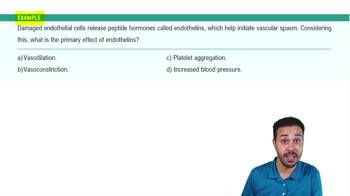
Role of Platelets in Hemostasis

Platelets are small cell fragments in the blood that play a vital role in hemostasis, the process that prevents and stops bleeding. They aggregate at the site of a blood vessel injury and form a temporary plug. However, in hemophilia A, the underlying issue is the lack of factor VIII, not platelet deficiency, meaning that administering platelets alone will not effectively address the bleeding.
Recommended video:
2:10
Platelets: Hemostasis Example 3

Factor Replacement Therapy

Factor replacement therapy involves administering clotting factors, such as factor VIII, to individuals with hemophilia to help restore their ability to form clots. This treatment is essential for managing bleeding episodes and preventing complications. In Mr. Jackson's case, providing factor VIII would be a more effective intervention than giving platelets.
Recommended video:
03:48
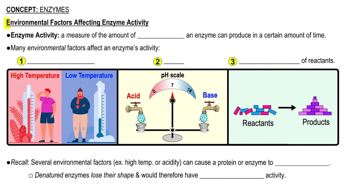
Environmental Factors Affecting Enzyme Activity
Related Practice
Textbook Question

Predict the effects of each of the following on systemic arterial blood pressure:

Blood loss from a bleeding ulcer

1
views

Textbook Question

Ms. Wu, whose blood type is O−, requires a blood transfusion. Her family members volunteer to donate blood. Their blood types are as follows: her son, type B−; her husband, type B+; her daughter, type O+. Which family members could safely donate blood to Ms. Wu? Who could not? Explain.

2
views
Textbook Question

The anticoagulant drug warfarin primarily disrupts the extrinsic/tissue factor coagulation pathway. Explain why disrupting only this pathway disrupts the entire coagulation cascade.

1
views
Textbook Question

A blood sample from your patient shows that she has decreased numbers of neutrophils. Predict the effects of this condition. How would it differ if numbers of T lymphocytes were decreased instead?

4
views
Textbook Question

Elise is a 36-year-old woman who has volunteered to donate red bone marrow to a patient in need of a bone marrow transplant for aplastic anemia. The physician performing the bone marrow extraction is an intern, and it is her first time doing the procedure. She asks that you prepare a site on Elise's tibia for the procedure. Is this a good place for red bone marrow to be extracted, considering Elise's age? Why or why not? Can you suggest an alternative location? Explain.

1
views
Textbook Question

Predict the effects of each of the following on systemic arterial blood pressure:

The practice of 'blood doping,' which increases the number of red blood cells in the blood

1
views