
Textbook Question
A surgical procedure known as gastric bypass involves removing all or part of the stomach.
How would stomach removal affect absorption of vitamin B12? Explain.
1
views

 Verified step by step guidance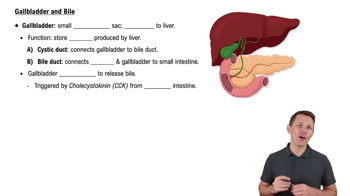
 6:54
6:54
 7:24
7:24 3:32
3:32A surgical procedure known as gastric bypass involves removing all or part of the stomach.
How would stomach removal affect absorption of vitamin B12? Explain.
Mr. Williams presents to your clinic with a complaint of abdominal pain in the right upper quadrant. He says that the pain worsens when he eats, particularly when he eats fatty meals. He has noticed that his stool has been an unusual clay color recently. You perform an ultrasound of his abdomen and find that gallstones are blocking his common bile duct, preventing bile from entering the duodenum.
You test Mr. Williams's stool and find high amounts of undigested fats. Explain this finding.
The peritoneal cavity is located:
a. Around each of the digestive organs
b. Between layers of mesentery
c. Superior to the greater omentum
d. Between the parietal and visceral peritoneum
Drugs with anticholinergic side effects block ACh receptors in the peripheral nervous system, including those on digestive organs. Predict the effects such drugs would have on motility and secretion on the specific organs of the digestive system.
A surgical procedure known as gastric bypass involves removing all or part of the stomach.
Ms. Anthony has undergone gastric bypass, and her stomach has been removed entirely. She goes out to dinner and eats an extremely large meal. Explain what will happen in her small and large intestine following this meal.