Ch. 4 Histology
Amerman - Human Anatomy & Physiology 2nd Edition
Amerman2nd EditionHuman Anatomy & PhysiologyISBN: 9780136873822Not the one you use?Change textbook
Chapter 4, Problem L3.A4

Imagine that a disease turns the simple epithelia of the lungs, kidney tubules, and intestines into keratinized stratified squamous epithelia. What effect would this change in form have on the functions of these tissues?

Verified step by step guidance
1
Understand the normal structure and function of simple epithelia in the lungs, kidney tubules, and intestines. Simple epithelia are typically one layer thick, allowing for efficient diffusion, filtration, absorption, and secretion. For example, in the lungs, simple squamous epithelium facilitates gas exchange; in kidney tubules, simple cuboidal epithelium aids in filtration and reabsorption; and in the intestines, simple columnar epithelium supports nutrient absorption and secretion of digestive enzymes.
Recognize the structure and function of keratinized stratified squamous epithelia. These tissues are multilayered and designed for protection against mechanical stress, dehydration, and pathogens. They are found in areas like the skin, where durability and resistance to abrasion are critical, but they are less specialized for absorption, secretion, or filtration.
Analyze the impact of replacing simple epithelia with keratinized stratified squamous epithelia in the lungs. The thicker, protective layers would hinder gas exchange by increasing the diffusion distance for oxygen and carbon dioxide, leading to impaired respiratory function.
Evaluate the consequences of this change in kidney tubules. The keratinized stratified squamous epithelium would obstruct filtration and reabsorption processes, as the thicker layers would reduce permeability and disrupt the normal function of the nephron, potentially leading to kidney failure or reduced efficiency in waste removal.
Assess the effects on the intestines. The keratinized stratified squamous epithelium would interfere with nutrient absorption and secretion of digestive enzymes, as the protective layers are not specialized for these functions. This could result in malnutrition and digestive issues due to the inability to properly absorb nutrients from food.

Verified video answer for a similar problem:

This video solution was recommended by our tutors as helpful for the problem above.
Was this helpful?

Key Concepts

Here are the essential concepts you must grasp in order to answer the question correctly.

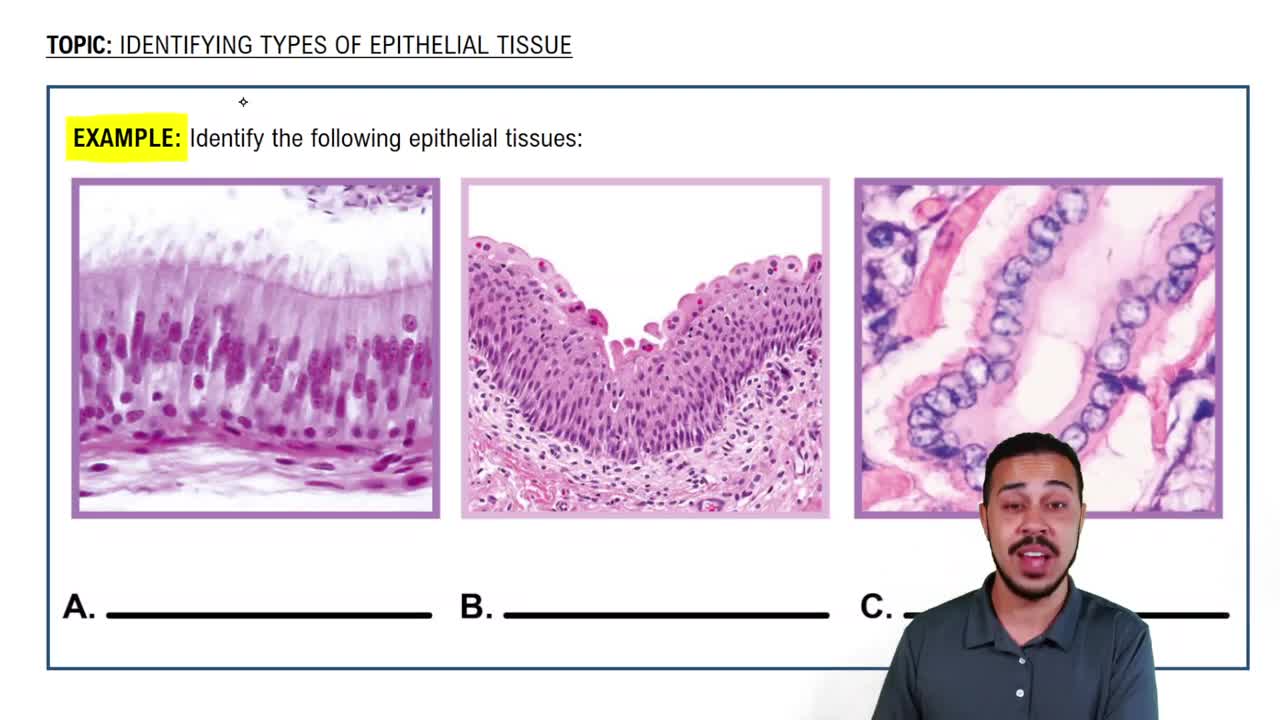
Epithelial Tissue Types

Epithelial tissues are classified based on cell shape and layers. Simple epithelia consist of a single layer of cells, allowing for efficient absorption and secretion, while stratified epithelia have multiple layers, providing protection against abrasion. Understanding these types is crucial to grasp how changes in epithelial structure can impact tissue function.
Recommended video:
Guided course
07:25
Identifying Types of Epithelial Tissue Example 1

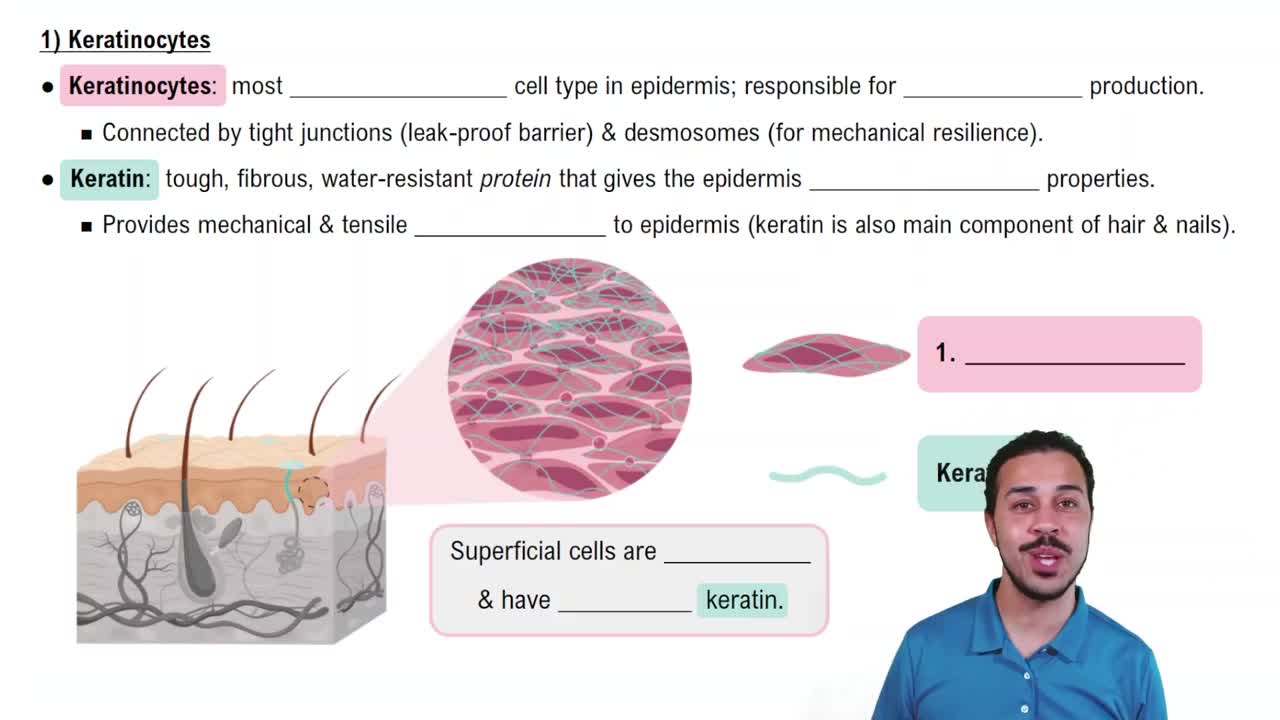
Keratinization

Keratinization is the process by which epithelial cells produce keratin, a protective protein. This process is typical in stratified squamous epithelium, which serves as a barrier against physical and chemical damage. In the context of the lungs, kidneys, and intestines, increased keratinization could hinder their primary functions, such as gas exchange and nutrient absorption.
Recommended video:
04:22
Keratinocytes

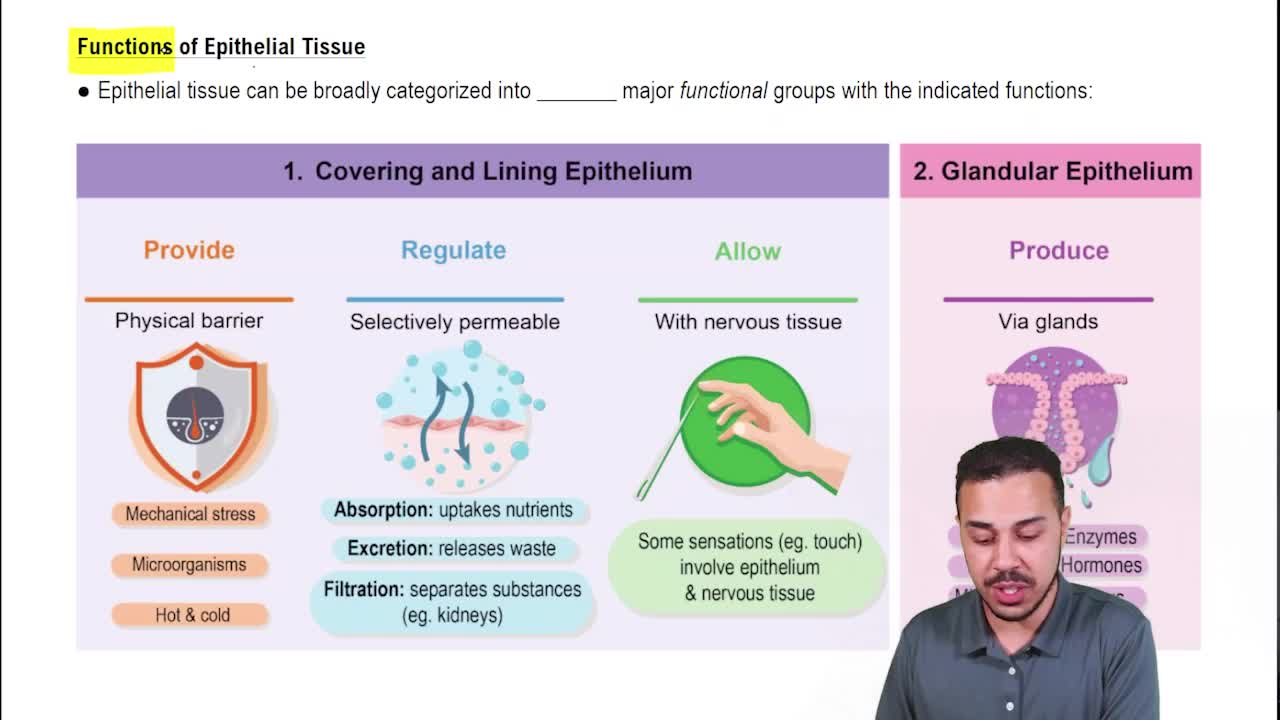
Functional Implications of Epithelial Changes

The function of epithelial tissues is closely linked to their structure. Changes from simple to keratinized stratified squamous epithelium would likely impair the lungs' ability to facilitate gas exchange, the kidneys' ability to filter blood, and the intestines' ability to absorb nutrients. Understanding these functional implications is essential for predicting the consequences of such pathological changes.
Recommended video:
Guided course
07:25
Functions of Epithelial Tissue