Ch. 14 The Digestive System and Body Metabolism
Marieb - Essentials of Human Anatomy & Physiology 13th Edition
Marieb13th EditionEssentials of Human Anatomy & PhysiologyISBN: 9780135624340Not the one you use?Change textbook
Chapter 14, Problem 4h

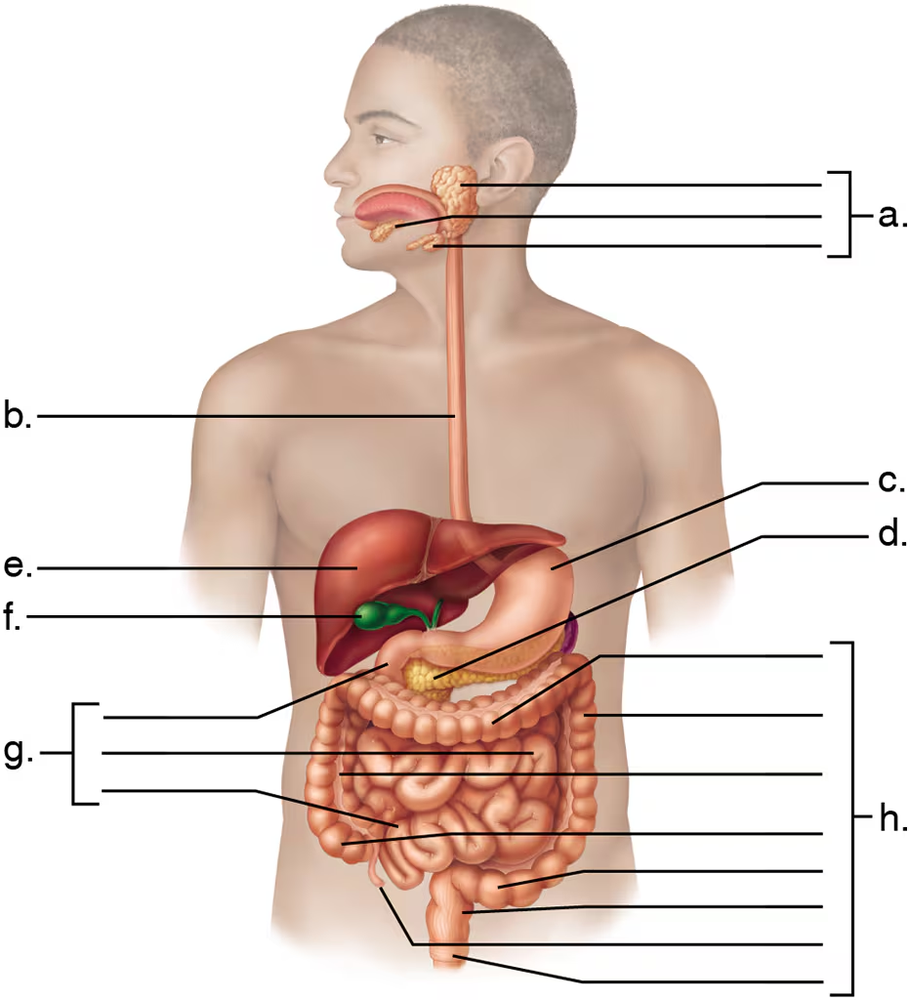
Match the letter of the digestive organ shown in the figure with its function.
___ segmentation occurs here

Verified step by step guidance
1
Step 1: Understand the term 'segmentation' in the context of the digestive system. Segmentation refers to the rhythmic contraction and relaxation of circular muscles in the digestive tract, which helps mix food with digestive enzymes and facilitates absorption by increasing contact with the intestinal walls.
Step 2: Identify the organs in the digestive system where segmentation typically occurs. Segmentation is most prominent in the small intestine, particularly in the duodenum, jejunum, and ileum.
Step 3: Review the figure provided in the problem and locate the labeled digestive organs. Match the labeled organs to their functions based on your knowledge of segmentation and its role in digestion.
Step 4: Confirm that the labeled organ corresponds to the small intestine or another area where segmentation is known to occur. Ensure the function aligns with the description of segmentation.
Step 5: Select the correct letter(s) from the figure that correspond to the organ(s) where segmentation occurs, ensuring that your choices are based on anatomical and physiological principles.

Verified video answer for a similar problem:

This video solution was recommended by our tutors as helpful for the problem above.
Video duration:
4m
Was this helpful?

Key Concepts

Here are the essential concepts you must grasp in order to answer the question correctly.

Segmentation

Segmentation is a process in the digestive system that involves the rhythmic contraction of circular muscles in the intestines. This action mixes food with digestive juices and enhances nutrient absorption by breaking down food into smaller pieces. It primarily occurs in the small intestine, where the chyme is thoroughly mixed to facilitate digestion.
Recommended video:
7:52
Antibody Class Switching

Digestive Organs

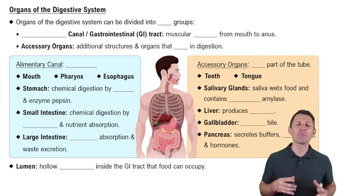
Digestive organs are specialized structures in the gastrointestinal tract that play distinct roles in the digestion and absorption of food. Key organs include the mouth, esophagus, stomach, small intestine, and large intestine, each contributing to the overall process of breaking down food and absorbing nutrients. Understanding the function of each organ is essential for identifying where specific digestive processes, like segmentation, occur.
Recommended video:
Guided course
6:28
Organs of the Digestive System

Function of the Small Intestine

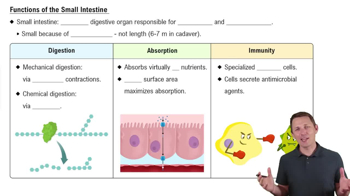
The small intestine is a crucial part of the digestive system, responsible for the majority of nutrient absorption. It is divided into three sections: the duodenum, jejunum, and ileum. The small intestine's structure, with its villi and microvilli, increases surface area for absorption, while processes like segmentation ensure that food is adequately mixed and broken down for optimal nutrient uptake.
Recommended video:
Guided course
3:44
Functions of the Small Intestine