Ch. 14 The Digestive System and Body Metabolism
Marieb - Essentials of Human Anatomy & Physiology 13th Edition
Marieb13th EditionEssentials of Human Anatomy & PhysiologyISBN: 9780135624340Not the one you use?Change textbook
Chapter 14, Problem 4a

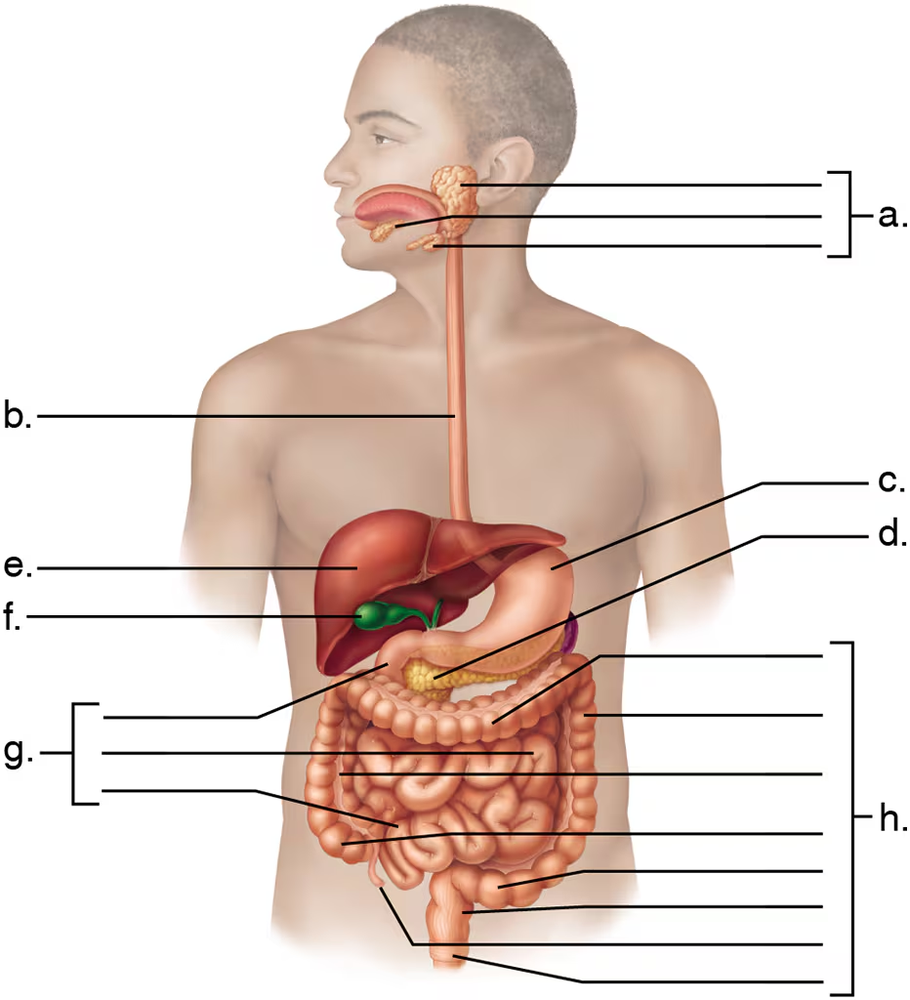
Match the letter of the digestive organ shown in the figure with its function.
___ produces bile
Illustration of the human digestive system with labeled organs, highlighting the liver's function in bile production.

Verified step by step guidance
1
Step 1: Recall the function of bile in the digestive system. Bile is a substance that aids in the digestion and emulsification of fats, breaking them into smaller droplets for easier enzymatic action.
Step 2: Identify the organ responsible for producing bile. The liver is the primary organ that synthesizes and secretes bile.
Step 3: Understand the anatomy of the liver. The liver is a large, reddish-brown organ located in the upper right quadrant of the abdominal cavity, just below the diaphragm.
Step 4: Match the letter of the organ labeled in the figure to the liver. Look for the organ in the diagram that corresponds to the anatomical location and structure of the liver.
Step 5: Confirm your answer by verifying that the labeled organ matches the description and function of the liver as the producer of bile.

Verified video answer for a similar problem:

This video solution was recommended by our tutors as helpful for the problem above.
Video duration:
2m
Was this helpful?

Key Concepts

Here are the essential concepts you must grasp in order to answer the question correctly.

Liver

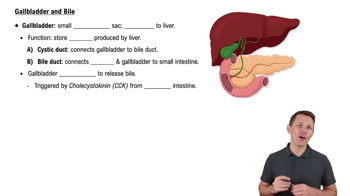
The liver is a vital organ in the digestive system responsible for producing bile, a substance that aids in the digestion and absorption of fats. Bile is stored in the gallbladder and released into the small intestine when needed, facilitating the emulsification of dietary fats.
Recommended video:
Guided course
2:59
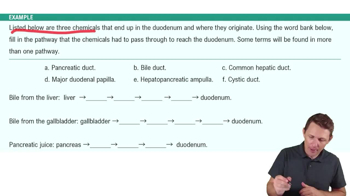
Duct System of the Liver, Gallbladder, and Pancreas Example 1

Bile

Bile is a digestive fluid produced by the liver that contains bile salts, cholesterol, and bilirubin. It plays a crucial role in the digestion of lipids by breaking down large fat globules into smaller droplets, making them easier for digestive enzymes to act upon.
Recommended video:
Guided course
6:54
Gallbladder and Bile

Digestive System

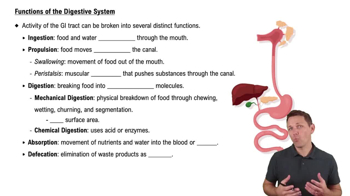
The digestive system is a complex network of organs that work together to break down food, absorb nutrients, and eliminate waste. Key organs include the mouth, esophagus, stomach, intestines, liver, and pancreas, each contributing to the overall process of digestion and nutrient absorption.
Recommended video:
Guided course
5:08
Functions of the Digestive System