
Textbook Question
A surgical procedure known as gastric bypass involves removing all or part of the stomach.
How would stomach removal affect absorption of vitamin B12? Explain.
1
views

 Verified step by step guidance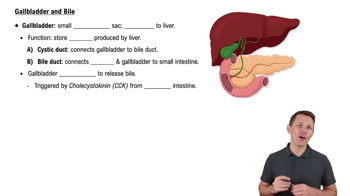
 6:54
6:54
 7:24
7:24A surgical procedure known as gastric bypass involves removing all or part of the stomach.
How would stomach removal affect absorption of vitamin B12? Explain.
Individuals experiencing prolonged vomiting lose a great deal of hydrochloric acid with the vomitus. Predict the effect this loss of acid will have on the pH of the blood. How will the respiratory system respond to the change in pH?
Mr. Williams presents to your clinic with a complaint of abdominal pain in the right upper quadrant. He says that the pain worsens when he eats, particularly when he eats fatty meals. He has noticed that his stool has been an unusual clay color recently. You perform an ultrasound of his abdomen and find that gallstones are blocking his common bile duct, preventing bile from entering the duodenum.
Explain why his feces have become a clay color instead of a normal brown color.
A surgical procedure known as gastric bypass involves removing all or part of the stomach.
Ms. Anthony has undergone gastric bypass, and her stomach has been removed entirely. She goes out to dinner and eats an extremely large meal. Explain what will happen in her small and large intestine following this meal.
Mr. Williams presents to your clinic with a complaint of abdominal pain in the right upper quadrant. He says that the pain worsens when he eats, particularly when he eats fatty meals. He has noticed that his stool has been an unusual clay color recently. You perform an ultrasound of his abdomen and find that gallstones are blocking his common bile duct, preventing bile from entering the duodenum.
Why are his symptoms worse when he consumes a high-fat meal? Would you expect his symptoms to worsen or lessen when he consumes a meal consisting only of carbohydrates? Explain.
Mark the following statements as true or false. If a statement is false, correct it to make a true statement.
The mucosa from the stomach to the anus consists of an inner layer of stratified columnar epithelium.