Ch. 20 The Lymphatic System and Immunity
Amerman - Human Anatomy & Physiology 2nd Edition
Amerman2nd EditionHuman Anatomy & PhysiologyISBN: 9780136873822Not the one you use?Change textbook
Chapter 20, Problem L3.5

The chemotherapeutic drugs Mr. White is taking affect all cells that undergo rapid mitosis, such as those of the skin. What effect would this have on the functions of the skin? How could this affect his immunity?

Verified step by step guidance
1
Understand the role of rapid mitosis in skin cells: Skin cells, particularly in the epidermis, undergo rapid mitosis to replace dead or damaged cells and maintain the skin's protective barrier.
Analyze the impact of chemotherapeutic drugs on mitosis: Chemotherapy targets rapidly dividing cells, which can impair the skin's ability to regenerate and repair itself, leading to thinning of the skin and increased susceptibility to injury.
Explain the skin's role in immunity: The skin acts as the first line of defense in the immune system by providing a physical barrier against pathogens and producing antimicrobial substances.
Evaluate how impaired skin function affects immunity: If the skin's integrity is compromised due to reduced cell turnover, it may become more prone to infections, allowing pathogens to enter the body more easily.
Discuss potential secondary effects on immunity: Damage to the skin can lead to inflammation and stress on the immune system, potentially weakening its ability to respond to other threats effectively.

Verified video answer for a similar problem:

This video solution was recommended by our tutors as helpful for the problem above.
Was this helpful?

Key Concepts

Here are the essential concepts you must grasp in order to answer the question correctly.

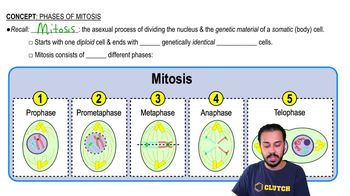
Rapid Mitosis

Rapid mitosis refers to the quick division of cells, which is characteristic of certain tissues, including the skin. This process is essential for growth, repair, and regeneration of skin cells. Chemotherapeutic drugs often target rapidly dividing cells, leading to potential side effects such as skin irritation, dryness, or increased susceptibility to infections due to impaired skin barrier function.
Recommended video:
03:21
Phases of Mitosis

Skin Function

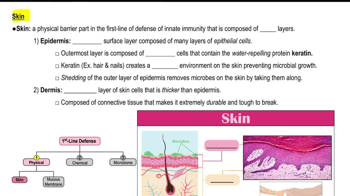
The skin serves multiple functions, including protection against pathogens, regulation of body temperature, and sensation. It acts as a barrier to prevent the entry of harmful microorganisms and helps maintain hydration. Disruption in skin cell turnover due to chemotherapy can compromise these functions, making the skin more vulnerable to infections and affecting overall health.
Recommended video:
4:08
Skin

Immunity

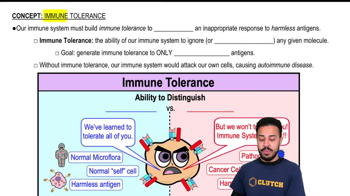
Immunity refers to the body's ability to resist infections and diseases, primarily through the immune system's response to pathogens. The skin plays a crucial role in the immune defense as the first line of protection. Chemotherapy can weaken the immune system by affecting not only skin cells but also other immune cells, leading to increased risk of infections and a reduced ability to fight off illnesses.
Recommended video:
3:19
Immune Tolerance
Related Practice
Textbook Question

Nonspecific immunity is also known as_____. Specific immunity is also known as_____. Specific immunity has the capacity for immunological ______ .

3
views

Textbook Question

Your friend tests her snake-wrangling skills on an eastern diamondback rattlesnake, and is bitten and envenomated (injected with the snake's venom). In the emergency department, doctors administer the antivenin CroFab, which contains antibodies to the toxins in snake venom. Is this an example of active or passive immunity? Will this confer any lasting protection to your friend?

1
views
Textbook Question

Mr. White has been diagnosed with febrile neutropenia, a condition characterized by the presence of a fever with an extremely low number of neutrophils in the blood. Blood work demonstrates the presence of bacteria in his blood. Explain why neutropenia might lead to a bacterial infection. Why is a bacterial infection particularly dangerous for Mr. White?

Textbook Question

Carla presents to her physician with a complaint of swollen axillary lymph nodes. Her physician performs a breast exam and finds a tumor on the same side as the swollen nodes.

b. Carla undergoes surgery to have the tumor and affected lymph nodes and surrounding lymphatic vessels removed. Predict any complications Carla might have after the surgery that could arise from removal of the lymph nodes and vessels.

2
views
Textbook Question

Which of the following make up the body's first line of defense?

a. Surface barriers

b. Cells and proteins of adaptive immunity

c. Cells and proteins of innate immunity

d. All of the above

1
views
Textbook Question

Carla presents to her physician with a complaint of swollen axillary lymph nodes. Her physician performs a breast exam and finds a tumor on the same side as the swollen nodes.

a. Explain what process has likely caused her nodes to swell.

2
views