Back

Analysis of Variance (f-Test) definitions

Control buttons has been changed to "navigation" mode.
1/15
  • F-test

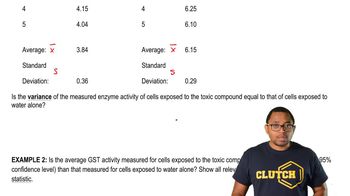
    A statistical method for comparing the variances of two populations to assess if they differ significantly.
  • Variance

    A measure of data spread, calculated as the square of the standard deviation for a set of values.
  • Standard Deviation

    A metric indicating the average distance of data points from the mean in a dataset.
  • F Calculated

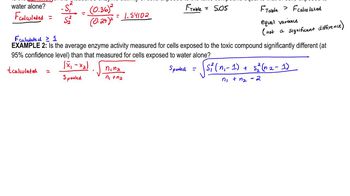
    A value obtained by dividing the larger sample variance by the smaller, ensuring a result of one or greater.
  • F Table

    A reference chart listing critical values used to determine the significance of variance differences.
  • Degrees of Freedom

    The number of independent values in a calculation, affecting the selection of critical values from tables.
  • Equal Variances

    A condition where two populations show no significant difference in their variances based on statistical comparison.
  • Unequal Variances

    A scenario where two populations have significantly different variances, requiring alternative statistical formulas.
  • t Calculated

    A computed value used to assess differences between means, with its formula depending on variance equality.
  • s Pooled

    A combined estimate of variance used when two populations are assumed to have equal variances.
  • Population

    A complete set of items or measurements from which samples are drawn for statistical analysis.
  • Critical Value

    A threshold from statistical tables used to judge the significance of a calculated test statistic.
  • Quotient

    The result of dividing one value by another, such as the ratio of two variances in statistical tests.
  • t Test

    A statistical procedure for comparing the means of two groups, often used alongside variance analysis.
  • Measurement

    A recorded value or observation from a population or sample, used in statistical calculations.