Ch. 1 - Introduction to Statistics
Larson - Elementary Statistics: Picturing the World 8th Edition
Larson8th EditionElementary Statistics: Picturing the WorldISBN: 9780137493470Not the one you use?Change textbook
Chapter 1, Problem 1.2.19

"Determine the level of measurement of the data set. Explain your reasoning.
The top ten fiction hardcover books on The New York Times Best Sellers List based on sales in the week ending March 6, 2021, are listed. (Source: The New York Times)


1. Life After Death

2. The Four Winds
3. Klara and the Sun

4. Dark Sky

5. The Affair

6. The Midnight Library

7. The Lost Apothecary

8. The Vanishing Half

9. Infinite Country

10. A Court of Silver Flames"

Verified step by step guidance
1
Step 1: Understand the concept of levels of measurement. In statistics, data can be classified into four levels of measurement: nominal, ordinal, interval, and ratio. Each level determines the type of analysis that can be performed on the data.
Step 2: Analyze the given data set. The data consists of the titles of the top ten fiction hardcover books ranked based on sales. This ranking implies an order, but the differences between ranks are not meaningful (e.g., the difference between rank 1 and rank 2 is not quantifiable).
Step 3: Determine the appropriate level of measurement. Since the data is ranked, it falls under the 'ordinal' level of measurement. Ordinal data represents categories with a meaningful order but does not allow for arithmetic operations on the differences between ranks.
Step 4: Explain the reasoning. The data is ordinal because it provides a ranking of books based on sales, which establishes an order (1st, 2nd, 3rd, etc.). However, the actual sales figures are not provided, so we cannot measure the exact difference between ranks.
Step 5: Conclude the analysis. The level of measurement for this data set is ordinal, as it involves a ranked order without quantifiable differences between the ranks.

Verified video answer for a similar problem:

This video solution was recommended by our tutors as helpful for the problem above.
Video duration:
2m
Was this helpful?

Key Concepts

Here are the essential concepts you must grasp in order to answer the question correctly.

Levels of Measurement

Levels of measurement refer to the different ways in which data can be categorized and quantified. There are four primary levels: nominal, ordinal, interval, and ratio. Each level has distinct characteristics that determine the type of statistical analysis that can be performed. Understanding these levels is crucial for accurately interpreting data and selecting appropriate statistical methods.
Recommended video:
Guided course
10:28
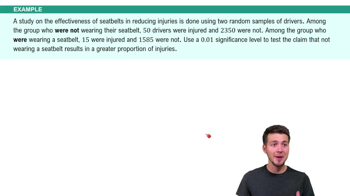
Difference in Proportions: Hypothesis Tests Example 1

Nominal Scale

A nominal scale is the simplest level of measurement, where data is categorized without any order or ranking. In the context of the book list, the titles of the books represent nominal data, as they are merely labels that identify each book without implying any quantitative value or hierarchy. This scale is useful for counting occurrences and identifying categories.
Recommended video:
04:52
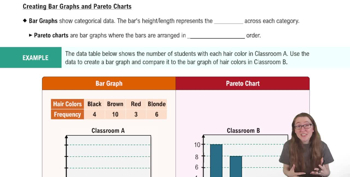
Creating Bar Graphs and Pareto Charts

Ordinal Scale

An ordinal scale involves data that can be ordered or ranked, but the intervals between the ranks are not necessarily equal. If the books were ranked based on sales, for example, this would create an ordinal scale. Understanding whether the data is nominal or ordinal is essential for determining the appropriate statistical techniques to apply, as it affects how we interpret the relationships between the data points.
Recommended video:
04:52
Creating Bar Graphs and Pareto Charts