Back

Frequency Distributions definitions

Control buttons has been changed to "navigation" mode.
1/15
  • Frequency Distribution

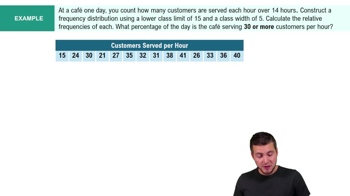
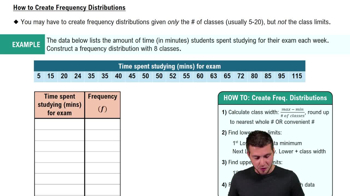
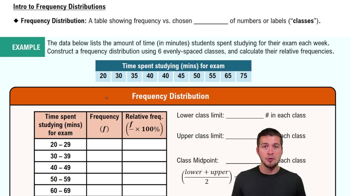
    A table organizing the count of measurements within specified groups, aiding in data visualization and analysis.
  • Class

    A group or interval of values used to categorize data in a frequency distribution, often defined by numerical ranges.
  • Lower Class Limit

    The smallest value included in a class interval, typically found on the left side of the class range.
  • Upper Class Limit

    The largest value included in a class interval, typically found on the right side of the class range.
  • Class Width

    The difference between consecutive lower or upper class limits, determining the size of each class interval.
  • Class Midpoint

    The average of the lower and upper class limits, representing the central value of a class interval.
  • Relative Frequency

    A proportion or percentage showing how often a class occurs compared to the total number of measurements.
  • Tally

    A counting method used to track occurrences within each class before finalizing frequencies.
  • Interval

    A range of values defining the boundaries of a class, used to group data for frequency analysis.
  • Dataset

    A collection of measurements or values subject to organization and analysis in frequency distributions.
  • Observation

    An individual measurement or value within a dataset, counted in frequency calculations.
  • Percent

    A unit expressing relative frequency as a portion out of 100, useful for comparing class frequencies.
  • Table

    A structured arrangement of data, commonly used to display frequency distributions for clarity.
  • Range

    The span between the minimum and maximum values in a dataset, used to determine class width.
  • Measurement

    A recorded value in a dataset, forming the basis for frequency and relative frequency calculations.