What is a monarchy and how is power transferred in this system?
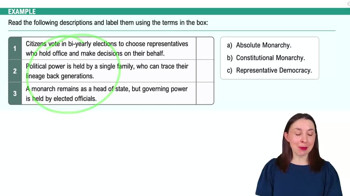
A monarchy is a political system where a single family rules from generation to generation, with power being inherited within the family.
How does an absolute monarchy differ from a constitutional monarchy?
In an absolute monarchy, the monarch has unlimited power, while in a constitutional monarchy, the monarch is mainly a symbolic head of state and elected officials govern.
What role does the royal family play in a constitutional monarchy?
In a constitutional monarchy, the royal family serves as a symbolic head of state and is subject to the same laws as other citizens.
What is a democracy and how is power distributed?
A democracy is a political system that gives power to the people, usually through elected representatives who make laws and policies on their behalf.
What is a representative democracy or republic?
A representative democracy or republic is a system where citizens vote for officials who then act in their best interests and make decisions for the society.
What are some common rights protected in democracies?
Democracies commonly protect rights such as freedom of speech, freedom of assembly, and freedom of the press.
How do democracies prevent the concentration of power?
Democracies use systems of checks and balances to ensure that power does not become too concentrated in one person or group.
What is authoritarianism and how is power maintained?
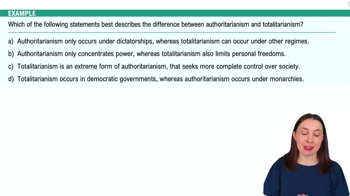
Authoritarianism is a political system where power is concentrated in one leader or a small group, maintained through coercion, propaganda, or military control.
How are elections typically conducted under authoritarian regimes?
Elections under authoritarian regimes are often absent, noncompetitive, or rigged to deny real participation to citizens.
What is a dictatorship and how does a dictator usually come to power?
A dictatorship is a system where one individual holds all political power, often rising through charisma or military leadership.
How do dictatorships relate to authoritarianism?
Dictatorships are almost always authoritarian, sharing features like concentrated power and limited freedoms.
What is totalitarianism and how does it differ from general authoritarianism?
Totalitarianism is an extreme form of authoritarianism that seeks total control over society, including media, education, and private life.
How does a totalitarian regime control its citizens?
A totalitarian regime controls mass media, education, and even the private lives of citizens, aiming to promote obedience and loyalty.
What can happen to dissenters under totalitarian regimes?
Dissenters under totalitarian regimes may face imprisonment, harsh treatment, or even execution.
Can authoritarianism and totalitarianism exist in regime types other than dictatorships?
Yes, both authoritarianism and totalitarianism can occur under other regime types, such as absolute monarchies.
 Back
Back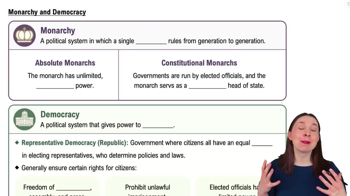
 03:04
03:04