Skip to main content
Introduction to Psychology
My Course
Learn
Exam Prep
AI Tutor
Study Guides
Flashcards
Explore
Try the app
My Course
Learn
Exam Prep
AI Tutor
Study Guides
Flashcards
Explore
Try the app
Back
General Adaptation Syndrome definitions
You can tap to flip the card.
General Adaptation Syndrome
You can tap to flip the card.
👆
General Adaptation Syndrome
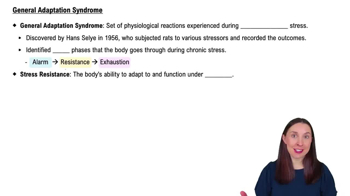
A model describing the body's three-stage physiological response to prolonged stress, highlighting adaptation and eventual depletion of resources.
Track progress
Control buttons has been changed to "navigation" mode.
1/14
Related flashcards
Related practice
Recommended videos
General Adaptation Syndrome quiz #1
General Adaptation Syndrome
21 Terms
General Adaptation Syndrome
13. Stress and Health
7 problems
Topic
Nicole
Stress and Immune Function
13. Stress and Health
7 problems
Topic
Nicole
13. Stress and Health
4 topics
12 problems
Chapter
Nicole
Guided course
02:11
Example 1
2
views
Guided course
06:01
General Adaptation Syndrome
2
views
Terms in this set (14)
Hide definitions
General Adaptation Syndrome
A model describing the body's three-stage physiological response to prolonged stress, highlighting adaptation and eventual depletion of resources.
Hans Selye
A pioneering researcher who identified and described the three-phase model of the body's response to chronic stress.
Alarm Phase
The initial stage marked by activation of the sympathetic nervous system, triggering intense fight-or-flight reactions and low stress resistance.
Resistance Phase
A stage where the body adapts to ongoing stress, maintaining a response with reduced intensity and higher stress resistance.
Exhaustion Phase
The final stage where bodily resources are depleted, leading to decreased stress resistance and increased risk of health problems.
Sympathetic Nervous System
A division of the autonomic nervous system responsible for initiating the fight-or-flight response during acute stress.
Fight-or-Flight Response
A rapid physiological reaction involving increased heart rate, blood pressure, and respiration in response to perceived threats.
Stress Resistance
The body's capacity to adapt and function effectively under conditions of chronic or prolonged stress.
Chronic Stress
A prolonged exposure to stressors that can lead to sustained physiological responses and eventual health consequences.
Hypertension
A common health issue resulting from chronic stress, characterized by persistently elevated blood pressure.
Gastrointestinal Issues
Digestive system problems, such as IBS or ulcers, often linked to reduced blood flow during extended stress.
Type 2 Diabetes
A metabolic disorder associated with chronic stress due to consistently elevated blood glucose levels.
Muscle Tension
A physical symptom of stress, often resulting in discomfort or headaches due to prolonged bodily arousal.
Immune Function
The body's defense capability, which can be compromised during extended periods of stress, increasing vulnerability to illness.
 BackBack
 02:11
02:11