- Download the worksheet to save time writing
- Start solving the practice problems
- If you're stuck, watch the video solutions
- See your summary to get more insights

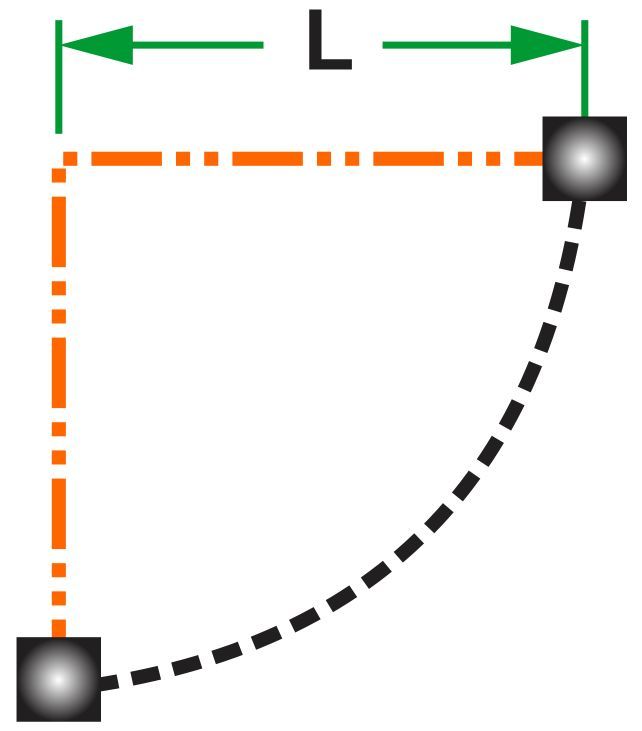
A block is attached to one end of a rope. However, the other end of it is fixed. Given that the rope's length is L and the block is released from the horizontal orientation of the rope, evaluate its final velocity at the bottom of its trajectory.
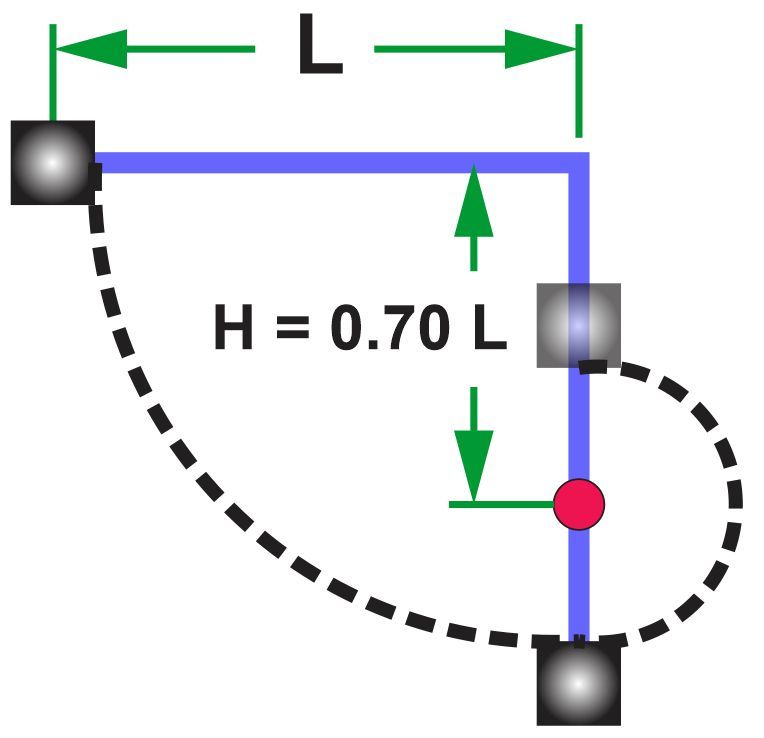
A block is attached to one end of a string while the other end is fixed. There is a pin directly below the pivot at a distance of H = 0.70L, where L is the length of the string. The block is released from the horizontal position as shown in the figure. Upon reaching the bottom it starts to revolve around the pin. Evaluate the speed of the block when it is at the topmost point of its trajectory about the pin.
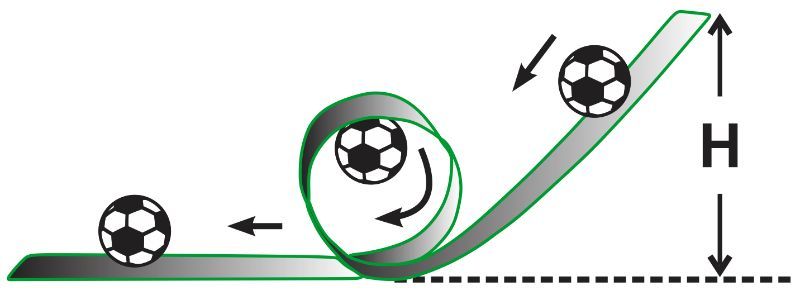
A group of students are experimenting. They place a loop at the foot of an incline and release a ball from rest along the incline. The goal is to keep the ball attached to the track throughout its trajectory. Given that the mass of the ball is M and the radius of the loop is R, evaluate the minimum release height of the ball (in terms of the given quantities) that achieves the goal. (Assume that friction is negligible.)
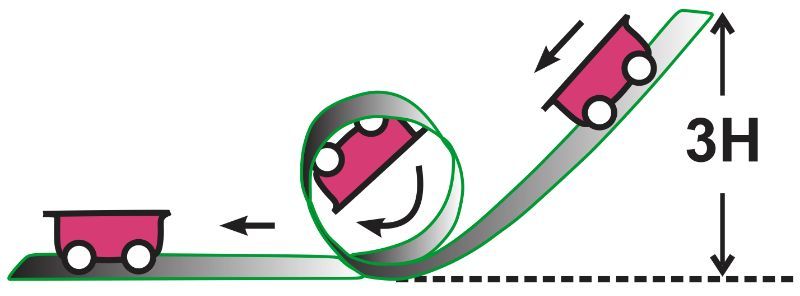
Some students are trying to build a self-powered roller coaster. The idea is to drop a cart from rest down into a looped path. The cart is to maintain contact with the looped path throughout its motion along the loop. The minimum height dropped from which this can happen is found to be H = 2.5R, where R is the radius of the loop. If the cart is instead dropped from a height of 3H, calculate the normal force exerted on the cart by the path at the top of the loop and on the horizontal portion of the path after leaving the loop. (Ignore friction)