
Textbook Question
Use bond-dissociation enthalpies (Table 4-2, p. 167) to calculate values of ΔH° for the following reactions.
a. CH3—CH3 + I2 → CH3CH2I + HI
2
views

 Verified step by step guidance
 03:06
03:06
 01:44
01:44 02:17
02:17Use bond-dissociation enthalpies (Table 4-2, p. 167) to calculate values of ΔH° for the following reactions.
a. CH3—CH3 + I2 → CH3CH2I + HI
Use bond-dissociation enthalpies (Table 4-2, p. 167) to calculate values of ΔH° for the following reactions.
c. (CH3)3C—OH + HCl → (CH3)3C—Cl + H2O
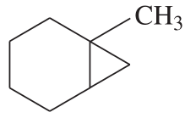
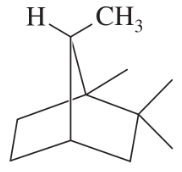
Label each hydrogen atom in the following compounds as primary (1°), secondary (2°), or tertiary (3°).
(a) CH3CH2CH(CH3)2
(b) (CH3)3CCH2CH3
Treatment of tert-butyl alcohol with concentrated HCl gives tert-butyl chloride.
When the concentration of H+ is doubled, the reaction rate doubles. When the concentration of tert-butyl alcohol is tripled, the reaction rate triples. When the chloride ion concentration is quadrupled, however, the reaction rate is unchanged. Write the rate equation for this reaction.
Label each hydrogen atom in the following compounds as primary (1°), secondary (2°), or tertiary (3°).
(c) (CH3)2CHCH(CH3)CH2CH3
(d)
Use bond-dissociation enthalpies (Table 4-2, p. 167) to calculate values of ΔH° for the following reactions.
b. CH3CH2Cl + HI → CH3CH2I + HCl