
Textbook Question
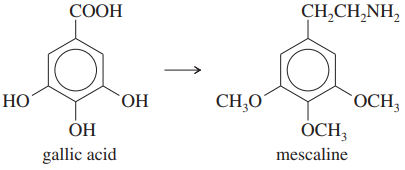
Show how you would accomplish the following multistep syntheses, using the indicated starting material and any necessary reagents.
(c)
1
views

 Verified step by step guidance
 02:15
02:15
 01:52
01:52 02:36
02:36Show how you would accomplish the following multistep syntheses, using the indicated starting material and any necessary reagents.
(c)
In each part, rank the compounds in order of increasing rate of nucleophilic attack at C=O by a strong nucleophile like methoxide.
(a)
Methyl p-nitrobenzoate has been found to undergo saponification faster than methyl benzoate.
(b) Would you expect methyl p-methoxybenzoate to undergo saponification faster or slower than methyl benzoate?
Show how you would accomplish the following multistep syntheses, using the indicated starting material and any necessary reagents.
(a) hept-6-en-1-ol → ε-caprolactone
(b) methoxybenzene → p-methoxybenzamide
Methyl p-nitrobenzoate has been found to undergo saponification faster than methyl benzoate.
(a) Consider the mechanism of saponification, and explain the reasons for this rate enhancement.
One mole of acetyl chloride is added to a liter of triethylamine, resulting in a vigorous exothermic reaction. Once the reaction mixture has cooled, 1 mole of ethanol is added. Another vigorous exothermic reaction results. The mixture is analyzed and found to contain triethylamine, ethyl acetate, and triethylammonium chloride. Propose mechanisms for the two exothermic reactions.