
Textbook Question
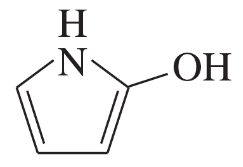
For each heterocyclic compound,
(i) explain what type of acid derivative is present.
(ii) show what compounds would result from complete hydrolysis.
(iii) are any of the rings aromatic? Explain.
(d)
3
views

 Verified step by step guidance
 2:06
2:06
 03:50
03:50 08:19
08:19For each heterocyclic compound,
(i) explain what type of acid derivative is present.
(ii) show what compounds would result from complete hydrolysis.
(iii) are any of the rings aromatic? Explain.
(d)
Draw structures to correspond with the following common and systematic names:
(d) N-butylacetamide
(e) N,N-dimethylformamide
For each heterocyclic compound,
(iii) are any of the rings aromatic? Explain.
(a)
(b)
(c)
For each heterocyclic compound,
(ii) show what compounds would result from complete hydrolysis.
(a)
(b)
(c)
For each heterocyclic compound,
(i) explain what type of acid derivative is present.
(ii) show what compounds would result from complete hydrolysis.
(iii) are any of the rings aromatic? Explain.
(f)
Draw structures to correspond with the following common and systematic names:
(a) phenyl formate
(b) cyclohexyl benzoate
(c) cyclopentyl phenylacetate