
Textbook Question
Propose a mechanism for each cyanohydrin synthesis just shown.
2
views

 Verified step by step guidance
 06:34
06:34
 09:11
09:11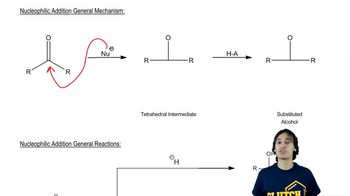 08:27
08:27Propose a mechanism for each cyanohydrin synthesis just shown.
Sodium triacetoxyborohydride, NaBH(OAc)3, is a mild reducing agent that reduces aldehydes much more quickly than ketones. It can be used to reduce aldehydes in the presence of ketones, such as in the following reaction:
(b) Propose a mechanism for the reduction of an aldehyde by sodium triacetoxyborohydride.
Show how you would accomplish the following syntheses.
(a) acetophenone → acetophenone cyanohydrin
Propose mechanisms for
(b) the base-catalyzed hydration of acetone to form acetone hydrate.
Show how you would accomplish the following synthetic conversions. You may use any additional reagents and solvents you need.
(d)
Sodium triacetoxyborohydride, NaBH(OAc)3, is a mild reducing agent that reduces aldehydes much more quickly than ketones. It can be used to reduce aldehydes in the presence of ketones, such as in the following reaction:
(a) Draw a complete Lewis structure for sodium triacetoxyborohydride.