
The Ka of phenylacetic acid is 5.2 × 10⁻⁵, and the pKa of propionic acid is 4.87.
a. Calculate the pKa of phenylacetic acid and the Ka of propionic acid.
b. Which of these is the stronger acid? Calculate how much stronger an acid it is.
Verified step by step guidance
The Ka of phenylacetic acid is 5.2 × 10⁻⁵, and the pKa of propionic acid is 4.87.
a. Calculate the pKa of phenylacetic acid and the Ka of propionic acid.
b. Which of these is the stronger acid? Calculate how much stronger an acid it is.
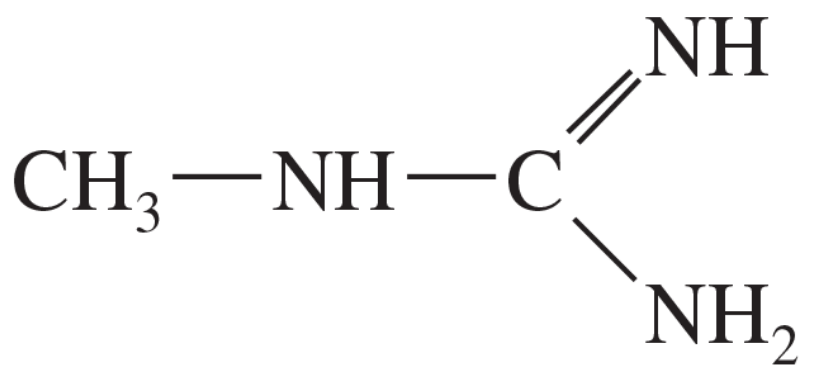
The following compound can become protonated on any of the three nitrogen atoms. One of these nitrogens is much more basic than the others, however.
b. Determine which nitrogen atom is the most basic.
The following compounds are listed in increasing order of acidity. In each case, the most acidic proton is shown in red.
b. Explain why X is a stronger acid than W.
c. Explain why Y is a stronger acid than X.
d. Explain why Z is a stronger acid than Y.
The Ka of phenylacetic acid is 5.2 × 10⁻⁵, and the pKa of propionic acid is 4.87.
c. Predict whether the following equilibrium will favor the reactants or the products.
Rank the following species in order of increasing basicity. Explain your reasons for ordering them as you do.
NH3 CH3O– H2O CH3COO– NaOH NH2– HSO4–
Hydrogen peroxide (HOOH) has a pKa of 11.6, making it roughly 10,000 times as strong an acid as water (pKa = 15.7). Explain why H2O2 is a stronger acid than H2O.