Ch. 5 - Chemical Reaction Analysis: Thermodynamics and Kinetics
Mullins - Organic Chemistry: A Learner Centered Approach 1st Edition
Mullins1st EditionOrganic Chemistry: A Learner Centered ApproachISBN: 9780137566471Not the one you use?Change textbook
Chapter 4, Problem 13

Which of the following carbocations would you expect to undergo rearrangement?

Verified step by step guidance
1
Step 1: Understand that carbocation rearrangements occur to form a more stable carbocation. This is because carbocations are electron deficient species and they will rearrange if it leads to a more stable configuration.
Step 2: Identify the stability of carbocations. The stability of carbocations follows the order: tertiary > secondary > primary > methyl. This is due to the inductive effect and hyperconjugation, where more alkyl groups attached to the positively charged carbon result in a more stable carbocation.
Step 3: Look at the given carbocations and determine their current stability based on the number of alkyl groups attached to the positively charged carbon.
Step 4: Consider if a rearrangement (such as a hydride shift or a methyl shift) could lead to a more stable carbocation. If a rearrangement can lead to a more stable carbocation, then it is likely to occur.
Step 5: Remember that rearrangements usually occur to form the most stable carbocation possible, but they are not guaranteed. Other factors, such as the reaction conditions and the presence of other functional groups, can also influence whether a rearrangement occurs.

Verified video answer for a similar problem:

This video solution was recommended by our tutors as helpful for the problem above.
Video duration:
6m
Was this helpful?

Key Concepts

Here are the essential concepts you must grasp in order to answer the question correctly.

Carbocation Stability

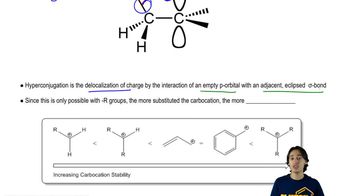
Carbocations are positively charged carbon species that can be classified based on their stability: primary, secondary, and tertiary. Tertiary carbocations are the most stable due to hyperconjugation and inductive effects from surrounding alkyl groups. Understanding the stability of carbocations is crucial for predicting their behavior, including whether they will undergo rearrangement.
Recommended video:
Guided course
05:58
Determining Carbocation Stability

Rearrangement Mechanisms

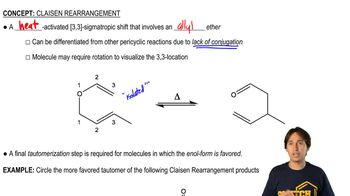
Rearrangement in carbocations typically occurs through hydride or alkyl shifts, where a neighboring atom or group moves to stabilize the positive charge. This process is driven by the formation of a more stable carbocation. Recognizing the conditions under which rearrangements happen is essential for predicting the outcome of reactions involving carbocations.
Recommended video:
Guided course
06:08
Definition of Claisen Rearrangement

Reaction Pathways

Understanding reaction pathways is vital in organic chemistry, as they describe the sequence of steps that lead to product formation. In the context of carbocations, the pathway may involve rearrangements that lead to more stable intermediates. Analyzing these pathways helps in predicting the products of reactions and the likelihood of rearrangement occurring.
Recommended video:
1:08
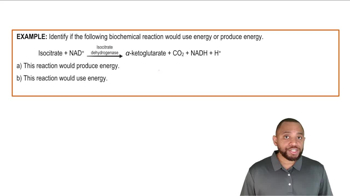
Energy Production In Biochemical Pathways Example 1