Textbook Question
For the following equilibrium processes and the corresponding ∆G°, calculate (i) Keq and (ii) the % composition of the equilibrium mixture (% reactants, % products) at 298 K.
(b)
1
views

 Mullins 1st EditionCh. 5 - Chemical Reaction Analysis: Thermodynamics and KineticsProblem 7b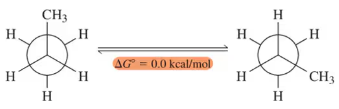
 Verified step by step guidance
 05:02
05:02
 02:19
02:19 01:40
01:40For the following equilibrium processes and the corresponding ∆G°, calculate (i) Keq and (ii) the % composition of the equilibrium mixture (% reactants, % products) at 298 K.
(b)
Provide a reasonable arrow-pushing mechanism for the following Lewis acid–Lewis base reactions.
(b)
For the following equilibrium processes and the corresponding ∆G°, calculate (i) Keq and (ii) the % composition of the equilibrium mixture (% reactants, % products) at 298 K.
(a)
For the following equilibrium processes and the corresponding ∆G°, indicate whether you expect the equilibrium constant to be greater than, equal to, or less than 1. Justify your expectation in words.
(a)
Chapter 5 taught us that chemical reactions are random collisions. Experimentally, how can we make molecules collide more often?
For the following values of ∆H° , ∆S°, and T, tell whether the process would be favored.
(a) ∆H° = -15 kcal/mol ; ∆S° = +37 cal/mol•K ; T = 273 K