Ch. 3 - Alkanes and Cycloalkanes: Properties and Conformational Analysis
Mullins - Organic Chemistry: A Learner Centered Approach 1st Edition
Mullins1st EditionOrganic Chemistry: A Learner Centered ApproachISBN: 9780137566471Not the one you use?Change textbook
Chapter 2, Problem 45b

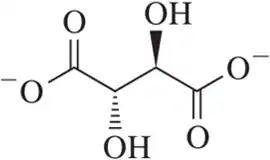
Modify the following line-angle drawings to show all lone pairs.
(b) Line-angle drawing of a molecule, highlighting lone pairs and functional groups, including hydroxyl and carboxyl groups.

Verified step by step guidance
1
Identify all heteroatoms (atoms other than carbon and hydrogen) in the structure. In this case, the heteroatoms are oxygen atoms.
Recall that oxygen typically has two lone pairs when it is neutral. If the oxygen is negatively charged (as in the case of the carboxylate group), it will have three lone pairs.
For each oxygen atom in the structure, add the appropriate number of lone pairs. For example, the oxygen in the hydroxyl group (-OH) will have two lone pairs, while the negatively charged oxygen in the carboxylate group (-COO⁻) will have three lone pairs.
Ensure that the lone pairs are drawn as pairs of dots around the oxygen atoms, positioned to reflect the tetrahedral or planar geometry of the molecule.
Double-check the structure to confirm that all lone pairs are added correctly and that the formal charges on the atoms are consistent with the number of lone pairs added.

Verified video answer for a similar problem:

This video solution was recommended by our tutors as helpful for the problem above.
Video duration:
3m
Was this helpful?

Key Concepts

Here are the essential concepts you must grasp in order to answer the question correctly.

Lone Pairs

Lone pairs are pairs of valence electrons that are not shared with another atom and are not involved in bonding. They are crucial for determining the geometry and reactivity of molecules. In organic chemistry, recognizing lone pairs is essential for understanding molecular shapes, predicting reaction mechanisms, and identifying sites of nucleophilicity or electrophilicity.
Recommended video:
Guided course
02:04
Heterocycles - Which lone pairs react?

Line-Angle Drawings

Line-angle drawings, also known as skeletal structures, are a shorthand representation of organic molecules where vertices represent carbon atoms and lines represent bonds. This notation simplifies the depiction of complex molecules by omitting hydrogen atoms attached to carbons and emphasizing the connectivity of the molecule. Understanding how to interpret and modify these drawings is vital for visualizing molecular structures.
Recommended video:
Guided course
02:46
What is angle strain?

Molecular Geometry

Molecular geometry refers to the three-dimensional arrangement of atoms within a molecule. It is influenced by the presence of lone pairs, which can affect bond angles and overall shape. Familiarity with molecular geometry helps predict the physical and chemical properties of substances, as well as their reactivity in various chemical reactions.
Recommended video:
Guided course
07:44
Molecular Geometry Explained.