Textbook Question
At the end of a reduction, there was found to be a small amount of unreacted amide along with the amine product dissolved in diethyl ether. How might you remove the amine from the ether?
1
views

 Mullins 1st EditionCh. 18 - Nucleophilic Acyl Substitution I: Carboxylic AcidsProblem 36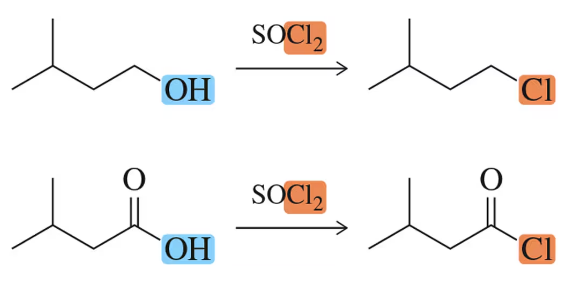
 Verified step by step guidance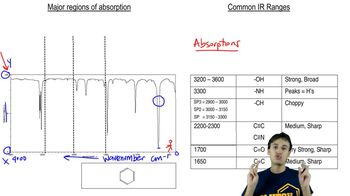
 16:04
16:04
 02:36 02:36
At the end of a reduction, there was found to be a small amount of unreacted amide along with the amine product dissolved in diethyl ether. How might you remove the amine from the ether?
The following carboxylic acids were named incorrectly. Provide the correct name.
(b) 6-bromocyclohexane carboxylic acid
In Chapter 19, we will learn about the hydrolysis of t-butyl esters. In the reaction below, the hydrolysis is coupled to the decarboxylation reaction learned in this chapter. Suggest a mechanism for this reaction. [Hint: The formation of t-butanol proceeds by an SN1 reaction.]
When a chemist attempted the following reaction sequence, the desired product was not formed.
(a) Why?
(b) Suggest a solution to the problem. [Think about chemistry from the end of Chapter 13.]
How would you reduce the alkene in the presence of a carboxylic acid?
The acid-catalyzed hydrolysis of an ester results in the formation of an equal amount of carboxylic acid and alcohol.
(b) Once separated, how could you distinguish between the carboxylic acid and alcohol using IR spectroscopy?